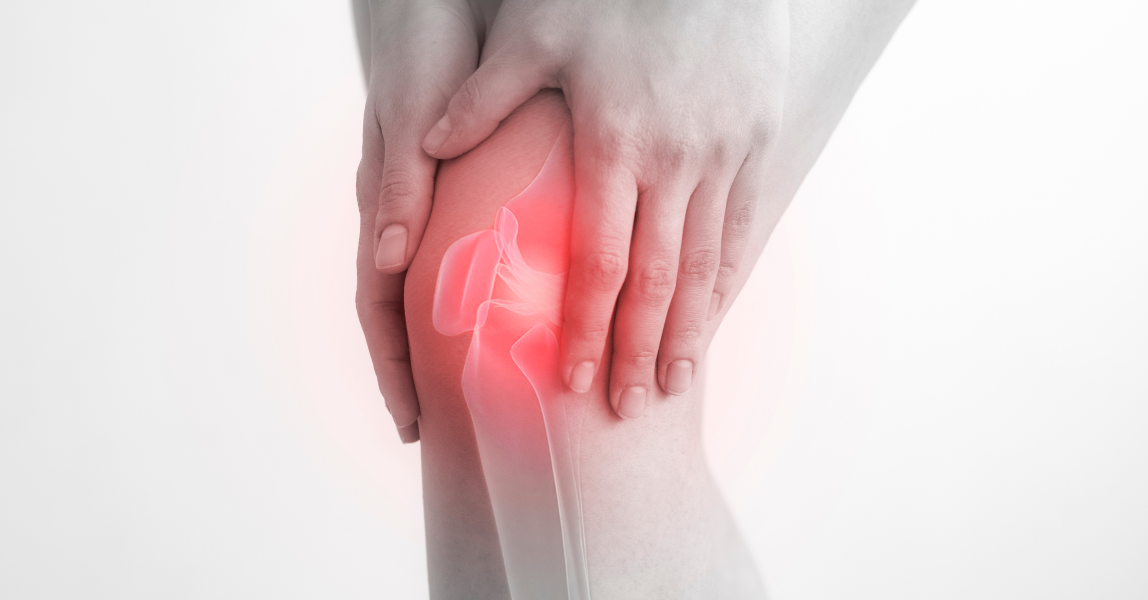
Knee pain can quietly creep into your life or arrive in a single sudden moment, the twinge that stops you on the stairs, the ache that makes you skip a walk with a friend, or the sharp pain after a fall.
Essentially, it is discomfort experienced in or around the knee, the largest joint in the body that bears your weight and allows movement such as bending, walking, and climbing.
No matter how it appears, it’s more than a physical problem: it can frustrate your daily routine, steal small joys, and leave you worried about what’s next.
This discomfort often arises from injuries, overuse, inflammation, arthritis, or other underlying conditions, and it can range from mild soreness to severe, debilitating pain.
Fortunately, there are several ways to manage knee pain, depending on its cause.
For example, home remedies such as rest, ice, and over-the-counter pain relief can help in the short term, while physical therapy and exercises strengthen the joint for longer-term improvement.
Additionally, non-surgical treatments such as injections or minimally invasive procedures provide targeted relief, and in some cases, surgery may be necessary when other methods aren’t enough.
In this post, we will explore what knee pain is, its causes, diagnosis, and treatment options, so you can understand your condition and take the right steps toward relief.
What is Knee Pain?
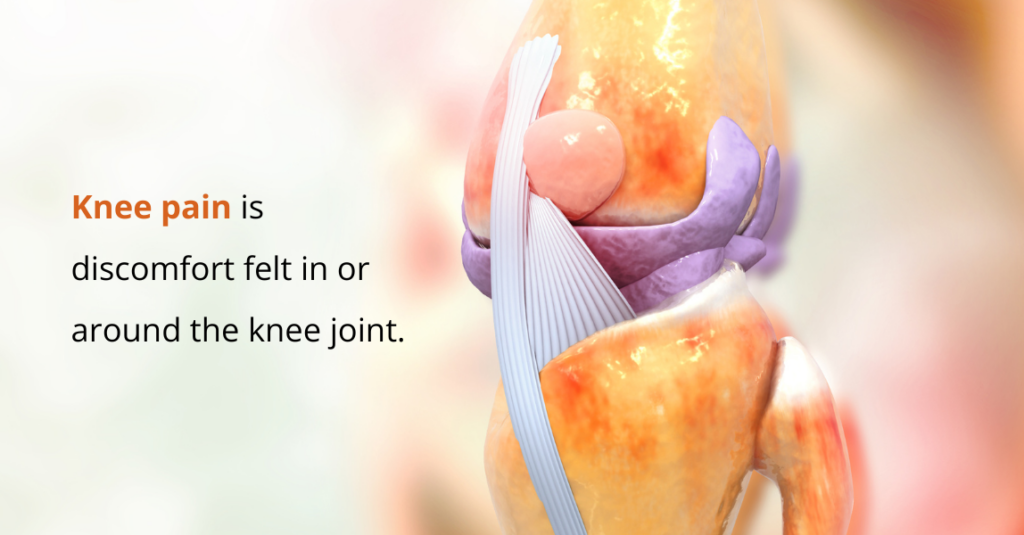
Knee pain is discomfort felt in or around the knee joint, the largest joint in the body. Where you feel the pain can often give clues about what’s causing it.
Your knee is a joint, the place where two bones meet. It connects your thigh bone (femur) to your lower leg bone (shin or tibia). This joint plays a major role in movement, balance, and weight support.
The knee is the largest joint in the body and absorbs a lot of stress when you walk, run, bend, or climb stairs. Because of this, it’s one of the most commonly injured joints. Knee pain can be short-term and temporary, or it can become a long-term (chronic) condition.
Some people notice pain when moving, bending, or putting weight on the knee, while others feel relief when resting. Pain may also vary throughout the day, often worse in the morning, at night, or after physical activity.
What are the Causes of Knee Pain?
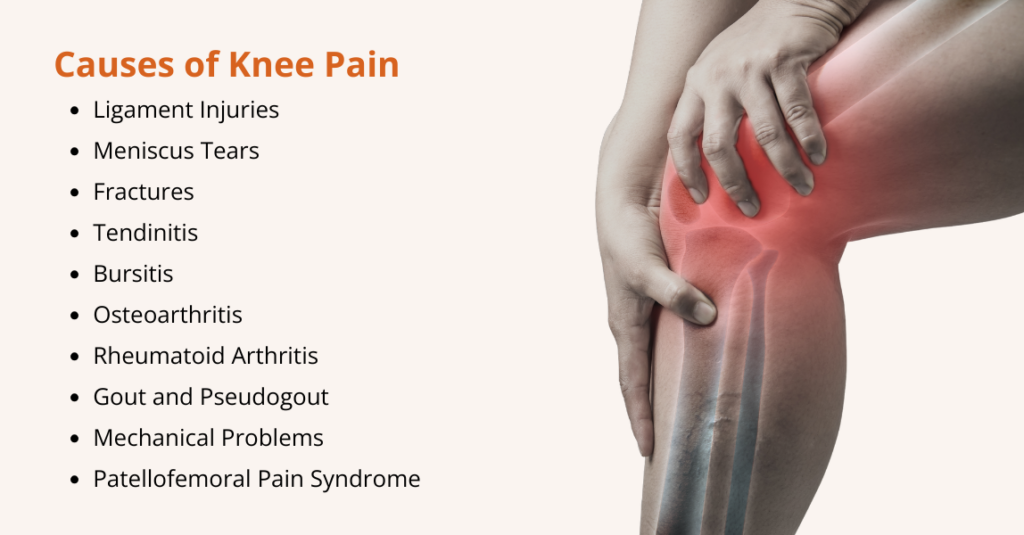
Knee pain can come from many different problems. Sometimes it’s due to an injury from a fall, twist, or sports activity. At other times, it develops over time due to wear and tear, inflammation, or other medical conditions.
Here are the main causes of knee pain:
- Ligament Injuries
Tears or sprains of ligaments such as the ACL, PCL, MCL, or LCL often occur with sudden twists, stops, or impacts. They can cause pain, swelling, and instability.
- Meniscus Tears
The meniscus is cartilage that cushions the knee. A tear often from twisting the knee while bearing weight can lead to pain, stiffness, and difficulty moving.
- Fractures
A fracture of the kneecap or nearby bones can result from falls, collisions, or other trauma. This causes sharp pain and usually needs prompt care.
- Tendinitis
Overuse of the tendons around the knee (especially the patellar tendon) can cause inflammation. This common condition, known as “jumper’s knee,” causes pain during activity.
- Bursitis
The bursae are small fluid-filled sacs that cushion the knee. When they become irritated or inflamed, they cause pain and swelling, especially with pressure or movement.
- Osteoarthritis
This “wear-and-tear” arthritis happens when the protective cartilage of the knee wears down over time, leading to pain, stiffness, and swelling.
- Rheumatoid Arthritis
An autoimmune condition in which the body’s immune system attacks the joints, causing inflammation, pain, and potentially long-term damage.
- Gout and Pseudogout
These are caused by tiny crystals forming in the joint, which can trigger sudden and severe pain, redness, and swelling.
- Mechanical Problems
Issues such as a dislocated kneecap, a loose piece of bone/cartilage floating in the joint, or irritation of the iliotibial (IT) band can all trigger pain by affecting knee mechanics.
- Patellofemoral Pain Syndrome
Pain around or under the kneecap, common among athletes and active individuals, often results from misalignment, overuse, or muscle imbalance.
How to Diagnose Knee Pain?
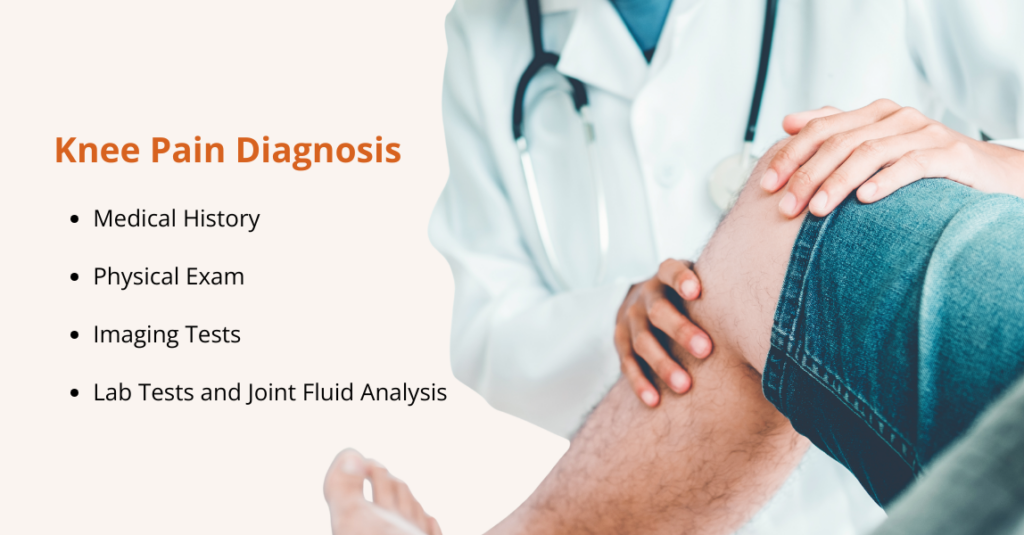
To diagnose knee pain, health care providers combine your medical history, a physical exam, and, if needed, special tests or imaging to see inside the joint.
Medical History
Your doctor or clinician will ask questions about:
- When the pain started and how it began (suddenly or gradually)
- What movements make it worse or better
- Any recent injuries or activities that could have caused strain
- Other symptoms like swelling, stiffness, or instability
Physical Exam
During the exam, your provider will:
- Look at your knee for swelling, bruising, warmth, or tenderness
- Check how far you can bend and straighten the knee
- Move your knee in different directions to test stability
- Feel for pain or weakness in specific areas
These tests help identify which structures (ligaments, tendons, cartilage, bones) might be involved.
Imaging Tests
Imaging helps doctors see inside the knee when the physical exam isn’t enough or the pain is severe:
- X-ray: First and most common test. It shows bone fractures, joint space narrowing (arthritis), and bone alignment problems.
- MRI (Magnetic Resonance Imaging): It provides detailed images of soft tissues, including ligaments, tendons, cartilage, and menisci. It’s very useful when a tear or soft tissue injury is suspected.
- CT Scan: Provides detailed bone images and may be used when X-rays are unclear or when fractures are difficult to visualize.
- Ultrasound: Uses sound waves to view soft tissues and see fluid or tendon injuries in real time.
- Bone Scan or Arthroscopy: Sometimes used in special cases to find bone activity or to directly look inside the joint with a camera.
Lab Tests and Joint Fluid Analysis
If the doctor suspects infection, inflammation, or arthritis, they may order:
- Blood tests (e.g., inflammation markers or autoimmune markers)
- Joint aspiration: Removing a small amount of fluid from the knee with a needle to check for infection, crystals (like in gout), or inflammation.
Your clinician will combine information from your history, exam, and test results to make a diagnosis.
What are the Treatments for Knee Pain Relief?
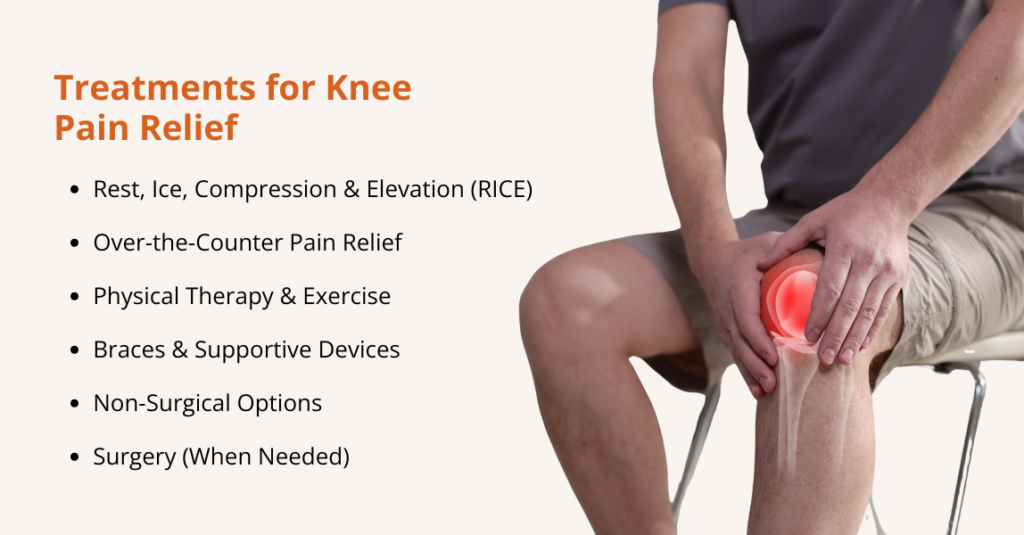
Knee pain treatment usually involves a combination of therapies and, when necessary, surgery. The best approach depends on the cause of the pain, its severity, and the patient’s individual needs and goals.
Rest, Ice, Compression & Elevation (RICE)
These simple steps help reduce pain, swelling, and stiffness—especially right after an injury.
- Rest: Take a break from activities that hurt.
- Ice: Apply a cold pack wrapped in a towel to reduce swelling and numb pain.
- Compression: Wrap the knee with a bandage to limit fluid buildup.
- Elevation: Raise the leg on pillows to facilitate drainage away from the knee.
Over-the-Counter Pain Relief
Over-the-counter pain medications can help manage knee pain. NSAIDs (like ibuprofen or naproxen) reduce pain and, at higher doses, inflammation, but should be used with caution if you have stomach ulcers, bleeding disorders, or certain kidney conditions.
Moreover, topical treatments such as gels or creams containing menthol or capsaicin can provide local pain relief. For more severe pain, doctors may recommend prescription-strength medications.
Physical Therapy & Exercise
A physical therapist can show you exercises to:
- Strengthen the muscles around your knee
- Improve flexibility and balance
- Reduce stress on the joint
Regular physical activity, such as walking, swimming, cycling, tai chi, or yoga, can also help with long‑term knee pain and improve mobility.
Braces & Supportive Devices
Knee braces, sleeves, or shoe inserts can:
- Help stabilize the knee joint
- Reduce strain during activities
- Improve alignment and comfort
These are often used alongside exercise or therapy.
Non-Surgical Options
There are non-surgical options for managing knee pain that provide relief without surgery.
- Genicular Artery Embolization (GAE): GAE is a minimally invasive procedure performed by an interventional radiologist. Tiny particles are used to block blood flow to inflamed areas around the knee, thereby reducing chronic pain, particularly in osteoarthritis.
- Intra-Articular Injections: Intra-articular injections deliver medications, such as corticosteroids, hyaluronic acid, or platelet-rich plasma, directly into the knee joint. These injections help reduce inflammation, improve joint lubrication, and relieve pain.
Surgery (When Needed)
If conservative treatments don’t help and the pain is disabling, surgery may be considered:
- Arthroscopy: Small repairs inside the knee
- Partial or total knee replacement: Replaces damaged joint surfaces
- Osteotomy: Realigns bones to take pressure off worn areas
These options are usually for severe injuries, advanced arthritis, or cases that limit daily activities.
How to Prevent Knee Pain?
Keeping your knees healthy is mostly about smart movement, good habits, and a few common-sense safety steps. Try these practical tips to lower your risk of injury and long-term pain:
- Warm up and cool down: Spend 5–10 minutes warming up (light walking, gentle movement) before exercise and cool down with slow walking and stretching afterward to protect muscles and joints.
- Build strength and flexibility: Perform regular exercises targeting the quadriceps, hamstrings, hips, and core, and incorporate gentle stretching or mobility exercises.
- Increase activity gradually: Raise intensity, distance, or weight slowly, and don’t jump into a harder routine overnight.
- Choose low-impact options: Swap high-impact activities (sprinting, repetitive jumping) for cycling, swimming, or elliptical workouts when possible to reduce joint stress.
- Use proper technique and gear: Learn correct form for sports and lifting. Wear supportive shoes and use protective equipment (e.g., knee pads, braces) as appropriate.
- Listen to your body: If your knee hurts during or after activity, stop, rest, and consult a professional before continuing.
- Manage weight and overall health: Keeping a healthy weight reduces pressure on the knees. Control chronic conditions (like diabetes or arthritis) that can affect joint health.
- Make your home safer: Remove tripping hazards, use stable step stools (not chairs), install handrails where needed, and use a cane or walker if you’re at risk of falling.
Small, consistent choices add up, protecting your knees today helps keep you active and pain-free tomorrow.
Frequently Asked Questions (FAQs)
Why do I have knee pain?
Knee pain can result from many causes, ranging from injuries to long-term joint conditions. Common causes include:
- Injuries: Sprains, ligament tears (like ACL or MCL), meniscus tears, or fractures can cause sudden pain, swelling, or instability.
- Arthritis: Osteoarthritis or rheumatoid arthritis gradually wears down the joint, leading to chronic pain, stiffness, and swelling.
- Overuse: Repetitive activities such as running, jumping, or kneeling can strain the muscles, tendons, and ligaments around the knee.
- Inflammation: Conditions such as bursitis or tendinitis can irritate the tissues surrounding the knee.
- Mechanical issues: Problems such as a dislocated kneecap, loose cartilage, or alignment problems can cause pain during movement.
Your knee may also be affected by a combination of these factors. Understanding the cause is important for choosing the right treatment, from rest and physical therapy to medications, injections, or minimally invasive procedures.
What is the fastest way to relieve knee pain?
While long-term relief depends on treating the underlying cause, you can ease knee pain quickly using these methods:
- Rest the Knee: Avoid activities that worsen pain or put weight on the joint. Short-term rest reduces strain.
- Ice Therapy: Apply a cold pack for 15–20 minutes several times a day to reduce pain and swelling.
- Compression: Use an elastic bandage or knee sleeve to support the joint and limit swelling.
- Elevation: Raise your leg on pillows so the knee is above heart level to help fluid drain away.
- Over-the-Counter Pain Relievers: NSAIDs (such as ibuprofen or naproxen) quickly reduce pain and inflammation. Acetaminophen may be beneficial if inflammation is not the primary issue.
- Topical Pain Creams: Menthol or capsaicin gels applied to the knee can provide fast local relief.
- Gentle Movement: Light stretches or walking (if tolerable) can prevent stiffness and maintain circulation.
What’s the best thing for knee pain?
The best approach for knee pain combines exercise and physical therapy to strengthen the joint, pain relief with ice or medications, and, if needed, injections or minimally invasive treatments for persistent pain, with surgery as a last resort.
What can I take for knee pain?
For knee pain, you can take over-the-counter medications such as NSAIDs (e.g., ibuprofen, naproxen) to reduce pain and inflammation, or acetaminophen for pain relief without anti-inflammatory effects. Topical creams or gels (e.g., menthol or capsaicin) can provide local relief. For persistent pain, doctors may recommend prescription medications or intra-articular injections.
When should I see a doctor for knee pain?
Most mild knee pain can improve with rest, home care, and over-the-counter treatments. However, you should consult a healthcare professional if you experience any of the following:
- Severe or sudden pain that doesn’t improve with rest
- Swelling, redness, or warmth around the knee
- Inability to bear weight or move the knee normally
- Deformity or popping/clicking sounds after an injury
- Pain that persists for several weeks despite home treatment
- Fever or signs of infection in the knee
- Recurring or worsening pain that affects daily activities
Early evaluation helps prevent complications, ensures accurate diagnosis, and allows for timely treatment.
Conclusion
Knee pain can be more than just a physical discomfort. It can disrupt daily life, limit activities you enjoy, and leave you feeling frustrated or worried about the future.
Understanding why your knee hurts is the first step toward finding relief. Whether it stems from an injury, overuse, arthritis, or inflammation, identifying the cause helps guide the right treatment.
Simple measures such as rest, ice, and over-the-counter pain relievers can ease discomfort, while physical therapy and targeted exercises can strengthen the joint and improve mobility.
Non-surgical options, such as injections or minimally invasive procedures, offer relief for persistent pain, and surgery is reserved for cases where other treatments aren’t enough.
Remember, knee pain doesn’t have to define your life.
Seeking timely advice, understanding your options, and following a personalized treatment plan can help you regain comfort, restore movement, and return to the activities you love.
Taking the first step toward care is the start of reclaiming your freedom.
Leave a Reply