Category: Medical Conditions and Diseases

  • Fibroids and Pregnancy: Everything You Should Know

    Fibroids and Pregnancy: Everything You Should Know

    For many expecting parents, the discovery of fibroids during a routine prenatal ultrasound comes as a surprise.

    Fibroids are incredibly common, and in many cases, people don’t even know they have them until pregnancy brings them to light.

    As more individuals choose to start families later in life, when fibroids naturally become more frequent, these findings are becoming part of the modern pregnancy experience.

    While most pregnancies involving fibroids progress smoothly, their presence can raise understandable questions.

    • Will they affect the baby’s growth?
    • Increase the risk of preterm birth?
    • Lead to pain or complications later in pregnancy?

    The answers depend on factors like size, number, and location, and with the right monitoring, many people navigate pregnancy with fibroids without major issues.

    In this guide, we’ll explain the impact of fibroids on pregnancy, outline potential risks, describe diagnostic approaches, and provide practical strategies for managing fibroids while pregnant.

    How Fibroids Affect Pregnancy

    how fibroids affect pregnancy

    The presence of uterine fibroids (even when they’ve been harmless before pregnancy) can influence pregnancy in several ways, from early pregnancy loss to complications late in pregnancy or at delivery. The risks vary based on fibroid size, number, and location.

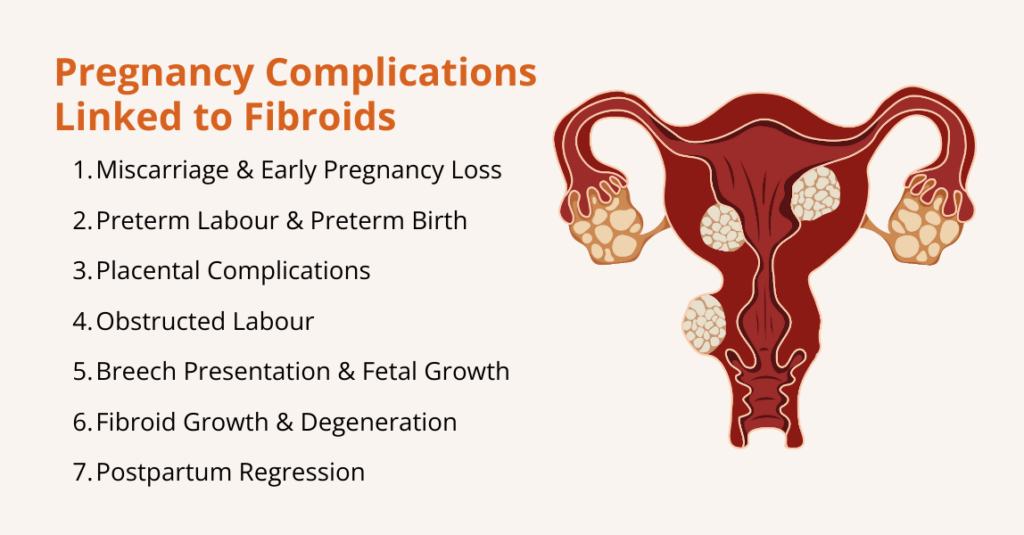
    Here are some of the ways fibroids can influence pregnancy:

    1.  Miscarriage and Early Pregnancy Loss

    Fibroids, particularly submucosal lesions, are associated with an increased risk of miscarriage.

    A meta‑analysis pooling data from more than 237,000 participants found that women with fibroids had a higher risk of miscarriage than those without fibroids (relative risk RR ≈ 4.5, with miscarriage rates 13.42 % vs. 2.84 % in controls).

    The risk is highest when fibroids distort the uterine cavity, because the altered blood supply and mechanical interference impair implantation and early placental development.

    2. Preterm Labour and Preterm Birth

    Large or multiple fibroids can irritate the uterus and trigger contractions, leading to preterm labour.

    A study reported that preterm birth occurred in 12.85 % of pregnant patients with fibroids versus 9.43 % of controls; after adjusting for confounders, fibroids remained associated with preterm birth.

    Another study estimated that 10 %–30 % of pregnant women with fibroids develop obstetric complications such as preterm labour. Also, premature uterine contractions may be due to local inflammation, degenerating fibroids, or increased uterine irritability.

    3. Placental Issues

    Fibroids can interfere with placentation. If a fibroid is located near the placenta, it may lead to:

    • Placenta Previa: The placenta covers the cervix, obstructing the birth canal.
    • Placental Abruption: Premature separation of the placenta. The meta‑analysis found an elevated risk of placental abruption in women with fibroids.
    • Placenta Accreta Spectrum: Fibroids may increase the likelihood of abnormal placental attachment; however, the data remain limited.

    4. Need for Caesarean Delivery

    Large intramural or subserosal fibroids can physically obstruct the birth canal, preventing the fetal head from descending. Thus, fibroids raise the odds of cesarean delivery.

    For example, fibroids growing low in the uterus or near the cervix may block the birth canal, preventing the baby’s head from descending.

    Others may distort the uterus, making it harder for the baby to settle into a head-down position and leading to breech or transverse presentations.

    5. Breech Presentation and Fetal Growth Restriction

    Fibroids, especially those in the lower uterine segment, can distort the uterine cavity and limit space for the fetus. Research highlights that breech presentation or other fetal malposition is more common when fibroids are present, likely because fibroids can alter the shape of the uterine cavity.

    Similarly, in analyses comparing by fibroid size, larger fibroids conferred especially high risk of breech presentation and placenta previa.

    However, the overall effect on fetal growth remains uncertain because many pregnancies with fibroids result in normal birth weights.

    6. Fibroid Growth and Degeneration during Pregnancy

    Fibroids behave unpredictably during pregnancy.

    A study describes a woman in early pregnancy who arrived with severe abdominal pain, which imaging later confirmed was caused by a degenerating fibroid. This degeneration occurs when a fibroid outgrows its blood supply, leading to tissue ischemia and necrosis.

    7. Postpartum Regression

    After delivery, many fibroids shrink as hormonal levels decline and the uterus involutes.

    A case series found that fibroids decreased in size in 7% of women postpartum and that their volume could shrink by 5% within 6 months.

    Ongoing breastfeeding may further promote fibroid regression. Another observational study reported that 37 % of fibroids disappeared postpartum and that breastfeeding was associated with fibroid regression.

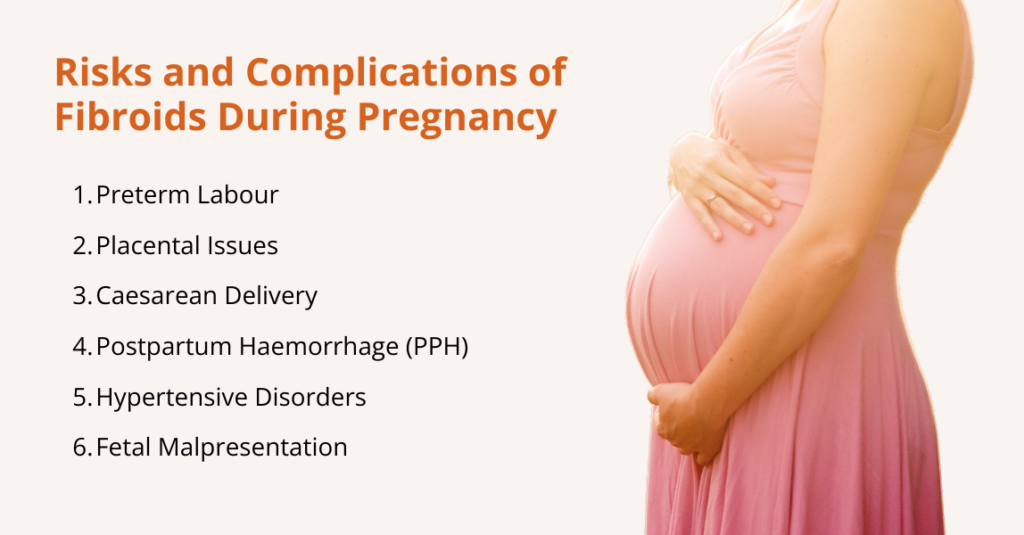
    What are the Risks and Complications of Fibroids during Pregnancy

    what are the risks and complications of fibroids during pregnancy

    While many women with fibroids have healthy pregnancies, these benign growths can sometimes create challenges as the uterus expands and hormonal changes intensify.

    Here are the key complications associated with fibroids during pregnancy:

    1. Premature Rupture of Membranes

    Fibroids can cause uterine irritability, increasing the frequency of contractions and elevating the risk of preterm labour.

    The high‑risk pregnancy resource notes that adverse outcomes such as preterm labour and premature rupture of membranes (PROM) are more common when fibroids exceed 10 cm.

    The meta‑analysis reported that fibroids were associated with both preterm birth and preterm PROM. Continuous antenatal care with ultrasound monitoring can help detect early cervical changes and manage preterm labour, sometimes using medications such as tocolytics to delay delivery.

    2. Heavy Bleeding Due to Placental Problem

    Placental problems can cause heavy bleeding and require early delivery or caesarean section. Women with placenta previa are more likely to deliver via caesarean section.

    Research shows that placenta previa may manifest as painless vaginal bleeding, often requiring bed rest or early delivery; placental abruption presents with painful bleeding and is an obstetric emergency.

    Importantly, fibroids located near the placenta or in the lower uterine segment increase these risks.

    3. Obstructed Labour

    Large fibroids can obstruct the cervix or lower uterine segment. When the fibroid blocks the birth canal, a caesarean delivery becomes necessary.

    Additionally, fibroids may cause dystocia (slow cervical dilation), prolonging labour and increasing the likelihood of operative delivery.

    The High‑Risk Pregnancy Information site states that a caesarean section is six times more likely in women with fibroids, highlighting the need for careful intrapartum planning.

    4. Postpartum Haemorrhage (PPH)

    PPH is excessive bleeding after delivery, often due to uterine atony (failure of the uterus to contract). Fibroids can impede uterine contraction, particularly if they distort the uterine muscle or occupy the uterine wall.

    The meta‑analysis found that postpartum haemorrhage occurred in 10.10 % of women with fibroids compared with 3.96 % in controls. Obstetric teams anticipate this risk and prepare for active management of the third stage of labour in women with known fibroids.

    5. Preeclampsia and Other Hypertensive Disorders

    Emerging evidence indicates a modestly increased risk of preeclampsia (new‑onset hypertension with end‑organ damage) in women with fibroids. The meta‑analysis reported an association between fibroids and preeclampsia.

    Although the absolute increase is small, pregnant women with fibroids should be monitored for blood pressure changes.

    6. Fetal Malpresentation and Growth Issues

    Fibroids can affect how a baby positions itself in the uterus, sometimes leading to malpresentation, when the baby is not head-down at the time of delivery.

    For example, large fibroids or those located near the lower uterine segment can physically block the baby from turning into the optimal head-first position, increasing the likelihood of breech or transverse presentation.

    In addition, fibroids may influence fetal growth. Large or multiple fibroids can reduce the space available for the baby to grow or interfere with blood flow to the placenta, which can occasionally lead to fetal growth restriction (FGR).

    While not all fibroids cause these issues, monitoring fetal position and growth via ultrasounds is crucial to ensure timely interventions if complications arise.

    How to Diagnose Fibroids during Pregnancy?

    how to deal with fibroids during pregnancy

    Diagnosing fibroids during pregnancy can be challenging because the growing uterus often makes physical examination unreliable.

    As a result, healthcare providers rely primarily on imaging to identify fibroids, determine their size, location, and number, and monitor any changes throughout pregnancy.

    Here are the main diagnostic approaches:

    • Ultrasound (US): Ultrasound is the primary tool for detecting fibroids during pregnancy. Using a transabdominal or transvaginal probe, providers can visualize the uterus, count fibroids, measure their size, and monitor growth. Ultrasound is safe because it uses sound waves rather than radiation.
    • Magnetic Resonance Imaging (MRI): MRI provides detailed images of uterine tissue when ultrasound is unclear, for example, with large fibroids or fibroids behind the placenta.
    • Other Tests: Techniques like X-ray, CT scans, hysterosalpingography, and sonohysterograms exist but are rarely used during pregnancy due to radiation exposure.
    • Surgical Diagnosis: In rare cases when imaging cannot clearly differentiate fibroids from other uterine masses, laparoscopy or hysteroscopy may be performed to visualize the uterus directly. These procedures are generally avoided during pregnancy unless absolutely necessary.

    Monitoring Fibroids during Pregnancy

    Once diagnosed, fibroids are monitored regularly. Obstetricians often perform ultrasounds at 20 weeks, 32 weeks, and sometimes earlier if symptoms (pain, bleeding, rapid uterine growth) arise.

    They assess fibroid size, location relative to the cervix and placenta, and signs of degeneration. Given this, frequent imaging helps detect complications such as placental abruption or fetal growth restriction in a timely manner.

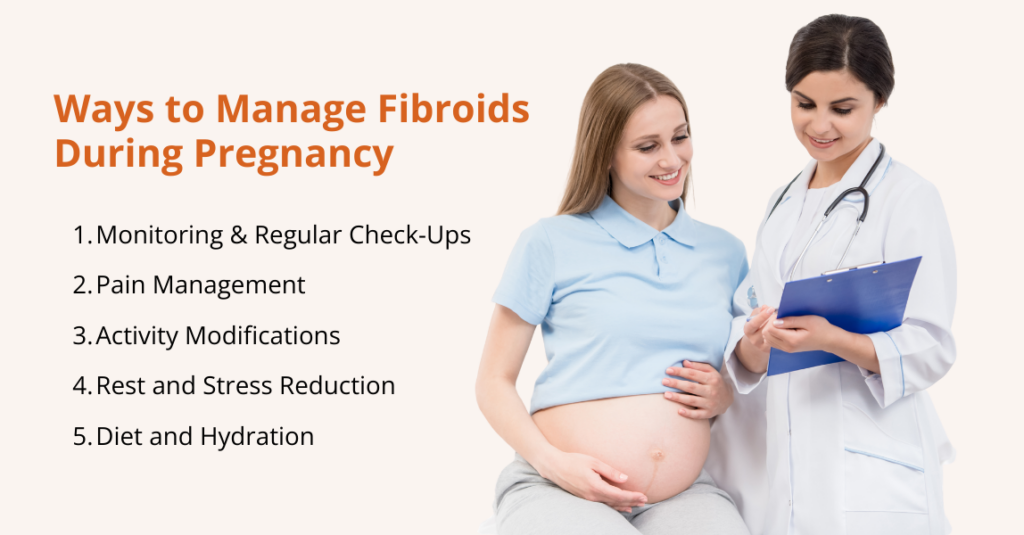
    How to Deal with Fibroids during Pregnancy?

    Managing fibroids during pregnancy focuses on monitoring for complications, controlling pain, modifying activities, and maintaining overall health.

    Here are some of the most common ways to deal with fibroids during pregnancy:

    Monitoring and Regular Check-Ups

    Once fibroids are diagnosed during pregnancy, ongoing monitoring is essential to ensure both maternal and fetal health.

    Regular check-ups help track fibroid growth, assess fetal development, and identify potential complications early. Here’s how:

    • Routine Ultrasounds: These are performed periodically to track fibroid size, monitor fetal growth, and detect issues such as placental problems or cervical shortening.
    • MRI when indicated: If ultrasound images are unclear, particularly with large, multiple, or posteriorly located fibroids, MRI can provide more detailed information without radiation exposure.
    • Fetal Growth Assessments: Serial ultrasounds measure fetal size to identify intrauterine growth restriction (IUGR). If growth concerns arise, obstetricians may adjust delivery planning to ensure optimal outcomes.
    • Cervical Length Monitoring: Transvaginal ultrasounds measure cervical length, and if the cervix is short, treatments such as progesterone supplementation or cervical cerclage may be recommended.

    Regular monitoring ensures that both the mother and baby are closely observed throughout pregnancy, allowing healthcare providers to respond quickly to any complications related to fibroids.

    Pain Management

    Managing pain safely is crucial to protect both the mother and the developing baby. Treatment strategies should balance effective relief with fetal safety.

    If pain or discomfort occurs, acetaminophen (paracetamol) is one of the safest options. According to the American College of Obstetricians and Gynecologists (ACOG), when used as needed, at the lowest effective dose, and for the shortest possible time, acetaminophen remains the preferred pain and fever medicine in pregnancy.

    Untreated pain or fever itself can pose risks to a developing baby, so controlling pain wisely matters.

    Also, the U.S. Food and Drug Administration (FDA) warns that using NSAIDs after about 20 weeks can harm the baby’s kidneys, reduce the fluid around the baby (amniotic fluid), and lead to serious complications.

    Because of these risks, NSAIDs like ibuprofen or naproxen should generally be avoided after mid‑pregnancy, unless a doctor says otherwise.

    For mild pain, non‑medication options can also help. Simple measures, such as warm compresses, warm baths or showers, a pregnancy support belt, gentle stretching or prenatal yoga, and rest, can safely ease discomfort.

    Activity Modifications

    Making thoughtful adjustments to daily activities can help reduce discomfort from fibroids and support a healthy pregnancy.

    Gentle modifications, along with proper rest and nutrition, play a key role in managing symptoms safely. Here are the practical tips for activity and lifestyle:

    • Low-impact exercise: Avoid heavy lifting or high-impact workouts; choose walking, prenatal yoga, or swimming.
    • Rest and stress management: Use mindfulness, meditation, or prenatal massage to reduce discomfort.
    • Hydration and diet: Eat a high-fiber, nutrient-rich diet and stay hydrated to prevent constipation and pelvic pressure.

    These simple changes help ease symptoms and promote maternal and fetal well-being.

    Rest and Stress Reduction

    Managing stress and getting adequate rest are important for easing fibroid-related discomfort during pregnancy.

    • Relaxation Techniques: Practices such as prenatal yoga, deep breathing exercises, and mindfulness can help reduce stress and relieve pelvic or abdominal discomfort caused by fibroids.
    • Adequate Rest: Prioritizing sufficient rest allows the body to recover, lowers physical strain, and helps minimize pain, especially when fibroids contribute to pelvic pressure.

    Incorporating these habits can improve overall comfort and support a healthier pregnancy experience.

    Diet and Hydration

    Good nutrition and plenty of fluids can ease fibroid-related discomfort and support a healthy pregnancy.

    • Balanced diet: Eat regular, nutrient-rich meals with plenty of fiber, fruits, vegetables, legumes, and whole grains, plus lean protein and healthy fats. Fiber helps prevent constipation, which can worsen pelvic pressure from fibroids.
    • Staying hydrated: Drink water throughout the day to support digestion and circulation; staying well hydrated also helps reduce constipation and general discomfort.

    Together, a fiber-rich diet and consistent hydration help manage everyday stress and support overall maternal and fetal health.

    Frequently Asked Questions (FAQs)

    Do fibroids affect pregnancy?

    No. Most women with fibroids have normal pregnancies, particularly when fibroids are small or located away from the uterine cavity. The High‑Risk Pregnancy Information site estimates that only 10 %–30 % of pregnant women with fibroids develop complications. Nevertheless, because complications can be serious, women with fibroids should have enhanced prenatal care.

    Can fibroids cause pain during pregnancy?

    Yes, fibroids can cause pain during pregnancy, and it is the most common symptom associated with these growths. Pain often appears in the second or third trimester when fibroids grow faster than their blood supply, leading to a condition called red degeneration (also known as carneous degeneration). Fibroid pain may also result from mechanical pressure on nearby organs or from torsion of a pedunculated fibroid. Most mild pain can be safely managed with acetaminophen and rest. However, severe or persistent abdominal pain should prompt immediate medical evaluation, as it may indicate complications such as fibroid degeneration, placental issues, or preterm labour.

    Do fibroids grow during pregnancy?

    Yes, fibroid growth can occur during pregnancy, but patterns vary depending on the size and location of the fibroid. Many fibroids tend to grow in the first trimester due to rising estrogen and progesterone levels. Research shows that small fibroids (less than 1 cm) often increase in volume, medium-sized fibroids usually remain stable, and large fibroids (3 cm or more) may actually shrink. Interestingly, about 10–12% of fibroids regress spontaneously during pregnancy.

    Do fibroids shrink after pregnancy?

    Yes, many fibroids shrink postpartum. A case series found that fibroid size decreased in 72 % of women after giving birth and that fibroid volume could decrease by 50 % within six months. The postpartum uterus contracts to its pre‑pregnancy size, and hormonal changes (lower estrogen and progesterone levels) contribute to fibroid regression. Breastfeeding may enhance regression. However, some fibroids persist or regrow over time, so postnatal follow‑up is important.

    Conclusion

    Fibroids are common benign tumors that often coexist with pregnancy. For the majority of women, fibroids will not significantly impact fertility or pregnancy outcome.

    Nevertheless, fibroids can increase the risk of miscarriage, preterm labour, placental complications, caesarean delivery, breech presentation, and postpartum haemorrhage.

    Comprehensive prenatal care, including regular ultrasounds, growth monitoring, and blood pressure screening, allows obstetricians to detect complications early and implement appropriate interventions.

    The safest pain management strategy during pregnancy is to use acetaminophen judiciously after consulting a healthcare professional; NSAIDs should generally be avoided after 20 weeks because they can reduce amniotic fluid and harm the fetus.

    Non‑pharmacologic measures such as rest, gentle exercise, hydration, and stress reduction can help alleviate discomfort. Most fibroids regress after birth, especially with breastfeeding.

    Given this, women with fibroids should work closely with their healthcare team to develop a personalized care plan.

  • Swollen Knee: Causes, Symptoms, Treatment, & Prevention

    Swollen Knee: Causes, Symptoms, Treatment, & Prevention

    A swollen knee, often called knee effusion, means extra fluid has collected inside the joint or in the tissues that surround it.

    Because the knee is a large hinge joint that supports your body weight and allows a wide range of motion, even mild swelling can be painful and make walking or bending difficult.

    Swelling may occur suddenly after a traumatic injury, or it can develop gradually as the result of chronic inflammation or degenerative disease.

    Although swelling itself is not a diagnosis, it is an important warning sign that something else is wrong. Causes range from minor sprains and ligament tears to more serious problems such as infections or autoimmune conditions.

    In the United States, knee injuries account for over half a million emergency department visits each year, and the lifetime prevalence of knee swelling is estimated at 27%. These numbers show how common knee problems are and why prompt attention matters.

    This guide walks through what a swollen knee is, its common causes and risk factors, symptoms to watch for, possible complications, how clinicians diagnose it, evidence-based treatment options, and practical steps you can take to reduce the risk of recurrence.

    What is a Swollen Knee?

    Knee swelling happens when extra fluid builds up in or around the knee joint. The knee connects your thigh bone (femur) to your shin bone (tibia) and kneecap (patella).

    It’s the largest joint in your body, supported by cartilage, muscles, ligaments, and nerves. Because so many structures work together, anything that irritates or injures the knee can lead to swelling.

    Swelling can occur after an injury or develop due to an underlying health condition affecting the tissues around the joint.

    When your knee is swollen, you may also notice:

    • Knee pain
    • Stiffness or a tight feeling
    • Redness or discoloration
    • Warmth or heat around the joint

    Most mild cases can be managed at home with rest, ice, elevation, and over-the-counter (OTC) medicine.

    However, you should see a healthcare provider if the swelling follows a fall or sports injury, doesn’t improve after a few days, causes severe pain, or makes it hard to move your knee.

    What Causes a Swollen Knee?

    what causes a swollen knee

    Since swelling is a symptom, not a condition in itself, it can result from a wide range of underlying conditions.

    Here are the key causes of a swollen knee:

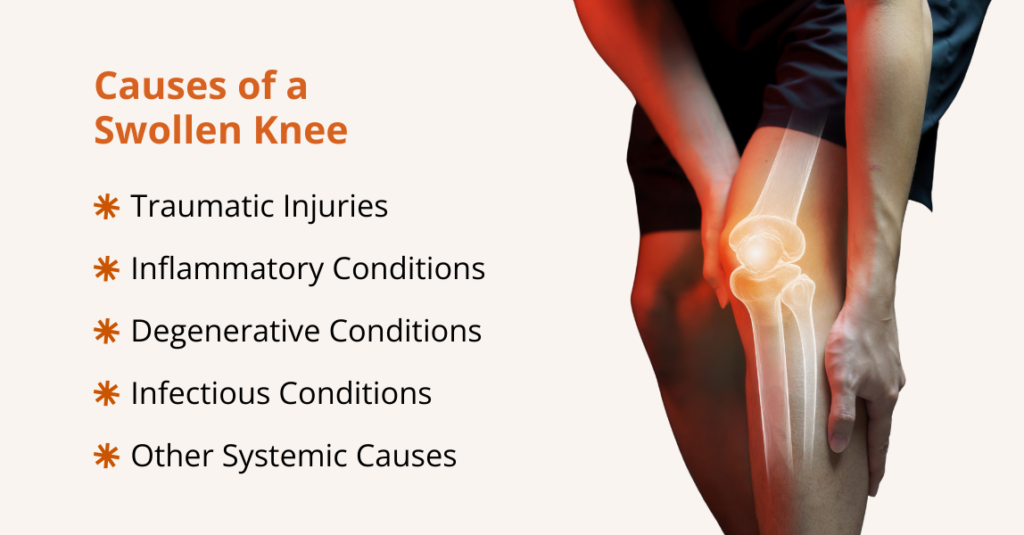
    1. Traumatic Injuries

    Trauma is a leading cause of acute knee swelling. Injuries often occur during sports, falls, or motor vehicle collisions. When soft tissues or bone structures in the knee are damaged, blood vessels rupture, and synovial membrane irritation leads to effusion.

    These include:

    • Ligament Injuries

    Ligament tears, especially of the anterior cruciate ligament (ACL), are a leading cause of acute swelling. ACL injuries often happen with a sudden pivot or landing, and people commonly report an audible “pop,” sharp pain, rapid swelling within hours, and a feeling that the knee will give way.

    A systematic review indicates that ACL tears often accompany bone bruises, meniscus damage, or cartilage injury, all of which can lead to bleeding or joint fluid build-up (hemarthrosis), a common cause of swelling.

    Whereas posterior cruciate ligament (PCL) injuries are less common but produce similar symptoms: pain, rapid swelling, stiffness, and difficulty walking.

    • Meniscal Tears

    The menisci are crescent-shaped cartilage cushions between the femur and tibia.

    A twisting injury can tear a meniscus, causing pain, stiffness, swelling, difficulty fully straightening the knee, and occasional locking or catching.

    • Fractures

    Breaks involving the patella, distal femur, or proximal tibia can lead to substantial swelling because bone bleeding often fills the joint space (hemarthrosis).

    If the patient cannot bear weight or the leg looks deformed, prompt X-rays or CT scans are essential.

    • Dislocations

    Patellar dislocation, when the kneecap slips out of its groove, is relatively common and causes sudden pain, visible deformity, and swelling.

    2. Inflammatory Conditions

    Inflammatory arthritides can provoke episodic or chronic knee swelling. They result from autoimmune processes or crystal deposition within the synovium.

    • Rheumatoid Arthritis (RA)

    Rheumatoid arthritis is a systemic autoimmune disease that causes chronic inflammation of the synovial lining. Although it usually starts in the small joints of the hands and feet, larger joints, including the knee, are frequently affected.

    Thus, persistent synovitis causes swelling, warmth, pain, stiffness, and gradual joint damage.

    • Gout and Pseudogout (Crystal Arthropathies)

    Gout is caused by the deposition of monosodium urate crystals in joints due to hyperuricemia. While the big toe is the classic site, gout can also affect the knees, ankles, and wrists.

    Whereas Pseudogout, also called calcium pyrophosphate deposition disease (CPPD), involves deposition of calcium pyrophosphate crystals in articular cartilage and soft tissues. Flares mimic gout but are more likely to involve the knees and wrists.

    • Septic Arthritis

    Septic arthritis is an infection of the joint space, most commonly caused by bacteria. Pathogens enter the knee through hematogenous spread, direct inoculation (trauma or surgery), or extension from osteomyelitis.

    Research shows that if a knee injury with hemarthrosis is not treated promptly or properly, patients face a significantly higher risk of developing knee osteoarthritis over the next 10 to 12 years.

    The knee becomes extremely painful, swollen, warm, and difficult to move, and patients often have fever or systemic signs of infection.

    • Viral Arthritis

    Acute viral infections can cause transient arthritis due to immune activation and direct viral invasion. Common culprits include parvovirus B19, hepatitis B and C, Epstein–Barr virus, chikungunya, rubella, and arthropod‑borne viruses.

    Viral arthritis is acute, generalized inflammation of joints triggered by a broad range of viruses; it presents with joint pain, swelling, fever, rash, and fatigue, and usually resolves spontaneously once the infection is cleared.

    3. Degenerative Conditions

    Degenerative processes gradually erode joint structures, leading to chronic swelling.

    • Osteoarthritis

    Osteoarthritis is the most common cause of chronic knee swelling. It develops as cartilage breaks down and the joint becomes inflamed.

    OA affects over 32 million U.S. adults and is most common in people aged 55–64, though many younger adults are also affected.

    Typical symptoms include gradual pain that worsens with activity, stiffness after rest, creaking sensations, and occasional fluid buildup.

    • Patellofemoral Pain Syndrome (PFPS)

    Often called “runner’s knee,” PFPS causes pain at the front of the knee due to irritation in the patellofemoral joint.

    People may notice a dull ache, discomfort with running or climbing stairs, pain after sitting, and sometimes mild swelling after activity. Also, overuse, muscle imbalance, poor alignment, and improper footwear are common triggers.

    • Bursitis

    The knee contains several small bursae that reduce friction. Repetitive kneeling, irritation, or infection can inflame these sacs, leading to prepatellar or infrapatellar bursitis. Symptoms include localized swelling, tenderness, and warmth.

    4. Infectious Conditions

    In addition to septic arthritis and bursitis, infections caused by atypical organisms, such as fungi or mycobacteria, can cause joint swelling, especially in people with weakened immune systems.

    These infections may develop more slowly or present with less typical symptoms, so prompt joint aspiration, culture, and targeted (culture-directed) treatment are essential to prevent ongoing damage.

    5. Other Systemic Causes

    Some systemic diseases can lead to knee swelling through immune or metabolic processes.

    • Systemic Lupus Erythematosus (SLE)

    SLE is an autoimmune condition that can affect multiple organs, including the joints. Around 95% of patients experience joint pain or arthritis, often involving large joints like the knees.

    • Lyme Disease

    Lyme arthritis is caused by infection with Borrelia burgdorferi, transmitted via tick bites. Untreated Lyme disease often leads to recurrent knee swelling, with about 60% of cases developing arthritis.

    Most patients respond to a 30-day course of oral antibiotics like doxycycline or amoxicillin, while persistent cases may require intravenous antibiotics.

    • Hyperuricemia (Gout)

    High uric acid levels, whether from genetics, metabolic syndrome, or reduced kidney excretion, can trigger gouty flares, including in the knee.

    What are the Symptoms of a Swollen Knee?

    what are the symptoms of a swollen knee

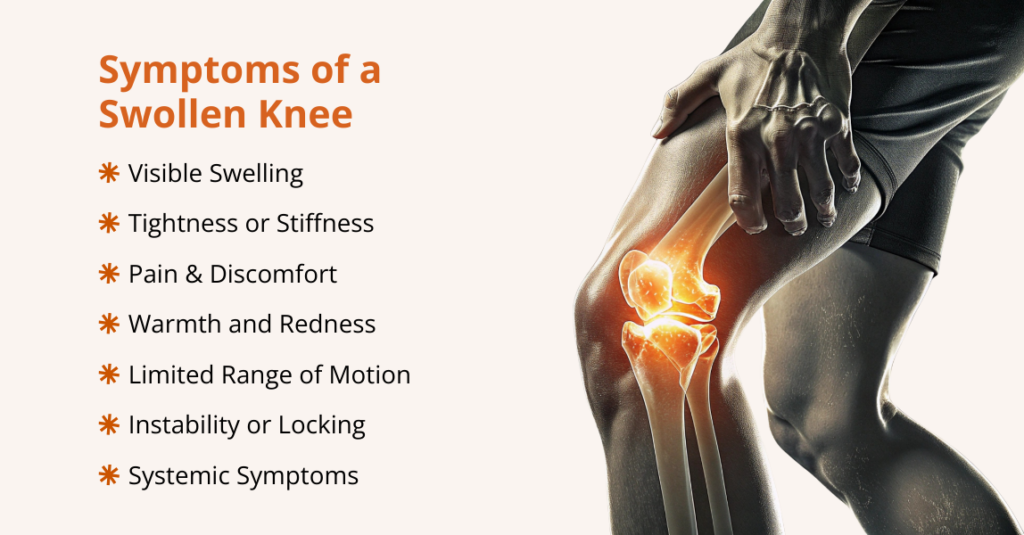
    The signs of a swollen knee can vary depending on the cause, but common symptoms include:

    • Visible swelling around the kneecap or general enlargement of the joint.
    • Tightness or stiffness, often with a feeling of fullness or pressure.
    • Pain, ranging from mild discomfort to severe throbbing, especially when bearing weight or moving the knee.
    • Warmth and redness if inflammation or infection is present.
    • Limited range of motion, making it difficult to fully bend or straighten the knee.
    • Instability or locking, particularly with mechanical injuries like ligament or meniscus tears.
    • Systemic symptoms such as fever, chills, or fatigue, in cases of infection or autoimmune disease.

    Because swelling can hide underlying injuries or joint damage, any persistent or severe knee effusion should be evaluated by a healthcare professional.

    What are the Common Risk Factors of a Swollen Knee?

    Certain factors increase the likelihood of knee swelling. These include:

    • Age: Older adults are more susceptible to degenerative conditions, such as knee osteoarthritis.
    • Previous Knee Injuries: A history of fractures, ligament tears, or meniscal injuries predisposes to future swelling due to residual instability and cartilage damage.
    • Obesity: Excess body weight increases mechanical load on the knee, accelerating cartilage wear and predisposing to osteoarthritis.
    • Physical Activity: High‑impact sports or occupations that involve repetitive kneeling, squatting, or twisting increase injury risk. Conversely, insufficient physical activity weakens the muscles that support the knee.
    • Medical Conditions: Rheumatoid arthritis, gout, pseudogout, lupus, psoriasis, and metabolic diseases can cause recurrent joint inflammation.
    • Genetics: Family history of osteoarthritis or connective tissue disorders may increase susceptibility.

    What are the Complications of a Swollen Knee?

    what are the complications of a swollen knee

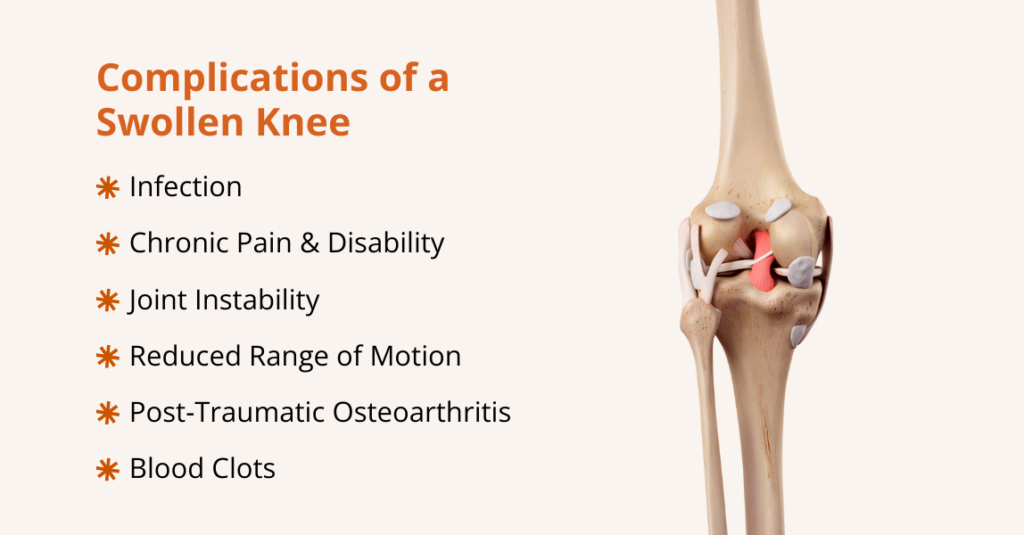
    Untreated or chronic knee effusion can lead to several complications:

    • Infection: Delayed diagnosis of septic arthritis allows bacteria to destroy cartilage and enter the bloodstream, potentially causing sepsis.
    • Chronic Pain and Disability: Persistent swelling from osteoarthritis or inflammatory arthritis results in ongoing pain, reduced mobility, and diminished quality of life.
    • Joint Instability: Ligament injuries that cause effusion may lead to ongoing instability and increased risk of recurrent injuries.
    • Reduced Range of Motion: Effusion and synovial thickening limit joint motion, leading to contractures.
    • Post‑Traumatic Osteoarthritis: Long‑standing swelling after trauma accelerates cartilage degeneration and can lead to secondary osteoarthritis.
    • Blood Clots (Deep Vein Thrombosis): Immobilization and inflammatory states increase the risk of venous thromboembolism.

    How to Diagnose a Swollen Knee?

    You can often tell a knee is swollen by comparing it to the other side: a swollen knee looks puffy or larger, the skin may appear shiny or stretched, and the joint can feel warm, tight, or painful, especially when you try to bend or straighten the leg.

    You may also notice uneven contours, reduced motion, or a sense of pressure or fullness inside the joint.

    Healthcare providers usually follow a stepwise approach to diagnose a swollen knee:

    1. Clinical Evaluation

    Diagnosing a swollen knee starts with a detailed history and physical exam:

    • History: Clinicians ask about the onset (sudden or gradual), prior injuries or infections, activity level, medications, comorbidities, and symptoms such as fever or rash.
    • Inspection & Palpation: The knee is checked for asymmetry, bruising, deformity, warmth, tenderness, effusion, and patellar mobility. Joint line tenderness is also assessed.
    • Range of Motion (ROM) & Special Tests: Active and passive ROM are compared to the other knee. Specific tests, such as the Lachman (ACL), posterior drawer (PCL), McMurray (meniscus), and patellar apprehension tests, help pinpoint injuries.

    2. Imaging Studies

    Imaging helps confirm diagnoses and assess structural damage:

    • X‑Ray: First‑line imaging to evaluate fractures, degenerative changes, and patellar alignment.
    • Ultrasound: Useful for detecting joint effusions, guiding aspirations, and evaluating bursitis or soft tissue injuries.
    • Magnetic Resonance Imaging (MRI): Gold standard for visualizing ligaments, menisci, cartilage, and bone marrow lesions. MRI can detect occult fractures, bone contusions, and synovial proliferation.
    • Computed Tomography (CT): Provides detailed bone images for complex fractures or preoperative planning.

    3. Arthrocentesis (Joint Aspiration)

    When the etiology is unclear or infection is suspected, joint aspiration is invaluable. Under sterile technique, a needle is inserted into the joint to withdraw fluid.

    The fluid is analyzed for color, clarity, viscosity, white cell count, crystals, and microorganisms. This distinguishes inflammatory from non‑inflammatory effusions, identifies septic arthritis, and diagnoses gout or pseudogout.

    Therapeutically, removing fluid can relieve pressure and improve mobility. Intra‑articular corticosteroid injection may be performed concurrently for inflammatory conditions.

    4. Laboratory Tests

    The following blood tests can aid in diagnosis:

    • Complete blood count (CBC) and C‑reactive protein (CRP)/Erythrocyte sedimentation rate (ESR)
    • Uric Acid Test
    • Rheumatoid Factor (RF) and Anti‑CCP
    • Antinuclear Antibody (ANA)
    • Culture and Gram Stain

    Swollen Knee Treatment Options

    Treatment for a swollen knee depends on the underlying cause, the severity and duration of symptoms, and other factors.

    Mild or short-term swelling from minor injuries can often be managed at home. Still, persistent, recurrent, or severe swelling may require medical evaluation and targeted interventions, or surgical options may be considered to address the issue.

    At home

    For many minor injuries and mild inflammation, conservative management suffices:

    • Rest: Avoid activities that worsen pain; short periods of limited weight‑bearing and the use of crutches may be necessary.
    • Ice: Apply cold packs for 15–20 minutes every few hours during the first 48–72 hours to reduce swelling.
    • Compression: Elastic bandages or sleeves help limit swelling; ensure they are not too tight.
    • Elevation: Keeping the knee above heart level assists venous return and reduces edema.
    • Non‑steroidal Anti‑Inflammatory Drugs (NSAIDs): Ibuprofen or naproxen relieve pain and inflammation. However, caution is needed in patients with kidney disease or gastrointestinal ulcers.
    • Activity Modification and Bracing: Temporarily avoiding high‑impact activities and using a knee brace can stabilize the joint during healing.
    • Physical Therapy: A structured rehabilitation program restores range of motion, strengthens surrounding muscles, improves balance, and reduces the risk of recurrence.

    Minimally Invasive Procedures

    When conservative measures fail, minimally invasive interventions may be considered:

    • Corticosteroid Injections: Intra‑articular corticosteroids reduce inflammation and provide rapid symptom relief for conditions like rheumatoid arthritis, gout, or OA flares. However, repeated injections may damage cartilage or increase the risk of infection.
    • Platelet‑Rich Plasma (PRP) Injections: PRP, derived from the patient’s own blood, contains growth factors that may promote tissue healing. Emerging evidence suggests benefit in early osteoarthritis and chronic tendon injuries.
    • Hyaluronic Acid (Viscosupplementation): Injecting hyaluronic acid aims to improve joint lubrication in osteoarthritis. Some patients experience modest pain relief lasting several months.
    • Cryoablation: Freezing sensory nerves can provide longer‑lasting pain relief in chronic conditions. It may be considered in select patients after other therapies fail.

    Surgical Management

    Surgery is reserved for severe injuries or advanced disease:

    • Arthroscopic Surgery: Minimally invasive arthroscopy allows surgeons to repair or remove torn meniscal fragments, trim damaged cartilage, reconstruct ligaments (ACL or PCL), or remove loose bodies.
    • Open or Arthroscopic Fracture Fixation: Stabilizes displaced fractures to facilitate healing and early mobilization.
    • Synovectomy: Surgical removal of inflamed synovial tissue may be performed in refractory rheumatoid arthritis or pigmented villonodular synovitis.
    • Total Knee Replacement (Arthroplasty): Replaces the diseased joint surfaces with artificial implants. This procedure is considered when pain and swelling severely limit function and conservative treatments fail.

    Postoperative Care and Rehabilitation

    Following surgery, appropriate postoperative care is essential:

    • Pain Management: Multimodal analgesia (NSAIDs, acetaminophen, opioids, nerve blocks) and cryotherapy help control pain.
    • Early Mobilization: Guided by surgeons and physical therapists, patients begin gentle ROM exercises and weight‑bearing as tolerated to prevent stiffness and blood clots.
    • Physiotherapy: Progressive strengthening and endurance exercises restore function and reduce the risk of complications.

    How to Prevent a Swollen Knee?

    Although not all causes of knee swelling are preventable, adopting healthy habits reduces the risk:

    • Protective Equipment: Use knee pads during sports and occupations that involve frequent kneeling or contact.
    • Weight Management: Maintaining a healthy body weight reduces mechanical stress and lowers the risk of osteoarthritis.
    • Strength Training: Strengthening quadriceps, hamstrings, gluteal, and core muscles enhances joint stability.
    • Low‑Impact Exercise: Incorporate activities like swimming, cycling, or elliptical training that minimize joint stress while maintaining cardiovascular fitness.
    • Proper Technique: Learn proper form for sports and weight lifting to avoid sudden twisting or hyperextension injuries.
    • Stretching: Regular stretching of the quadriceps, hamstrings, and calf muscles maintains flexibility and reduces strain on the knee.
    • Early Management of Chronic Diseases: Prompt treatment of autoimmune diseases, metabolic syndrome, and gout reduces flare‑ups and joint damage.
    • Regular Monitoring: Individuals at high risk (athletes, older adults, and those with prior knee injuries) should undergo periodic medical evaluations to detect early changes.

    Frequently Asked Questions (FAQs)

    Can a swollen knee be dangerous?

    Yes. While many causes are benign, rapid swelling accompanied by fever, severe pain, or inability to bear weight may signal a fracture, ligament tear, or septic arthritis and should prompt immediate medical attention. Delay in treatment increases the risk of permanent damage and systemic infection.

    What can I do for a swollen knee at home?

    Follow the RICE protocol: rest, ice, compression, and elevation. Use NSAIDs for pain if safe. Avoid activities that exacerbate symptoms. However, if swelling lasts more than a few days or recurs frequently, see a healthcare provider.

    How long does it take for knee swelling to go down?

    The time it takes for knee swelling to go down depends on the cause and severity of the injury or condition. Mild swelling from minor strains or overuse may improve within a few days to a week with rest, ice, compression, and elevation. Whereas swelling from more significant injuries, such as ligament tears, fractures, or hemarthrosis, can take several weeks to months to resolve, especially if rehabilitation or medical treatment is required. Chronic conditions such as arthritis or gout may cause intermittent swelling that persists or recurs over time and often requires ongoing management to control inflammation.

    When should I worry about a swollen knee?

    You should worry about a swollen knee if it is sudden, severe, or persistent, or comes with warning signs. Seek urgent care if you have rapid swelling, inability to bear weight, severe pain, deformity, redness, warmth, fever, or numbness. See a doctor soon if swelling doesn’t improve after a few days, recurs, causes locking or instability, or is accompanied by systemic symptoms. Early evaluation helps prevent joint damage and identify serious causes such as infection, fractures, or ligament injuries.

    What happens if a swollen knee is left untreated?

    Ignoring persistent swelling can lead to complications such as cartilage degeneration, chronic instability, decreased range of motion, and, in cases of infection, joint destruction and sepsis.

    What does a swollen knee indicate?

    A swollen knee indicates that there is excess fluid in or around the joint, which is usually a sign of an underlying problem rather than a condition on its own. It can result from injuries (ligament tears, meniscus tears, fractures), degenerative changes (osteoarthritis), infections (septic arthritis, bursitis), inflammatory or autoimmune diseases (rheumatoid arthritis, lupus), or crystal deposits (gout, pseudogout). The swelling reflects inflammation, bleeding, or fluid buildup in the knee, and its cause determines the severity, associated symptoms, and treatment required.

    What does a swollen knee look like?

    A swollen knee usually appears larger or puffier than the other knee. The skin may look shiny, stretched, or tight, and the joint can feel warm to the touch. Swelling may cause uneven contours around the kneecap or along the joint line. In some cases, redness or bruising is visible, and the knee may appear stiff or slightly deformed. Swelling can make it difficult to fully bend or straighten the leg.

    Conclusion

    A swollen knee is a symptom with many possible causes, ranging from traumatic injuries such as ACL or meniscus tears, fractures, and patellar dislocations, to inflammatory conditions such as rheumatoid arthritis, gout, and pseudogout, to degenerative osteoarthritis in older adults.

    Serious infections like septic arthritis and bursitis require prompt recognition and treatment, while less common systemic causes include SLE, Lyme disease, and metabolic disorders.

    Early diagnosis and intervention are crucial to prevent complications, reduce pain, and preserve joint function. Therefore, proper evaluation, including history, physical exam, imaging, and lab tests, helps identify the underlying cause and guide effective treatment.

  • Urinary Incontinence: Types, Causes, Symptoms, & Treatments

    Urinary Incontinence: Types, Causes, Symptoms, & Treatments

    Urinary incontinence (UI) means leaking urine when you don’t want to. It is a common health problem that affects millions of people, especially women and older adults.

    Over 33 million Americans suffer from some type of urinary incontinence or bladder condition.

    Although it becomes more common with age, it is not a normal part of getting older. UI usually happens because the bladder cannot store urine properly, or the muscles that hold urine in become weak.

    Importantly, it can affect daily life. People may feel embarrassed, avoid social activities, or feel stressed. For caregivers and family, UI increases physical and emotional strain.

    But do you know what makes this problem even harder?

    There is a lot of stigma around urinary incontinence, which makes people think leaking urine is “normal” after childbirth or as they get older. This stops many from asking for help.

    In this blog, we’ll break down everything you need to know about urinary incontinence, its types, causes, symptoms, risks, diagnosis, treatment, and prevention.

    With the right information, people can get help sooner, and healthcare providers can offer better care.

    What is Urinary Incontinence?

    Urinary incontinence (UI) means losing control of your bladder and accidentally leaking urine.

    This can happen in different ways: you might leak a little when you cough or sneeze, feel a sudden urge to pee, or, in rare cases, lose full control of your bladder.

    Your urinary system includes several organs that work together to filter, store, and remove waste as urine. When everything is working normally, you can get to the bathroom on time.

    Incontinence happens when these organs or muscles don’t function properly. There are many reasons this can occur, and it can affect people at any stage of life.

    While it’s true that the risk increases with age, UI can affect anyone, young or old.

    The good news is that treatments are available to help manage it. With the right care, incontinence doesn’t have to disrupt your life or stop you from staying active.

    Types of Urinary Incontinence

    types of urinary incontinence

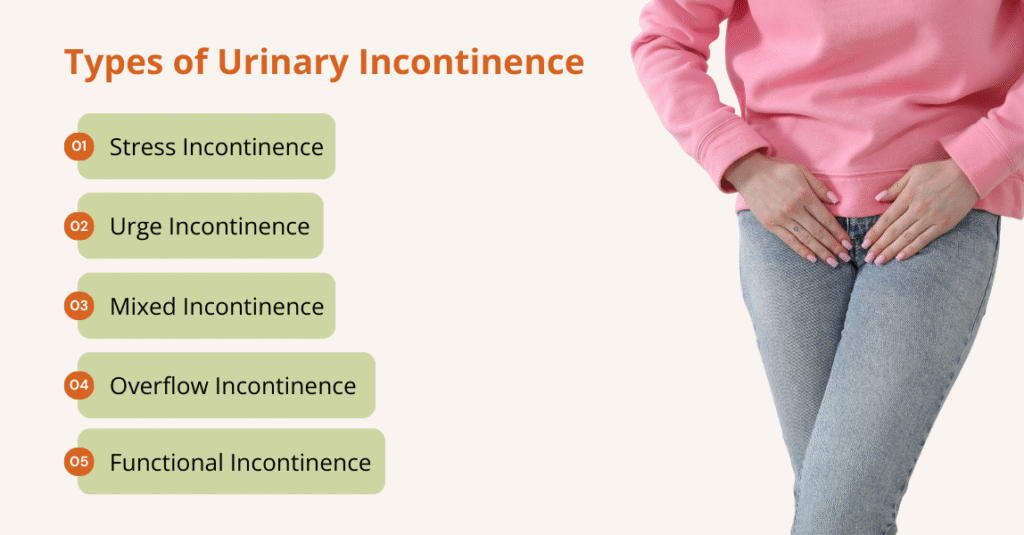
    There are several types of urinary incontinence, each with its own causes, symptoms, and triggers. Understanding which type you have is an important step in getting the right treatment.

    The main types of incontinence include:

    1. Stress Incontinence (SUI)

    Stress incontinence (SUI) occurs when the pelvic floor muscles and/or urethral sphincter cannot resist sudden increases in intra‑abdominal pressure. Activities such as coughing, sneezing, laughing, exercising, or lifting heavy objects cause involuntary leakage.

    In women, SUI commonly results from pregnancy, vaginal deliveries, and menopause, which weaken pelvic supports and the urethra. In men, it is frequently a postoperative complication of radical prostatectomy or transurethral resection of the prostate.

    SUI is the most prevalent type in women; a cross‑sectional analysis of U.S. adults found that stress incontinence occurred in about 37.5% of women reporting incontinence.

    2. Urge Incontinence (UUI)

    Urge incontinence (UUI) is characterized by a sudden, intense urge to urinate followed by uncontrollable leakage. It is commonly associated with overactive bladder (OAB), a syndrome of urinary frequency, urgency, and nocturia.

    Detrusor muscle overactivity is the principal mechanism; triggers include bladder inflammation or irritation (such as urinary tract infections), neurologic disorders (e.g., stroke, multiple sclerosis, Parkinson’s disease), and aging.

    According to NHANES data, UUI affects approximately 9–31% of U.S. women and 2.6–21% of men, with prevalence rising sharply after age 75.

    3. Mixed Incontinence (MUI)

    Mixed incontinence (MUI) combines both stress and urgency symptoms. Research shows that 20–30% of individuals with chronic incontinence have MUI.

    People may experience leakage with physical activity and a sudden urge to void. It is common in older women and is associated with the same risk factors as SUI and UUI.

    4. Overflow Incontinence (OFI)

    Overflow incontinence results from chronic urinary retention; the bladder becomes overdistended and leaks constantly or intermittently.

    Causes include obstruction of urine outflow (e.g., enlarged prostate, urethral stricture), neurologic diseases causing impaired detrusor contractility (e.g., diabetic neuropathy, spinal cord injury), or medications that affect bladder emptying.

    Also, overflow incontinence is potentially dangerous because it can lead to urinary tract infections and, in severe cases, kidney damage.

    5. Functional Incontinence (FUI)

    Functional incontinence arises when a person cannot reach the toilet or remove clothing in time.

    Causes are external to the urinary tract, mobility impairments, cognitive disorders such as dementia, visual impairment, or environmental barriers.

    While often overlooked, functional incontinence significantly contributes to incontinence in frail older adults and nursing home residents.

    What Causes Urinary Incontinence?

    what causes urinary incontinence

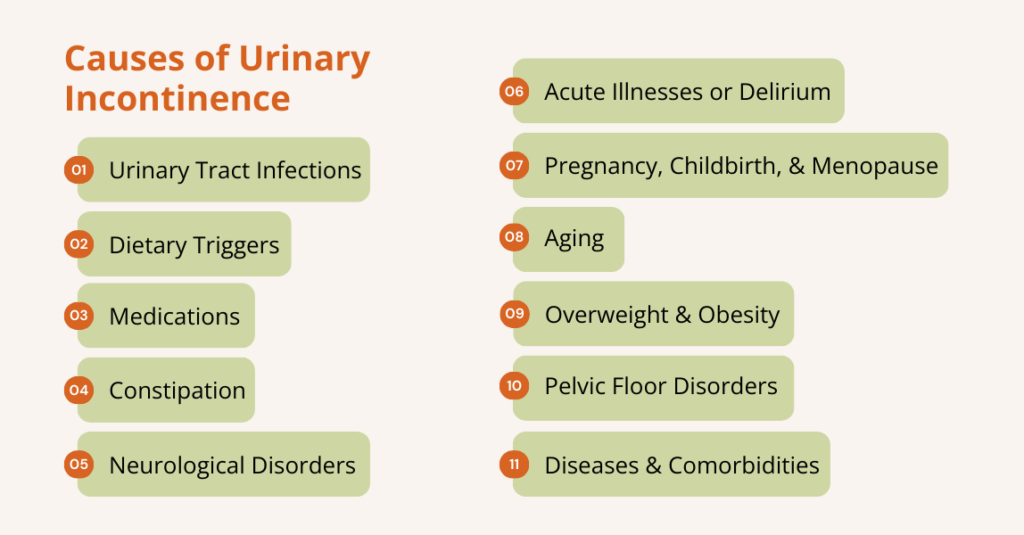
    Urinary Incontinence has multifactorial causes that can be temporary or persistent. Recognising the underlying cause is essential because treatment strategies vary.

    Temporary Causes

    • Urinary Tract Infections (UTIs): Infections can irritate the bladder, leading to sudden urges to urinate and leakage.
    • Dietary Triggers: Foods and drinks like caffeine, alcohol, spicy foods, citrus fruits, carbonated drinks, and artificial sweeteners can irritate the bladder. Drinking large amounts of fluid or taking diuretics can also overwhelm the bladder.
    • Medications: Diuretics increase urine production, while some sedatives, muscle relaxants, or anticholinesterase drugs can interfere with bladder or sphincter control.
    • Constipation: Hard or impacted stool can put pressure on the bladder and block urine flow.
    • Acute Illnesses or Delirium: Confusion from illness or delirium can make it harder to recognize the need to use the bathroom or get there in time.

    Persistent or Long-Term Causes

    Key persistent and long-term causes include:

    • Pregnancy, Childbirth, and Menopause

    Pregnancy and childbirth stretch and injure pelvic tissues and nerves. Vaginal delivery, instrument‑assisted birth, and having multiple births increase the risk of later SUI.

    During menopause, declining estrogen causes atrophy of the urethral mucosa and pelvic connective tissue, reducing urethral closure pressure.

    • Aging

    Age‑related changes include reduced bladder capacity, diminished urethral sphincter tone, and decreased estrogen in women.

    Detrusor muscle overactivity becomes more frequent with aging. Evidence from the CDC’s Rise for Health study shows that women with multiple chronic conditions had poorer bladder health than those with zero or one chronic condition.

    • Overweight and Obesity

    Excess body weight increases intra‑abdominal pressure and weakens pelvic floor muscles.

    Another cross‑sectional study from NHANES 2013‑2018 reported that the weight‑adjusted waist index (WWI) was positively associated with urge urinary incontinence; each unit increase in WWI was associated with a 20% increase in UUI risk.

    The study concluded that weight‑loss interventions could reduce UI in overweight women and clinically obese men.

    • Neurological Disorders

    Stroke, spinal cord injury, Parkinson’s disease, multiple sclerosis (MS), and diabetic neuropathy can disrupt neural control of the bladder and urethra.

    For example, MS and spinal cord injury can cause detrusor overactivity or detrusor-sphincter dyssynergia (outflow obstruction). Alzheimer’s disease and other dementias contribute to functional incontinence by impairing recognition of bladder signals or the ability to reach a toilet.

    • Pelvic Floor Disorders and Connective Tissue Weakness

    Pelvic organ prolapse, such as cystocele or rectocele, can displace the bladder and urethra. Loss of connective tissue strength (e.g., collagen disorders) predisposes to SUI. In men, benign prostatic hyperplasia (BPH) and prostate cancer can cause obstruction and overflow or stress UI.

    • Diseases and Comorbidities

    Diabetes, chronic obstructive pulmonary disease (COPD), chronic kidney disease, asthma, and cardiovascular disease contribute to UI risk. Obesity‑related metabolic syndrome amplifies risk through systemic inflammation and hormonal changes.

    A study using NHANES data found that sarcopenia was independently associated with increased risk of mixed and stress UI among women aged ≥60 and that sarcopenic obesity with a metabolically unhealthy phenotype conferred the highest risk.

    What are the Symptoms of Urinary Incontinence

    symptoms of urinary incontinence

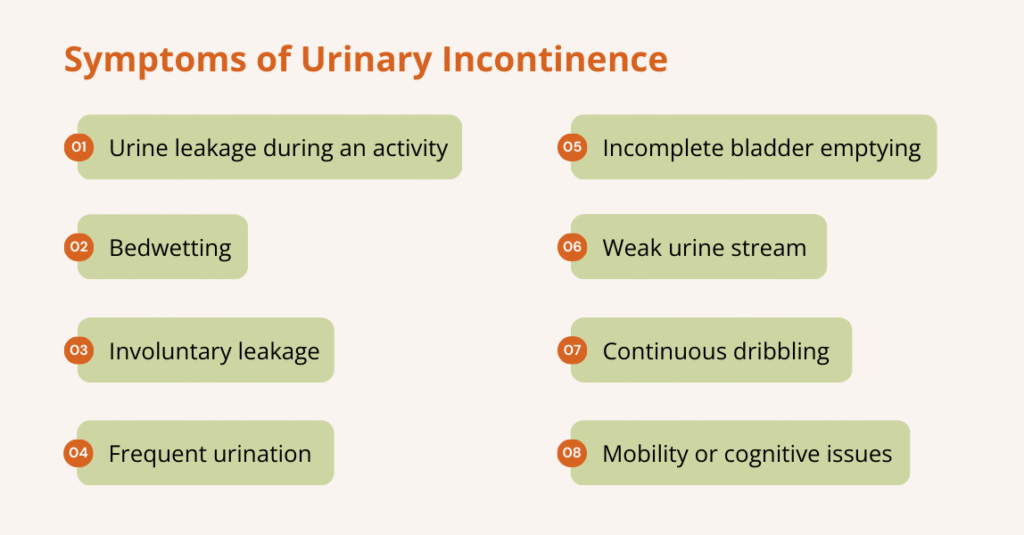
    The main symptom of urinary incontinence is leaking urine before reaching the bathroom or during activities. Leaks can be small or large, occasional or constant, and the exact symptoms often depend on the type of incontinence.

    Common symptoms may include:

    • Leaking urine during activities like coughing, sneezing, laughing, exercising, bending, or sexual activity
    • Bedwetting (enuresis)
    • Sudden, strong urge to urinate followed by involuntary leakage
    • Feeling that the bladder is full or unable to completely empty
    • Weak urine stream or needing to strain to urinate
    • Continuous dribbling or leakage without warning
    • Difficulty reaching the toilet in time due to mobility or cognitive issues

    Who Is More Likely to Develop Urinary Incontinence?

    Women are roughly twice as likely as men to experience UI; hormonal changes, pregnancy, and childbirth account for much of this difference.

    Moreover, age is a strong predictor; prevalence increases from 3.7% among people aged 65–69 to 10.6% among those aged ≥85.

    Race/ethnicity and socioeconomic status also influence risk; African American women have higher rates of urge or mixed UI, while white women are more likely to report stress UI.

    Also, higher body‑mass index, diabetes, COPD, hypertension, and neurological disorders increase risk. Similarly, a study shows that sarcopenia, sarcopenic obesity, and metabolic unhealthy obesity were shown to elevate the risk of stress and mixed UI markedly.

    In addition, research also highlights that environmental exposures to endocrine‑disrupting chemicals (e.g., bisphenol A) may specifically raise the risk of urge UI.

    What are the Complications of Urinary Incontinence?

    what are the complications of urinary incontinence

    Chronic UI can lead to:

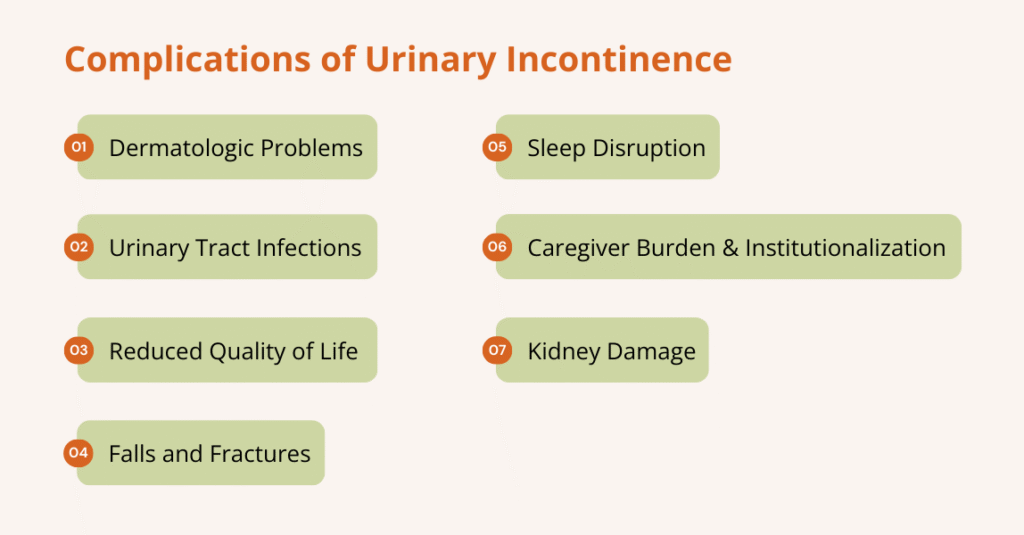
    • Dermatologic Problems: Persistent wetness causes skin irritation, rashes, infections, and pressure ulcers.
    • Urinary Tract Infections (UTIs): Incomplete emptying and catheter use increase the risk of UTIs.
    • Reduced Quality of Life: People may restrict social interactions and physical activities to avoid accidents, leading to isolation, depression, and anxiety.
    • Falls and Fractures: Rushing to the toilet increases the risk of falls, particularly among older adults.
    • Sleep Disruption: Nocturnal urgency and voiding disturb sleep, causing fatigue and cognitive impairment.
    • Caregiver Burden and Institutionalization: UI is a major reason for admission to long‑term care, and study shows that more than 50% of nursing home residents and 75% of long‑term care residents have UI.
    • Kidney Damage: Chronic urinary retention in overflow incontinence can lead to hydronephrosis and renal failure.

    How Is Urinary Incontinence Diagnosed?

    A thorough evaluation is essential to determine the type and cause of UI. Here’s how:

    • History & Physical Examination

    The Doctor asks about when and how often leaks happen, fluid intake, medications, and health history. They check your abdomen/pelvis and may do a “cough stress test” to see if leakage happens with pressure.

    • Bladder Diary

    You record when you drink, when you pee, how much, and when leaks occur (for several days). This helps identify patterns and triggers.

    • Urinalysis & (if needed) Urine Culture

    A urinalysis checks for urinary tract infection (UTI), blood, sugar, or other abnormalities that might explain incontinence. Also, blood tests are sometimes performed to evaluate kidney function or detect other systemic conditions. These blood tests assess renal function, glucose, calcium, and electrolytes.

    • Post-Void Residual Measurement

    After you urinate, a test (via ultrasound or catheter) may measure how much urine remains in your bladder. If a large amount remains, this may indicate incomplete bladder emptying (overflow or neurogenic bladder).

    • Bladder Function (Urodynamic) Tests

    For more complex or unclear cases, tests such as uroflowmetry, cystometry, or pressure-flow studies assess how well your bladder and sphincter store and release urine.

    • Cystoscopy or Imaging

    If there’s suspicion, endoscopic or radiographic evaluation is performed to assess for abnormalities, bladder stones, tumors, or fistulas.

    Urinary Incontinence Treatment Options

    urinary incontinence treatment options

    Treatment should be individualized based on the type of incontinence, severity, age, sex, and comorbidities.

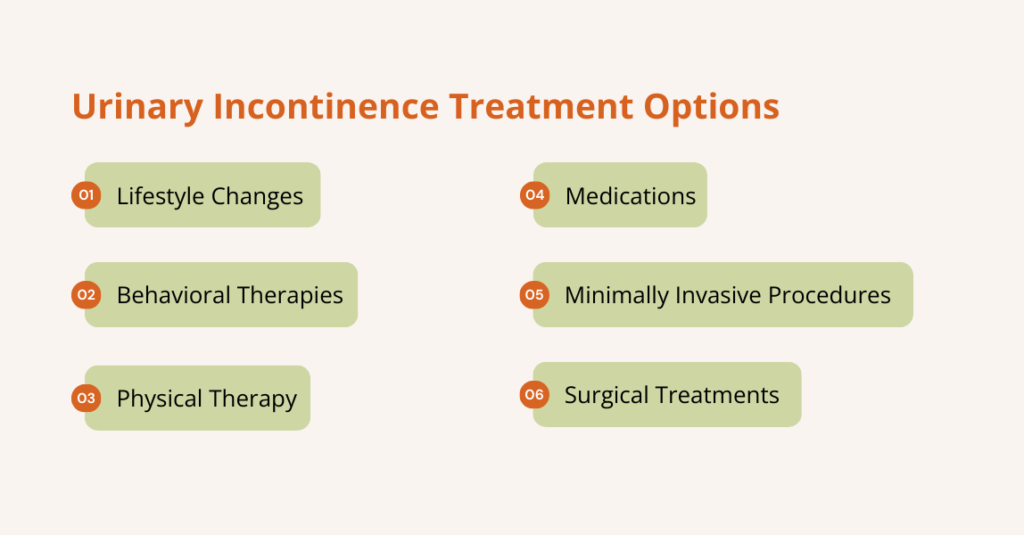
    Management usually follows a stepwise approach: lifestyle modifications, behavioral therapies, medications, devices, and surgery.

    Lifestyle Changes

    These are first‑line strategies recommended for all patients because they have minimal side effects and address reversible factors.

    A frontiers study of 20,195 adults found that adherence to 4–5 healthy lifestyle factors (non‑smoking, moderate alcohol intake, regular physical activity, healthy diet, and optimal waist circumference) reduced the risk of overactive bladder by 46% compared with adherence to 0–1 factors.

    Here are some lifestyle and behavioral therapies to consider:

    • Pelvic Floor Muscle Training (PFMT)

    Also called Kegel exercises, PFMT strengthens the levator ani and urethral sphincter. People contract and relax pelvic muscles in sets of 10–15 squeezes, three times daily.

    Evidence indicates that PFMT improves or resolves symptoms in two-thirds of women. Men benefit as well; PFMT is recommended after prostate surgery.

    • Lifestyle Modifications

    Maintain a healthy weight, treat chronic cough, manage diabetes and constipation, stop smoking, reduce alcohol and caffeine intake, and avoid bladder irritants.

    • Fluid Management

    Drink adequate fluids (about 6–8 glasses daily) and avoid excessive intake. Avoid drinking right before bedtime.

    Behavioral Therapies

    Behavioral therapies help retrain the brain–bladder connection and reduce anxiety, urgency, and leakage through mental and emotional techniques.

    • Bladder Training and Timed Voiding

    For urgency or mixed incontinence, patients gradually increase intervals between voids and use urge‑suppression techniques. This helps expand bladder capacity and reduce urgency.

    • Cognitive Behavioral Therapy (CBT)

    CBT helps individuals modify thoughts and behaviors that exacerbate urgency or fear of leaking. It teaches coping strategies, reduces bathroom-related anxiety, and improves confidence in bladder control.

    Physical Therapies

    Physical therapy focuses on strengthening and retraining the pelvic floor muscles to improve bladder control and reduce leakage.

    • Pelvic Floor Muscle Rehabilitation

    This involves learning to strengthen and control the pelvic floor muscles, as they support the bladder and help prevent urinary leakage.

    A physical therapist teaches proper techniques (similar to Kegel exercises). Therapy may also include breathing techniques and core strengthening to improve overall pelvic stability.

    • Biofeedback and Electrical Stimulation

    Biofeedback uses sensors to display muscle activity on a screen, helping you learn when you’re contracting the right muscles and how to improve control.

    Whereas electrical stimulation delivers a gentle current to activate weak pelvic floor muscles, strengthen them over time, and reduce symptoms like urgency, frequency, and leakage.

    Together, they help improve muscle awareness, coordination, and bladder control.

    Medications

    Medication is usually considered when behavioral therapies don’t provide enough relief.

    Common drug options include:

    • Anticholinergics (Antimuscarinics)

    Antimuscarinic agents (e.g., oxybutynin, tolterodine, solifenacin) are used to relax the bladder muscle to reduce urgency, frequency, and urge-related leakage.

    In U.S. Medicare data, antimuscarinics remain the most commonly prescribed, but their use decreased from 49% to 34% between 2012 and 2021, while β‑3 agonist use increased from 0.2% to 17%.

    • Beta-3 Agonists

    These drugs (e.g., mirabegron, vibegron) also relax the bladder muscle but typically have fewer cognitive side effects than anticholinergics.

    • Topical Estrogen

    Low-dose vaginal estrogen can improve urethral and vaginal tissue health, reduce irritation, and improve stress or urgency symptoms in postmenopausal women.

    It is not the same as systemic hormone therapy and has minimal systemic absorption.

    • Medications for Men with BPH-Related Incontinence

    For men with bladder symptoms caused by prostate enlargement, alpha-blockers (e.g., tamsulosin, terazosin) help relax the prostate and bladder neck. Whereas 5-alpha reductase inhibitors (e.g., finasteride, dutasteride) shrink the prostate over time. Often, these medications are combined for better symptom control.

    Minimally Invasive Procedures

    These treatments are considered when lifestyle changes and medications aren’t enough and offer effective, low-risk options to improve bladder control.

    • Botox Injections for Overactive Bladder

    Botox is injected into the bladder muscle to calm overactive contractions. This reduces urgency, frequency, and the risk of sudden leakage. Results typically last 6–12 months.

    • Sacral Neuromodulation (Nerve Stimulation Therapy)

    A small device sends gentle electrical pulses to the sacral nerves, which control bladder function. This helps restore normal signaling and reduces urge incontinence and urinary retention.

    • Urethral Bulking Agents

    A gel-like material is injected around the urethra to facilitate closure. This provides extra support and reduces stress incontinence, especially in women with weak sphincter muscles.

    Surgical Treatments

    These procedures are considered when other treatments fail or when incontinence is severe and linked to structural problems.

    • Mid‑urethral Sling Procedures

    A mesh or tissue sling is placed under the urethra to provide support. It helps maintain urethral closure during coughing, laughing, or exercise, making it highly effective for stress urinary incontinence in women.

    • Artificial Urinary Sphincter (AUS) Implantation

    AUS is most commonly used in men, especially after prostate surgery. It involves placing an inflatable cuff around the urethra, which opens and closes via a small pump. This provides strong control for moderate to severe incontinence.

    • Bladder Neck Suspension

    This surgery lifts and secures the bladder neck and urethra into a better position. It helps reduce leakage caused by weak support tissues and is often used for stress incontinence in women.

    • Cystoplasty (Bladder Augmentation)

    This procedure enlarges the bladder using a piece of bowel. It increases bladder capacity and reduces pressure, making it useful for severe urge incontinence or neurogenic bladder when other treatments have failed.

    How to Prevent Urinary Incontinence?

    how to prevent urinary incontinence

    You can lower your risk of urinary incontinence by protecting your pelvic floor and managing lifestyle factors: Here’s how:

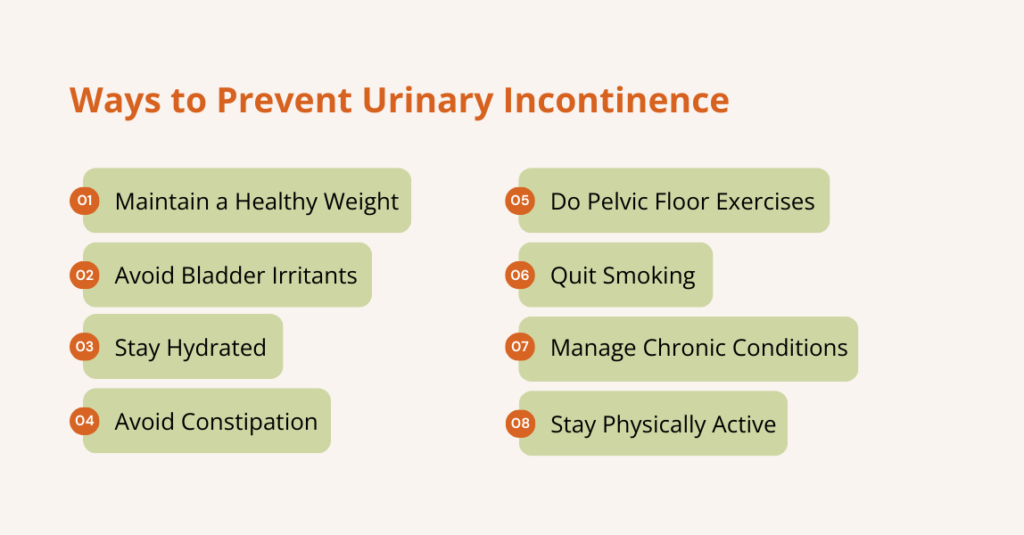
    • Maintain a Healthy Weight: Keeping your BMI in a healthy range reduces pressure on your bladder. Weight-loss programs are especially effective for overweight women and obese men.
    • Avoid Bladder Irritants: Cut back on caffeine, alcohol, carbonated drinks, artificial sweeteners, spicy foods, and citrus. Some people also react to chocolate and acidic foods.
    • Stay Hydrated: Drink enough water to keep urine light-colored, but don’t overdrink. Dehydration can irritate the bladder and increase the risk of UTIs.
    • Prevent Constipation: Eat more fiber, drink plenty of fluids, and stay active. Constipation can worsen bladder leakage.
    • Do Pelvic Floor Exercises: Practice PFMT regularly, including during and after pregnancy, to keep pelvic muscles strong.
    • Quit Smoking: Smoking causes chronic coughing, which strains pelvic muscles and increases SUI risk.
    • Manage Chronic Conditions: Keep conditions like diabetes, hypertension, asthma, and COPD under control to protect bladder function.
    • Stay Physically Active: Regular exercise supports weight control and muscle strength. Avoid too many high-impact activities if they trigger leakage; balance them with PFMT.

    Frequently Asked Questions (FAQs)

    Can urinary incontinence be cured?

    Many people achieve significant symptom improvement or complete resolution, especially with early intervention. Lifestyle and behavioral therapies (PFMT, bladder training) are effective first‑line treatments. For persistent symptoms, medications, neuromodulation, or surgery can provide relief. Cure rates vary by type and severity; for example, research shows that PFMT cures or improves symptoms in roughly 67% of women, while mid‑urethral sling surgery for SUI has long‑term success rates around 80%. Urge incontinence often requires combination therapy; Botox and sacral neuromodulation have similar efficacy at two years.

    Is urinary incontinence a normal part of aging?

    No. Although prevalence increases with age, UI is a medical condition, not an inevitable consequence of aging. Many older adults maintain continence with proper bladder health habits, pelvic floor exercises, and management of chronic diseases.

    Will drinking less water help with incontinence?

    Restricting fluid intake can worsen urinary symptoms because concentrated urine irritates the bladder. Instead, spread fluid intake throughout the day and limit fluids before bedtime. Avoid caffeinated or carbonated beverages, as they can’t stimulate the bladder.

    When should I see a healthcare provider about incontinence?

    You should consult a clinician if you experience involuntary leakage that affects daily life; have associated symptoms such as burning, pain, blood in urine, or frequent UTIs; or have difficulty emptying your bladder. Early evaluation helps identify reversible causes and prevents complications.

    Conclusion

    For many people, talking about bathroom habits can feel embarrassing. However, it is a common and often overlooked condition that affects millions of Americans.

    Urinary incontinence may make you self-conscious or keep you from enjoying daily activities because you’re worried about leaking or not reaching the bathroom in time.

    Therefore, promoting bladder health, encouraging early symptom reporting, and supporting lifestyle changes are essential.

    Most individuals can achieve meaningful improvement through weight management, pelvic floor exercises, bladder training, and appropriate medications or procedures.

    If you’re experiencing any signs of incontinence, don’t wait; taking action now can help you prevent discomfort and bigger problems later in life.

  • Knee Osteoarthritis: Causes, Symptoms, Diagnosis, Treatment, & Prevention

    Knee Osteoarthritis: Causes, Symptoms, Diagnosis, Treatment, & Prevention

    Knee osteoarthritis (OA) is a common and growing public health concern in the United States.

    As people live longer and rates of obesity rise, more Americans are developing this degenerative joint disease, leading to major personal and societal costs.

    In fact, research estimates that about 14 million U.S. adults suffer from symptomatic knee OA.

    Moreover, radiographic studies from the U.S. show that more than one in three adults aged 60 or older have signs of knee OA on imaging, and around 12 percent report symptoms.

    As the population ages and obesity continues to climb, resulting in knee OA prevalence rising further, understanding risk factors, diagnosis, and treatment is more important than ever.

    In this article, we’ll walk through what knee osteoarthritis is, how it progresses, who’s most at risk, what causes it, how it’s diagnosed, treatment options, and finally, strategies for prevention.

    What is Knee Osteoarthritis?

    what is knee osteoarthritis

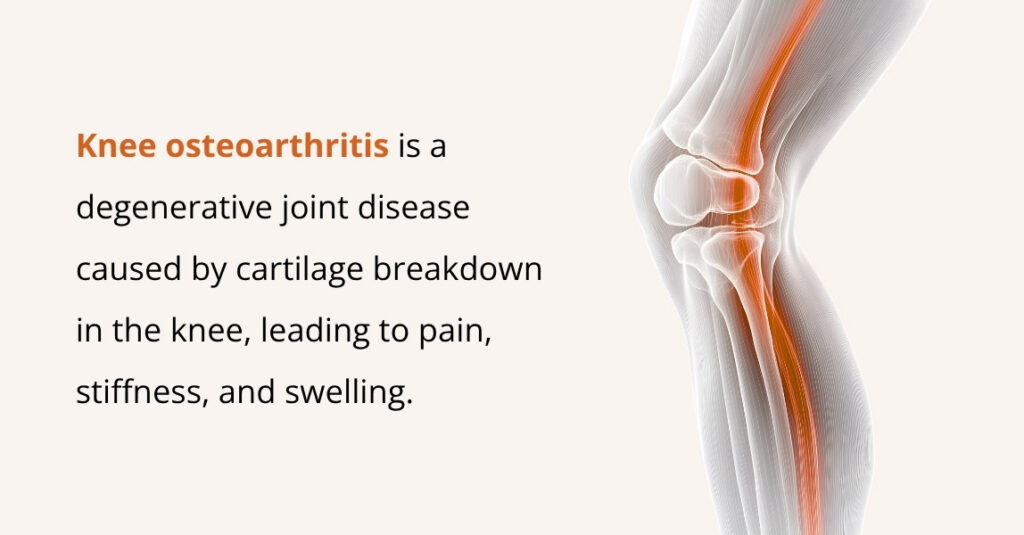
    Knee osteoarthritis occurs when the cartilage that cushions your knee joint gradually wears down. As this protective layer thins, the bones begin to rub against each other, creating friction that leads to pain, swelling, and stiffness.

    Because the knee carries your body weight and absorbs impact with every step, it’s one of the joints most commonly affected by this degenerative “wear-and-tear” disease.

    Research shows that OA of the knee joint is often associated with aging, but it can also be influenced by factors such as injury, obesity, genetics, and other health conditions.

    As the condition worsens, individuals may experience difficulty performing daily activities, such as walking, climbing stairs, or getting up from a chair. Over time, though, the disease can worsen and may eventually limit mobility.

    However, many treatments can help slow its progression, reduce pain, and improve everyday function. Healthcare providers carefully monitor its progression, and if knee OA begins to significantly affect your quality of life, surgical and non-surgical options are available.

    What are the Stages of Knee Osteoarthritis?

    what are the stages of knee osteoarthritis

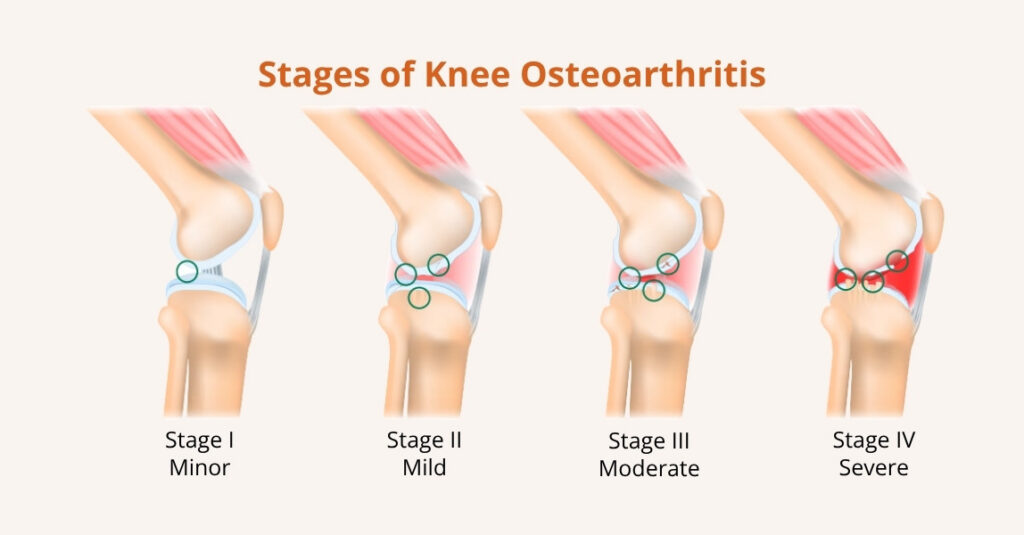
    Although there’s no single universal staging system, knee osteoarthritis typically follows a predictable, gradual course.

    Clinicians often describe it in stages to explain how advanced the disease is and what to expect.

    Knowing these stages can help you recognize symptoms early and plan treatment with your healthcare team.

    • Stage 1 (Minor)

    At this earliest stage, there is minor wear and tear to the cartilage. Changes are usually subtle, and most people feel little or no pain. X-rays may show only very subtle changes, if any at all.

    • Stage 2 (Mild)

    Mild OA means the cartilage is beginning to break down. You may notice occasional pain or stiffness, especially after activity or when getting up from a seated position. There is still enough cartilage to prevent bones from rubbing together, but symptoms are starting to appear.

    • Stage 3 (Moderate)

    In the moderate stage, cartilage loss is more pronounced. Pain becomes more frequent and may interfere with daily activities such as walking, climbing stairs, squatting, or kneeling. Stiffness and reduced range of motion are common, and you may feel discomfort after periods of rest.

    • Stage 4 (Severe)

    Severe OA indicates that cartilage is nearly or completely gone in parts of the knee. Bones may grind together, causing constant pain, swelling, marked stiffness, and significant limitations in movement. At this point, conservative measures often provide limited relief, and joint replacement surgery may be discussed as an option.

    What Causes Knee Osteoarthritis?

    what are the causes of knee osteoarthritis

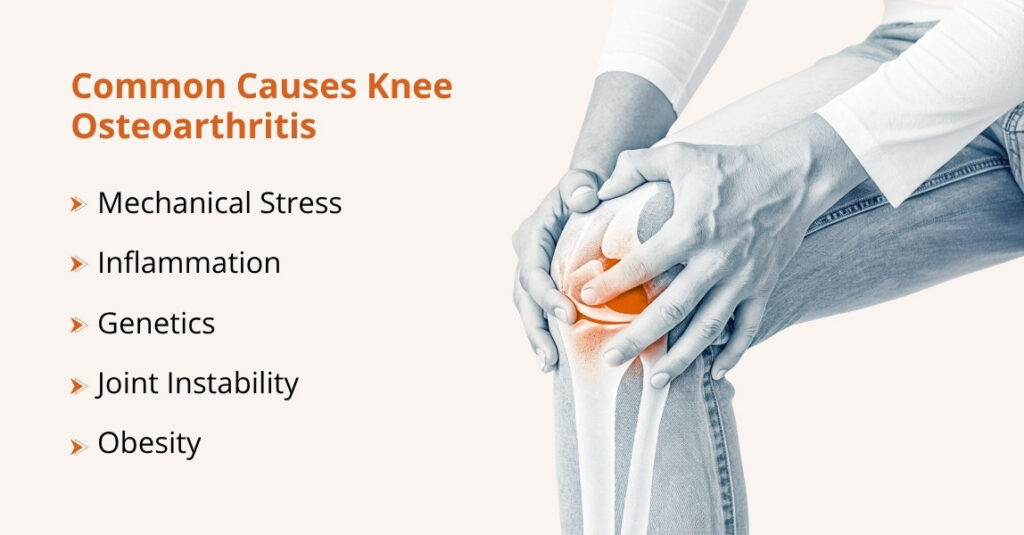
    Knee osteoarthritis is caused by the gradual breakdown of cartilage in the knee joint.

    While the exact cause of this breakdown is not always clear, several factors contribute to its development:

    • Mechanical Stress: Research shows that overuse of the knee joint, especially among individuals who engage in repetitive activities or heavy lifting, can cause cartilage wear and tear.
    • Inflammation: Chronic joint inflammation, often due to conditions such as rheumatoid arthritis, can accelerate cartilage breakdown.
    • Genetics: Modern research shows genetic factors can contribute to the development of knee osteoarthritis. If you have a family history of the condition, you may be more likely to develop it yourself.
    • Joint Instability: Knee instability due to prior injuries or muscle strength imbalances can place additional stress on the joint, leading to cartilage damage.
    • Obesity: Studies show that excess body weight puts additional pressure on the knee joint, leading to increased cartilage wear and tear.

    What are the Symptoms of Knee Osteoarthritis?

    The symptoms of knee osteoarthritis can vary depending on the severity of the condition.

    Knee pain is the most common and noticeable symptom of knee osteoarthritis. You may feel discomfort when putting weight on your knee, during movement, or even while resting.

    As the condition progresses, other symptoms can appear, including:

    • Stiffness, especially when you first wake up or after sitting for long periods.
    • Swelling or a puffy feeling around the knee joint.
    • Cracking, popping, or grinding sounds (called crepitus) when you move the knee.
    • A feeling of instability, as if the knee might buckle or “give out.”
    • Locking or catching, where the knee briefly feels stuck or difficult to move.

    These symptoms may come and go at first, but often become more frequent over time as osteoarthritis progresses.

    Who is at Risk for Knee Osteoarthritis?

    Several factors can increase the likelihood of developing knee osteoarthritis. Some of the key risk factors include:

    • Age: As we age, the cartilage in our joints naturally wears down, increasing the risk of developing OA. It is most common in people over 50.
    • Gender: Women are more likely than men to develop knee osteoarthritis, especially after menopause. This may be due to hormonal changes that affect the joints.
    • Obesity: Excess body weight adds stress to the knee joint, increasing the risk of cartilage wear. Studies show that individuals with a body mass index (BMI) of 30 or higher are at significantly higher risk of developing knee OA.
    • Previous Joint Injury: Individuals who have experienced a knee injury, such as a ligament tear or fracture, are at higher risk for developing OA later in life. Even if the injury heals, the knee joint may be weakened, leading to cartilage damage.
    • Genetics: Some people may have a genetic predisposition to osteoarthritis. Certain genes may make individuals more susceptible to cartilage breakdown in the knee joint.
    • Occupation: Jobs that require heavy lifting, kneeling, or squatting can increase the risk of developing knee osteoarthritis due to repetitive stress on the joint.
    • Other Health Conditions: Conditions such as rheumatoid arthritis, gout, and diabetes can also increase the likelihood of developing knee osteoarthritis.

    How is Knee Osteoarthritis Diagnosed?

    how is knee osteoarthritis diagnosed

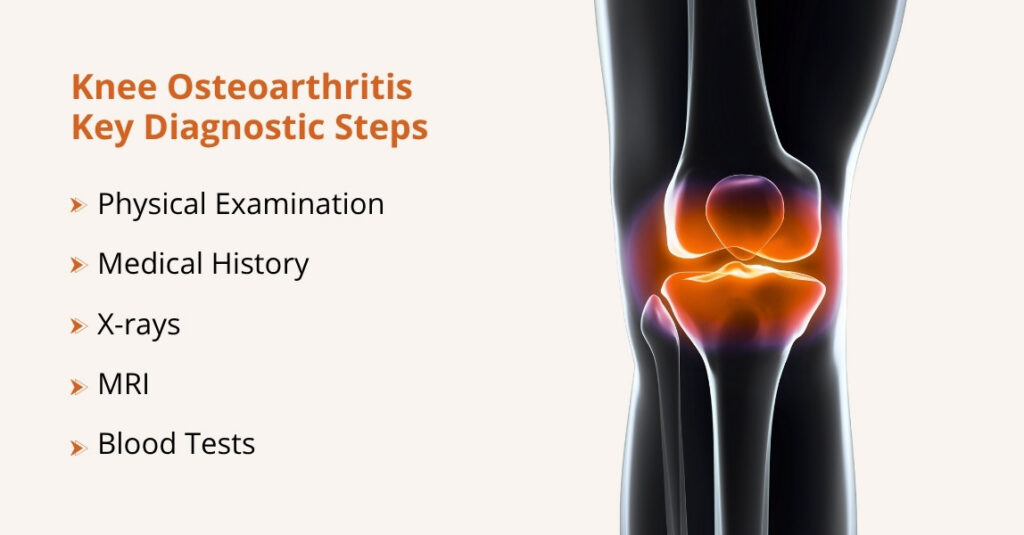
    Knee osteoarthritis is typically diagnosed through a combination of physical examination, medical history, and imaging.

    The following steps may be involved:

    • Physical Examination: Your doctor will assess your knee’s range of motion, check for swelling or tenderness, and evaluate how well your knee functions during movement.
    • Medical History: Your doctor will ask about your symptoms, any previous knee injuries, and your family history of osteoarthritis or other joint disorders.
    • X-rays: X-rays are commonly used to evaluate the extent of joint damage and cartilage loss. They can show narrowing of the joint space, bone spurs, and other signs of OA.
    • MRI: An MRI may be used if your doctor needs more detailed images of the soft tissues in your knee, including cartilage, ligaments, and tendons.
    • Blood Tests: In some cases, blood tests may be done to rule out other conditions, such as rheumatoid arthritis, that may cause similar symptoms.

    Knee Osteoarthritis Treatment Options

    Knee osteoarthritis treatment focuses on relieving pain, improving mobility, and slowing the progression of joint damage.

    Options range from lifestyle changes and nonsurgical therapies to surgical procedures. In most cases, healthcare providers begin with conservative (nonsurgical) treatments before considering surgery.

    Nonsurgical treatments for knee OA

    Nonsurgical options aim to reduce pain and inflammation, support joint function, and delay the need for surgery. Common treatments include:

    • Pain Medications: Over-the-counter NSAIDs (such as ibuprofen) or acetaminophen can help reduce pain and swelling. Prescription options may be used if symptoms are more severe.
    • Physical therapy: Targeted exercises strengthen the muscles around the knee, improve joint stability, and increase flexibility, making daily activities easier.
    • Weight loss (when needed): Reducing body weight decreases stress on the knee joint. Even losing 5–10% of body weight can significantly reduce symptoms.
    • Knee braces: Braces help support the joint, reduce strain, and may shift pressure away from the most damaged part of the knee.
    • Corticosteroid (steroid) injections: These injections reduce inflammation and can provide short-term pain relief, especially during flare-ups.
    • Knee gel injections (viscosupplementation): Hyaluronic acid “gel shots” add lubrication inside the joint to improve movement and reduce pain.
    • Genicular nerve block injections: These target the small nerves around the knee to interrupt pain signals temporarily.
    • Platelet-rich plasma (PRP) injections: PRP uses concentrated platelets from your own blood to promote healing and reduce joint inflammation.
    • Genicular artery embolization (GAE): A minimally invasive procedure that reduces blood flow to inflamed tissues around the knee, helping decrease pain and swelling for some patients.

    Surgical treatments for knee OA

    Surgery is typically considered when pain is severe, daily function is limited, or nonsurgical treatments are no longer effective. Surgical options include:

    • Cartilage restoration or replacement: Techniques such as microfracture, grafting, or implanting new cartilage aim to repair small areas of damage in younger, active patients.
    • Knee bone reshaping (osteotomy): Surgeons cut and realign the bones around the knee to shift weight away from the damaged area, helping relieve pain and delay joint replacement.
    • Partial knee replacement: Only the damaged portion of the knee is replaced with an artificial implant. This option preserves more of your natural knee and may lead to a faster recovery.
    • Total knee replacement: The entire knee joint is replaced with artificial components. This is the most common surgical treatment for advanced knee OA and can provide long-lasting pain relief and improved mobility.

    How Can Knee Osteoarthritis Be Prevented?

    While you cannot entirely prevent knee osteoarthritis, there are several steps you can take to reduce your risk and protect your knee joint:

    • Exercise Regularly: Engaging in low-impact activities like swimming, cycling, and walking can help strengthen the muscles around the knee and improve joint stability.
    • Maintain a Healthy Weight: Reducing excess weight will reduce the pressure on your knees and help protect against OA.
    • Avoid Joint Injuries: Protect your knees during physical activities, especially high-impact sports, by using proper techniques and wearing protective gear.
    • Strengthen Your Muscles: Strengthening the muscles around the knee joint can help support the joint and reduce the risk of developing osteoarthritis.
    • Stretch Regularly: Regular stretching can improve flexibility and reduce stiffness in the knee joint.

    With these prevention strategies and staying proactive about your knee health, you can reduce your risk of developing knee osteoarthritis and maintain a high quality of life for years to come.

    Frequently Asked Questions (FAQs)

    What does knee osteoarthritis feel like?

    Knee osteoarthritis often feels like a combination of pain, stiffness, and joint grinding. You may notice aching pain during movement or after activity, stiffness when you first wake up or stand after sitting, and a cracking or grating sensation (crepitus) when the knee moves. Many people also experience knee swelling, a feeling that the knee is unstable or might “give out,” and occasional locking or catching when the joint gets stuck. As the condition progresses, you may find it harder to fully bend or straighten your knee, making everyday activities more difficult.

  • Benign Prostatic Hyperplasia: Causes, Symptoms, & Treatments

    Benign Prostatic Hyperplasia: Causes, Symptoms, & Treatments

    Benign Prostatic Hyperplasia (BPH) is the most common prostate condition affecting men, particularly as they age.

    In the United States, over 50% of men over 50 experience symptoms of BPH, and this number rises to 90% by age 85.

    BPH is closely linked with male lower urinary tract symptoms (LUTS), but it does not raise the risk of prostate cancer or cause sexual dysfunction. However, it can affect quality of life by leading to bothersome and sometimes embarrassing urinary issues.

    While age and genetics play a key role in the development of BPH, emerging research shows that modifiable factors, including hormone levels, obesity, glucose regulation, diet, exercise, and inflammation, also influence its onset and progression.

    Therefore, understanding these risk factors, recognizing early symptoms, and seeking timely diagnosis and treatment can dramatically improve outcomes and quality of life.

    This article provides an overview of BPH, including its causes, symptoms, risk factors, diagnosis, and the latest treatment options, to help patients and caregivers understand how to manage this common condition effectively.

    What is Benign Prostatic Hyperplasia?

    what is benign prostatic hyperplasia

    BPH is the non-cancerous enlargement of the prostate gland, a small walnut-sized organ below the bladder that surrounds the urethra and produces seminal fluid.

    As men age, the prostate can enlarge from the size of a walnut to that of a lemon. In BPH, the prostate undergoes increased cell growth (hyperplasia), especially around the urethra, leading to gland enlargement.

    As it grows, it can compress the urethra and partially block urine flow, causing symptoms such as difficulty starting urination, a weak urine stream, or needing to urinate frequently.

    Who is more likely to have Benign Prostatic Hyperplasia?

    In the United States alone, BPH accounts for millions of healthcare visits each year, reflecting its prevalence among an aging male population.

    Certain risk factors make someone more prone to developing BPH:

    • Age

    Advancing age is the strongest risk factor. BPH is uncommon before 40, but the incidence rises sharply in later decades. The prostate tends to keep growing as men get older, which is why BPH primarily affects middle-aged and older men.

    • Family History (Genetics)

    Men with a family history of BPH, such as a father or brother who had an enlarged prostate, are more likely to develop the condition themselves. Studies have shown that first-degree relatives of BPH patients may have a fourfold increase in risk compared to men with no family history.

    • Diabetes and Heart Disease

    Research shows that chronic health conditions like type 2 diabetes and cardiovascular disease have been linked to a higher likelihood of BPH. Men with diabetes, in particular, have a higher incidence of BPH and often more severe symptoms, possibly due to insulin and growth-factor effects on the prostate.

    • Diet and Obesity

    An unhealthy diet and obesity can increase BPH risk. Research suggests that diets high in fat and red meat are associated with a greater risk of symptomatic BPH, whereas diets rich in vegetables may be protective. Obesity is also correlated with BPH; men who are overweight or who have metabolic syndrome tend to have larger prostate volumes and more symptoms.

    • Localized Inflammation

    Chronic prostatitis or inflammation of the prostate is often found alongside BPH on tissue analysis, and researchers suspect that inflammation may contribute to prostate enlargement. Inflammatory cells in the prostate can release factors that stimulate growth.

    • Metabolic Syndrome

    Related to the above factors, metabolic syndrome (a cluster of conditions including insulin resistance/diabetes, high blood pressure, and high cholesterol) has been linked to BPH.

    Men with metabolic syndrome tend to have larger prostates on average, and those with poor blood sugar control have an increased risk of LUTS.

    This may be due to metabolic syndrome’s association with obesity, inflammation, and hormonal imbalances that also drive prostate growth.

    • Hormone Levels

    Although not a traditional risk factor in the sense of a lifestyle choice, age-related hormonal changes underlie BPH development.

    Research shows that men who have normal testes producing testosterone can develop BPH, whereas men who were castrated or have very low testosterone from a young age do not develop BPH.

    What Causes Benign Prostatic Hyperplasia?

    what are the causes of benign prostatic hyperplasia

    Despite how common BPH is, its exact cause remains unclear. As men grow older, changes in sex hormones, particularly the accumulation of dihydrotestosterone (DHT), can stimulate prostate growth.

    Key factors contributing to BPH:

    • Aging
    • Hormonal changes
    • Family history
    • Lifestyle factors

    Other health conditions, such as obesity, type 2 diabetes, and heart and blood vessel diseases

    What are the Symptoms of Benign Prostatic Hyperplasia?

    what are the symptoms of benign prostatic hyperplasia

    BPH mainly affects urination and can range from mild to severe. As the prostate enlarges, it presses on the urethra and bladder, leading to lower urinary tract symptoms (LUTS) that can disrupt daily life.

    Common BPH symptoms include:

    • Frequent urination: Needing to urinate more often, especially at night (nocturia). Some men go every 1–2 hours.
    • Urgency: A sudden, strong urge to urinate, even when the bladder isn’t full.
    • Difficulty starting urination (hesitancy): Trouble beginning the urine stream, sometimes requiring straining.
    • Weak or interrupted urine stream: A slow or stop-and-start flow due to urethral narrowing.
    • Dribbling at the end: Small drops of urine may continue after finishing.
    • Incomplete bladder emptying: Feeling that the bladder isn’t fully emptied, leading to frequent trips to the bathroom.
    • Urinary retention: In severe cases, partial or complete blockage can make urination difficult or impossible, which is a medical emergency.
    • Painful urination (dysuria): BPH itself usually doesn’t cause burning, but infections or straining can.
    • Blood in the urine (hematuria): Straining or bladder irritation can cause small amounts of blood in the urine; a doctor should check any visible blood.

    Many of these symptoms are quantified by doctors using the International Prostate Symptom Score (IPSS), which is a questionnaire that asks about frequency, nocturia, weak stream, etc., to grade symptom severity from mild to severe.

    Also, not every man with BPH will have all these symptoms, and the severity can vary.

    What are the Complications of Benign Prostatic Hyperplasia?

    BPH is benign and usually develops slowly, but if it becomes advanced or is left untreated, it can lead to complications in the urinary tract.

    The prostate’s blockage of urine flow and the resulting strain on the bladder can cause several issues:

    • Urinary Retention: The enlarged prostate can block urine flow, causing the bladder to fill and sometimes leading to sudden, painful inability to urinate (acute retention) or constant partial retention.
    • Recurrent Urinary Tract Infections (UTIs): When the bladder doesn’t empty fully, urine can stagnate, leading to infections and symptoms such as burning, cloudy urine, or pelvic pain.
    • Bladder Stones: Minerals in leftover urine can form stones, which may worsen urinary problems or cause blood in the urine.
    • Bladder Damage: Constant pressure on the bladder can weaken its muscles and reduce its ability to empty properly. This can cause long-term urinary problems even after treatment.
    • Kidney Damage: Severe blockage can cause urine to back up into the kidneys (hydronephrosis), potentially leading to kidney injury or infection. Rarely, untreated BPH can contribute to kidney failure.
    • Incontinence: Overflow or urge incontinence can occur when the bladder is too full or unstable. Some BPH treatments may also cause temporary incontinence.
    • Blood in Urine (Hematuria): Persistent bleeding can happen due to the enlarged prostate, sometimes requiring treatment.
    • Sexual Side Effects: BPH itself doesn’t cause erectile dysfunction, but treatments may lead to issues like retrograde ejaculation, which can affect fertility but is not dangerous.

    Many of these complications are preventable with timely treatment. If you have BPH, it’s important to follow up with your healthcare provider, especially if symptoms are worsening.

    How is Benign Prostatic Hyperplasia Diagnosed?

    When BPH is suspected, healthcare providers will perform a series of evaluations to confirm the diagnosis, assess severity, and rule out other conditions (like infections or prostate cancer) that can cause similar symptoms.

    Diagnosing BPH typically involves some or all of the following steps and tests:

    • Medical history & symptom check: Your doctor will ask about urinary habits (frequency, urgency, nighttime trips, stream changes, blood in urine) and may use a questionnaire such as the IPSS/AUA symptom score to rate severity.
    • Digital rectal exam (DRE): A quick exam where the doctor feels the prostate through the rectal wall to estimate size and check for lumps or hard areas.
    • Urinalysis: A urine sample checks for infection, blood, or other conditions (e.g., diabetes) that can mimic or worsen symptoms.
    • PSA blood test: Measures prostate-specific antigen. PSA can be higher with larger prostates or cancer, so results are interpreted alongside other findings.
    • Uroflowmetry (flow test): You urinate into a device that measures flow rate and volume to see if there’s an obstruction.
    • Post-void residual (PVR) scan: A quick bladder ultrasound (or catheter measurement) shows how much urine remains after voiding—high volumes suggest incomplete emptying.
    • Transrectal ultrasound (TRUS): Used when precise prostate size is needed (for treatment planning) or before biopsy; not required in every case.
    • Cystoscopy: A scope is passed into the urethra to view the prostate and bladder directly; it is used when symptoms are unusual or before certain procedures.
    • Urodynamic testing: Specialized pressure and flow studies that evaluate bladder function; reserved for complex cases (e.g., weak bladder muscle, neurologic disease).
    • Advanced imaging (MRI/CT): Not routine for BPH, but may be used if cancer is suspected or to assess the kidneys/bladder when complications are possible.

    In most cases, a combination of history, DRE, urinalysis, PSA, and simple office tests (uroflow and PVR) is enough to diagnose BPH and start treatment.

    More invasive or specialized tests are used when the diagnosis is uncertain, symptoms are severe, or surgery is being considered.

    Benign Prostatic Hyperplasia Treatment Options

    benign prostatic hyperplasia treatment options

    Multiple treatment options exist for BPH, ranging from simple lifestyle adjustments to medications to minimally invasive procedures and surgery.

    Here we’ve outlined the main categories of BPH treatment:

    Lifestyle Changes (Conservative Management)

    For men with mild BPH symptoms, simple lifestyle adjustments can help reduce urinary problems and improve comfort:

    • Adjust fluid intake: Avoid drinking large amounts in the evening and limit fluids 1–2 hours before bedtime to reduce nighttime bathroom trips.
    • Limit bladder irritants: Cut back on caffeine, alcohol, and any foods that trigger bladder irritation, such as spicy or acidic items.
    • Stay active and maintain a healthy weight: Regular exercise (e.g., 30 minutes of brisk walking daily) can improve urinary symptoms. Maintaining a healthy weight, blood pressure, and blood sugar also supports prostate health.
    • Optimize bathroom habits: Urinate when you feel the urge, and try “double voiding” to empty the bladder more completely. Planning regular trips every 2–3 hours can help manage frequent urges.
    • Review medications: Some decongestants, antihistamines, and diuretics can worsen urinary symptoms. Consult your doctor before using these medications.
    • Pelvic floor exercises: Kegel exercises can strengthen the pelvic muscles and improve bladder control.
    • Stay warm: Cold can worsen urinary retention; dressing warmly and avoiding prolonged exposure to cold may help.

    Many men start with “watchful waiting” using these habits, often managing symptoms without medication. Regular check-ups are important to monitor progression.

    If symptoms worsen, doctors may recommend medications or other treatments.

    Medications for BPH

    For men with moderate to severe BPH, medications are usually the first line of treatment. These drugs either relax the prostate and bladder muscles to improve urine flow or shrink the prostate over time.

    Common options include:

    • Alpha-blockers

    These relax the muscles in the prostate and bladder neck, making urination easier. They work quickly (days to weeks) but do not shrink the prostate.

    • 5-Alpha-Reductase Inhibitors (5-ARIs)

    Drugs like finasteride (Proscar) and dutasteride (Avodart) shrink the prostate by blocking DHT, the hormone that drives growth. They take several months to work and are most effective in larger prostates.

    • Combination Therapy

    For men with severe symptoms or large prostates, alpha-blockers and 5-ARIs can be used together (e.g., tamsulosin + dutasteride, Jalyn®). This provides fast symptom relief and long-term prostate shrinkage.

    • Phosphodiesterase-5 inhibitors (PDE-5i)

    Tadalafil (Cialis) at a low daily dose can improve urinary symptoms by relaxing the bladder and prostate muscles. It’s especially helpful for men who also have erectile dysfunction.

    • Other Medications

    For overactive bladder symptoms, anticholinergics (e.g., oxybutynin, tolterodine) or beta-3 agonists (mirabegron) may be added. These help reduce urgency and frequency but must be used carefully if bladder emptying is poor.

    Most men start with an alpha-blocker for quick relief. If the prostate is large or symptoms persist, a 5-ARI or combination therapy may be added.

    Doctors monitor symptom scores, urine flow, and PSA levels to ensure treatment is effective and safe. If medications don’t work or side effects are unacceptable, minimally invasive procedures or surgery may be considered.

    Minimally Invasive Procedures for BPH

    For men whose symptoms aren’t fully controlled with medication or who want to avoid major surgery, minimally invasive procedures offer effective alternatives with quicker recovery and fewer complications.

    These procedures either widen the urethra or shrink prostate tissue. Common options include:

    • Prostatic Artery Embolization (PAE)

    Prostatic artery embolization is a truly minimally invasive, non-surgical procedure performed by Dr. Zagum Bhatti, an interventional radiologist.

    It involves accessing the blood vessels to the prostate (usually via a catheter inserted in the femoral or radial artery) and injecting tiny particles to block blood flow in the prostatic arteries.

    PAE is done under local anesthesia and sedation, and typically, no hospital stay is needed.

    It’s an option for men who may not tolerate surgery or anesthesia or who prefer an arterial approach. PAE’s advantages are that there’s no incision, no general anesthesia, and sexual function is generally preserved.

    • Prostatic Urethral Lift

    This is a device-based therapy where small implants are used to pull apart the enlarged prostate lobes, widening the urethral passage.

    The urologist inserts a special instrument through the urethra and places several tiny spring-like implants that tether the prostate lobes open, almost like curtain tie-backs, to prevent them from pressing inward. This does not involve cutting or destroying tissue, and it can be done under local anesthesia or light sedation.

    The benefit is that it improves urine flow and often preserves sexual function (minimal risk of retrograde ejaculation or ED) compared to traditional surgery. It is best suited for men with relatively moderate prostates and no large middle lobe.

    • Rezūm Water Vapor Therapy

    Rezūm is a newer treatment that uses steam injections to ablate prostate tissue.

    During this procedure, a device is introduced via the urethra and a small needle is deployed into the prostate; steam (water vapor) is then released, which delivers thermal energy that kills the surrounding prostate cells.

    Over the next days and weeks, the body’s immune system clears away the treated tissue, shrinking the prostate.

    • Laser Therapy

    Laser prostatectomy involves inserting a scope through the urethra and using laser energy to burn/vaporize or cut prostate tissue.

    Examples include photoselective vaporization of the prostate (PVP), often called GreenLight laser (which vaporizes tissue), and holmium laser enucleation of the prostate (HoLEP), which uses a laser to actually enucleate (carve out) the enlarged prostate tissue in lobes.

    The advantage of lasers: lower risk of bleeding, so it’s good for patients on blood thinners or with bleeding risks. However, side effects like retrograde ejaculation still occur in many cases (especially if a lot of tissue is removed).

    • Transurethral Microwave Therapy (TUMT)

    This is an older minimally invasive therapy where a special catheter with a microwave antenna is inserted into the urethra, and microwave energy heats and destroys prostate tissue from inside.

    TUMT can be done without general anesthesia. It generally only reduces symptoms moderately and may take weeks to have an effect.

    Surgical Procedures

    Modern BPH surgeries are mostly done endoscopically (through the urethra) without external cuts, providing lasting relief by removing or reducing the enlarged prostate tissue.

    Common surgical options include:

    • Simple Prostatectomy (Open or Robot-Assisted)

    Reserved for very large prostates (>80–100 grams), this involves removing the enlarged internal portion via an open incision or robot-assisted surgery.

    Recovery is longer, with a few days in the hospital and the use of a catheter. It carries higher risks like bleeding, infection, and blood clots, but offers excellent symptom relief.

    • Transurethral Incision of the Prostate (TUIP)

    TUIP is for men with small prostates (<30 cc) but significant blockage. The surgeon makes one or two small cuts in the prostate and bladder neck to widen the urethra without removing tissue.

    Recovery is usually quick, with a lower risk of retrograde ejaculation than TURP.

    In general, surgery is considered when symptoms are severe and not responding well to meds, the patient can’t tolerate meds, or if there are complications.

    How to Prevent Benign Prostatic Hyperplasia

    Since BPH is so tied to the aging process and genetics, there is no guaranteed way to prevent prostate enlargement altogether.

    Here are some strategies that may help support long-term prostate health:

    • Eat a Healthy Diet: Focus on fruits, vegetables, whole grains, and healthy fats (such as fish, nuts, and olive oil). Avoid too much red meat, high-fat foods, processed foods, sugar, and excess dairy.
    • Maintain a Healthy Weight: Obesity can disrupt hormone balance and increase the risk of BPH. Staying at a healthy weight through diet and exercise may help prevent prostate enlargement.
    • Exercise Regularly: Aim for at least 30 minutes of moderate activity, like walking, most days. Exercise improves blood flow and hormone balance and reduces inflammation, all of which support prostate health.
    • Manage Chronic Health Conditions: Keep diabetes, high blood pressure, and cholesterol under control. Good metabolic health may lower the risk of BPH progression. Avoid smoking, as it can worsen urinary symptoms.
    • Avoid Irritants: Limit caffeine and alcohol, especially in the evening, to reduce bladder stress. Stay hydrated but avoid extremes of too little or too much fluid.
    • Preventive Medications (for select cases): In certain men at higher risk (strong family history or early prostate enlargement), doctors may sometimes consider low-dose 5-alpha-reductase inhibitors to slow growth. This is not routine for all men.

    Remember, BPH is common with age, but a healthy lifestyle can delay symptoms, reduce severity, and improve well-being.

    Frequently Asked Questions (FAQs)

    How common is Benign Prostatic Hyperplasia?

    BPH is very common, especially as men get older.

    While many men may have an enlarged prostate (even without symptoms), a large portion of older men will experience BPH to some degree.

    According to the National Institute of Diabetes and Digestive and Kidney Diseases (NIDDK), BPH affects 5–6% of men aged 40–64, and 29–33% of men aged 65 and older. Similarly, Johns Hopkins Medicine estimates that about 1 in 4 men by age 55 have symptoms, and about 50% of men by age 75 do.

    Can an enlarged prostate be cured?

    An enlarged prostate can be treated with medications like 5-ARIs and procedures such as Prostatic Artery Embolization, relieving blockage and symptoms, often for many years. Since BPH is linked to aging, the prostate may grow again over time, but symptoms are usually well controlled. With proper treatment, follow-up, and healthy habits, most men regain normal urinary function and quality of life.

    What happens if you leave an enlarged prostate untreated?

    If an enlarged prostate (BPH) is left untreated, symptoms can gradually worsen and lead to serious problems: urine may not empty fully or you can suddenly be unable to urinate (acute urinary retention), recurrent urinary tract infections and bladder stones can develop, and long-term bladder strain can weaken the bladder. In severe cases, urine can back up into the kidneys (hydronephrosis) and cause kidney damage, and visible blood in the urine or new incontinence may occur. These issues reduce quality of life and can become medical emergencies.

    How long can I live with an enlarged prostate?

    You can live a long, healthy life with an enlarged prostate (BPH), as it is noncancerous and doesn’t raise the risk of prostate cancer. Life expectancy isn’t affected when symptoms are managed with lifestyle changes, medications, or procedures such as Prostatic Artery Embolization. Untreated BPH can worsen over time, but many men with mild symptoms live comfortably for years while managing them.

    What type of doctor treats benign prostatic hyperplasia?

    A urologist is the primary specialist for BPH, managing both medications and procedures such as Prostatic Artery Embolization. Primary care doctors can evaluate early symptoms and start basic treatment, but significant or persistent BPH usually requires a urologist’s care.

    Can BPH lead to prostate cancer?

    No, BPH does not cause prostate cancer. It is a benign condition, and the prostate cells are not cancerous. BPH does not raise your risk of developing prostate cancer. However, because both conditions can cause similar symptoms, such as frequent or difficult urination, regular checkups are important to rule out cancer.

    Conclusion

    Benign Prostatic Hyperplasia is a very common and manageable condition that affects a great number of aging men.

    While the prospect of an “enlarged prostate” can be worrisome, it’s important to remember that BPH is benign, it is not prostate cancer, and in itself is not life-threatening.

    The primary impact of BPH is on quality of life: it can cause frustrating urinary symptoms that interrupt sleep, work, and daily comfort.

    With modern medications and minimally invasive treatments, most men can find relief that suits their needs and lifestyle.

    If you’re a man over 50 experiencing urinary changes, such as increased frequency, hesitancy, or nocturia, it’s important to talk to your healthcare provider.

    That said, a simple evaluation can identify BPH as the cause and guide you to the most appropriate treatment plan.

    Today, men don’t have to live with severe urinary problems like previous generations. Early consultation and personalized care can keep BPH a minor concern rather than a major obstacle to healthy aging.

  • Uterine Fibroids: Types, Causes, Symptoms, Diagnosis, & Treatments

    Uterine Fibroids: Types, Causes, Symptoms, Diagnosis, & Treatments

    Uterine fibroids (also called leiomyomas) are benign tumours made of smooth muscle and fibrous tissue that form in or on the muscular wall of the uterus.

    It can range in size from a seedling to masses bigger than a melon.

    Epidemiological analyses estimate that 40–80 % of people with a uterus have fibroids, with the greatest prevalence between 30 to 50 years.

    Despite being non‑malignant, fibroids can severely affect quality of life by causing heavy menstrual bleeding, chronic pelvic pain, pressure symptoms, infertility, or pregnancy complications.

    Moreover, new survey data from The Harris Poll for the Society of Interventional Radiology show that many women still have misunderstandings about their treatment options.

    In fact, 17% believe a hysterectomy, the complete removal of the uterus, is the only solution, including 27% of women aged 18–34. However, minimally invasive treatments like UFE, in addition to surgical treatment, are a great option.

    This article explains uterine fibroids, including their types, causes, symptoms, complications, and treatment options.

    What are Uterine Fibroids?

    what are uterine fibroids

    Uterine fibroids are non-cancerous (benign) growths that develop in the wall of the uterus. They are made of smooth muscle cells and fibrous (connective) tissue. Fibroids can be as small as a pea or as large as a grapefruit, and a woman may have one fibroid or many.

    Most fibroids grow slowly or not at all and do not turn into cancer. Fibroids are usually described by where they grow:

    • Submucosal
    • Intramural
    • Subserosal

    Each fibroid’s size and location influence the symptoms a person may have and which treatments are appropriate.

    Who Usually Develops Uterine Fibroids?

    Fibroids are most common in women of reproductive age, particularly between about 30 and 50 years old. The risk increases with age during the childbearing years and then generally decreases after menopause.

    Evidence from epidemiological and mechanistic research identifies several modifiable and non‑modifiable risk factors:

    Risk FactorEvidences
    Race/ethnicityResearch shows that black women are about three times more likely to develop fibroids than the general population, often experiencing earlier onset, larger fibroids, and more severe symptoms such as pelvic pain, menopause, bladder problems, and heavy bleeding.
    Genetic predispositionHaving close relatives with fibroids increases the risk, with genetic predisposition playing a significant role.
    Age, early menarche & late menopauseFibroids are rare before puberty; incidence peaks in the 40s and declines after menopause. Early menarche and late menopause prolong estrogen exposure and increase risk.
    Obesity and high BMIA nutritional review shows that obesity increases aromatase activity, converting androgens to estrogens, which stimulate fibroid growth.
    HypertensionA longitudinal analysis of 2,570 midlife women found that untreated hypertension was associated with a 19 % higher risk of incident fibroids, whereas antihypertensive medication reduced risk by 37 %. Participants who developed hypertension during follow‑up had a 45 % increased risk.
    NulliparityWomen who have not delivered children have a higher risk. Pregnancy may be protective because uterine remodelling during pregnancy may reduce the number of uterine stem cells.
    Hormonal factorsA study highlights that prolonged exposure to estrogen and progesterone stimulates growth; fibroids enlarge during pregnancy and shrink after menopause.
    Vitamin D deficiencyLow vitamin D levels increase risk; supplementation may inhibit fibroid growth.
    Environmental factorsResearch indicates diets high in red meat, saturated fats, and alcohol, exposure to endocrine‑disrupting chemicals (e.g., organophosphate esters, plasticizers), tobacco use, and vitamin D deficiency have been associated with increased risk.
    Genitourinary microbiome & inflammationAlterations in the reproductive tract microbiome and chronic low‑grade inflammation may promote fibroid growth.

    3 Types of Uterine Fibroids

    Fibroids are classified according to their location in the uterus and relationship to the uterine wall.

    The most commonly used system is the International Federation of Gynecology and Obstetrics (FIGO) classification. For clinical purposes, three broad types are usually discussed:

    1. Submucosal Fibroids

    Grow just beneath the uterine lining and can protrude into the uterine cavity. They’re the type most likely to cause heavy or prolonged menstrual bleeding and fertility problems because they distort the lining where an embryo would implant.

    2. Intramural Fibroids

    Form inside the muscular wall of the uterus and are the most common type. They can make the uterus feel larger, cause pelvic pain or pressure, and may contribute to heavy bleeding and fertility issues, depending on size and exact location.

    3. Subserosal Fibroids

    Develop on the outer surface of the uterus and grow outward. These usually cause bulk-related symptoms, such as pelvic pressure, pain, or urinary/bowel problems, from pressing on nearby organs. Some subserosal fibroids are pedunculated (stalked) and can cause acute pain if they twist.

    Clinical Note: The fibroid’s location strongly affects symptoms and treatment choices. For example, submucosal fibroids are often removed hysteroscopically to improve bleeding or fertility, while large intramural or subserosal fibroids may need other surgical or radiologic approaches.

    What Causes Uterine Fibroids?

    what are the causes of uterine fibroids

    The exact cause of fibroid development is still unclear, but several mechanisms are implicated:

    • Hormonal Imbalance

    Estrogen and progesterone promote the proliferation of smooth muscle cells and the extracellular matrix in fibroids. Fibroids contain more estrogen and progesterone receptors than normal myometrium.

    Hormone fluctuations explain why fibroids grow during pregnancy and shrink after menopause.

    • Genetic and Molecular Alterations

    Somatic mutations in the MED12 gene are the most common driver mutation, detected in 45–90% of fibroids. Other genes can also be involved. These changes make the cells grow more than they should.

    • Growth Factors and Vascular Regulation

    Fibroids produce growth factors (e.g., transforming growth factor‑β and vascular endothelial growth factor) and exhibit altered angiogenic signalling, leading to increased vascularisation and fibroid growth.

    • Environmental and Inflammatory Triggers

    Vitamin D deficiency, endocrine‑disrupting chemicals, chronic inflammation, and obesity contribute to pathogenesis by altering hormone metabolism and extracellular matrix deposition.

    What are the Symptoms of Uterine Fibroids?

    what are the symptoms of uterine fibroids

    Symptoms depend on the size, number, and location of fibroids; many women are asymptomatic.

    The most common symptoms include:

    • Heavy or Prolonged Menstrual Bleeding (Menorrhagia)

    Submucosal fibroids, which grow close to the uterine lining, are the most likely to cause heavy, long, or irregular periods. This type of bleeding can be severe enough to lead to iron-deficiency anemia, causing fatigue, weakness, or shortness of breath.

    • Pelvic Pain or Pressure

    Larger intramural or subserosal fibroids can press on nearby organs. This pressure may cause:

    • Low back pain
    • A swollen or enlarged abdomen
    • Urinary frequency or difficulty emptying the bladder
    • Constipation or discomfort during bowel movements

    These symptoms are caused by the fibroid pushing against the bladder, bowel, or pelvic nerves.

    • Reproductive and Fertility Issues

    Fibroids can affect fertility by changing the shape of the uterus, blocking the fallopian tubes, or interfering with embryo implantation. They may also increase the risk of miscarriage.

    Studies show fibroids are found more in women seeking fertility treatment, and both the number and size of fibroids are directly linked to how severe symptoms are and how much they impact quality of life.

    • Pregnancy Complications

    During pregnancy, fibroids can increase the risk of:

    • Difficulty becoming pregnant
    • Preterm birth
    • Breech presentation
    • Heavy bleeding after delivery (postpartum hemorrhage)

    The risk depends heavily on the fibroid’s location and size. Some fibroids remain stable during pregnancy, while others may grow due to higher hormone levels.

    What are the Risk Factors for Uterine Fibroids?

    Several factors can increase a woman’s chances of developing uterine fibroids:

    • Family history: Women with a mother or sister who had fibroids are more likely to develop them.
    • Age (30–50 years): Fibroids usually appear and grow during the reproductive years, especially in the 30s and 40s, then often shrink after menopause.
    • Obesity and high blood pressure: Higher body weight and hypertension are both linked to a greater risk of fibroids.
    • Lifestyle factors: Low physical activity, a diet high in red meat, and low intake of fruits and vegetables may contribute to fibroid growth.
    • Early menstruation and late menopause: Starting periods at a young age and going through menopause later in life expose the uterus to hormones for longer, increasing the chance of developing fibroids.

    What are the Complications of Uterine Fibroids?

    Besides the symptoms listed above, fibroids can lead to specific complications:

    • Anemia from Heavy Bleeding

    When fibroids, especially those near the uterine lining, cause heavy or prolonged periods, chronic blood loss can lead to iron-deficiency anemia. This may require iron supplements or other medical treatment to restore iron levels.

    • Infertility and Adverse Pregnancy Outcomes

    A study shows that large submucosal fibroids (those that grow into the uterine cavity) are linked with infertility and a higher risk of miscarriage and preterm birth.

    For selected patients, removing submucosal fibroids with hysteroscopic myomectomy has been shown to improve reproductive outcomes. However, the benefit depends on the fibroid type and individual factors.

    • Urinary and Bowel Dysfunction

    Fibroids that press on the bladder or rectum can cause urinary frequency, urgency, difficulty emptying the bladder, or constipation and discomfort during bowel movements.

    These “bulk” effects come from the fibroid’s size and location rather than bleeding.

    • Rare Risk of Cancer

    Malignant transformation of a fibroid into a leiomyosarcoma is extremely rare (well under 1% of cases). Because the risk is small but clinically important, doctors evaluate rapidly growing or suspicious masses carefully.

    How are Uterine Fibroids Diagnosed?

    Evaluation begins with a clinical history and pelvic examination. The choice of test depends on symptoms, suspected fibroid location, and whether fertility is a concern.

    Initial Assessment

    • Pelvic Exam: A doctor may feel an enlarged or irregular uterus during a routine pelvic exam, which can suggest the presence of fibroids.
    • Medical History and Symptoms: Information about heavy bleeding, pelvic pain, or urinary problems helps guide which tests are needed.

    Imaging Tests

    • Pelvic Ultrasound (first-line test): Ultrasound is the most common and readily accessible modality for detecting fibroids. It shows their size, number, and basic location.
    • Magnetic Resonance Imaging (MRI): MRI provides detailed fibroid mapping and is useful for surgical planning or when ultrasound results are inconclusive.
    • CT Scan: CT is not routinely used to diagnose fibroids, but it may show them incidentally if performed for another reason.

    Procedures for Uterine Cavity Assessment

    • Hysteroscopy or Hysterosalpingography: Hysteroscopy allows direct visualisation and treatment of submucosal fibroids. Hysterosalpingography helps evaluate intracavitary lesions.
    • Laparoscopy: Used when other imaging is inconclusive or when concomitant pelvic pathology is suspected.

    Additional Tests

    • Blood Tests: These help check for anemia from heavy bleeding and rule out other causes of symptoms.

    Uterine Fibroids Treatment Options

    uterine fibroids treatment options

    Uterine treatment decisions depend on fibroid size, location, symptom severity, patient age, and fertility desires. Many small or asymptomatic fibroids can be monitored (“watchful waiting”).

    Symptomatic fibroids may require medical therapy, minimally invasive procedures, or surgery.

    Here are some options supported by recent evidence and guideline recommendations.

    Medical Management

    • Symptom Control

    Symptom control is the goal of medical therapy; medications generally do not eradicate fibroids but can reduce bleeding and shrink tumours.

    According to the American College of Radiology’s Appropriateness Criteria, first‑line agents include oral contraceptive pills and progestin‑containing intrauterine devices, which reduce bleeding symptoms.

    Non‑hormonal alternatives such as tranexamic acid are effective for heavy menstrual bleeding.

    • GnRH Agonists and Antagonists

    Two types of medicines can shrink fibroids and reduce symptoms: GnRH agonists (such as leuprolide) and GnRH antagonists (such as elagolix, linzagolix, and relugolix).

    Research shows that these medicines work by lowering estrogen levels, which in turn causes fibroids to shrink. Because low estrogen can cause side effects such as hot flashes and bone thinning, they are usually used for a short time, often to shrink fibroids before surgery.

    Newer treatments combine a low dose of estrogen and progestin with the medication. This helps prevent strong side effects while still controlling heavy menstrual bleeding, and this approach is FDA-approved.

    • Selective Progesterone Receptor Modulators (SPRMs)

    Drugs such as ulipristal acetate reduce bleeding and fibroid size, but concerns about hepatotoxicity have limited widespread use.

    Other Agents: NSAIDs relieve pain; combined oral contraceptives, progestin injections or implants, and the levonorgestrel intrauterine device control bleeding. Iron supplementation addresses anemia.

    Minimally Invasive Procedures

    • Uterine Fibroid Embolization (UFE)

    Uterine fibroid embolization is a catheter‑based procedure performed by Dr. Zagum Bhatti, a board-certified interventional radiologist..

    A catheter is introduced through the femoral or radial artery and navigated into the uterine arteries; small embolic particles occlude the branches supplying the fibroids, causing ischemic necrosis and shrinkage.

    Randomised trials show that UFE provides symptom relief comparable to myomectomy; quality‑of‑life scores and re‑intervention rates at four years are not significantly different. Advantages include a shorter hospital stay, lower risk of blood transfusion, and faster recovery.

    However, patients may experience post‑embolization syndrome (pelvic pain, fever, nausea) and expulsion of submucosal fibroids.

    Another retrospective study of 155 patients undergoing UFE for submucosal fibroids found that UFE reduced the median volume of the dominant fibroid by 64% and achieved >90% devascularization in 94.8% of cases.

    High patient satisfaction was reported, with 84.5% discharged without further intervention.

    Severe adverse events were rare (3.2 %), while mild adverse events (mainly infection or vaginal discharge) occurred in 16.8 %. These findings support UFE as an effective and safe option for submucosal fibroids.

    • Radiofrequency Ablation (RFA)

    RFA (available as laparoscopic Acessa or transcervical Sonata systems) uses thermal energy to coagulate fibroid tissue.

    Under ultrasound guidance, a needle electrode delivers radiofrequency energy, heating the fibroid to ~100 °C and causing coagulative necrosis, which is gradually reabsorbed. RFA is typically a day surgery and preserves the uterine wall structure.

    • MRI‑Guided Focused Ultrasound (MRgFUS/HIFU)

    MRgFUS uses high‑intensity focused ultrasound waves to thermally ablate fibroid tissue under MRI guidance. Advantages include no incisions, minimal blood loss, and rapid recovery.

    According to the ACR Appropriateness Criteria, complications are rare but can include skin burns, nerve injury, and deep vein thrombosis.

    Compared with UFE, MRgFUS has longer procedure times and higher re‑intervention rates.

    Surgical Options

    • Myomectomy (Uterine‑Sparing Surgery)

    Myomectomy removes fibroids while preserving the uterus and fertility. It can be performed hysteroscopically (for submucosal fibroids), laparoscopically/robotically, or via open abdominal surgery.

    • Hysterectomy

    Hysterectomy (removal of the uterus) provides definitive treatment with no risk of recurrence, making it appropriate for women who do not desire future fertility.

    Options include total hysterectomy (uterus and cervix removed), supracervical hysterectomy (uterus only), and may be performed vaginally, laparoscopically, or abdominally.

    Frequently Asked Questions (FAQs)

    Are Uterine fibroids common?

    Yes. About 40–80% of people with a uterus develop fibroids, with the highest prevalence between ages 30 and 50. Most fibroids are small and cause no symptoms, so many people only find out about them during a pelvic exam or ultrasound.

    Do uterine fibroids cause pain?

    Many women experience pelvic pressure or pain; symptoms depend on fibroid size and location. Submucosal fibroids often cause heavy bleeding, while large intramural or subserosal fibroids can cause back pain, urinary frequency, and constipation.

    Can uterine fibroids be cancerous?

    Fibroids are almost always benign. Malignant transformation into leiomyosarcoma (cancer) is extremely rare.

    What size of uterine fibroids should be removed?

    There is no single size threshold. Indications include significant symptoms (heavy bleeding, pain, infertility), rapid growth, or distortion of the uterine cavity. Fibroids larger than 5 cm or submucosal fibroids causing heavy bleeding often warrant intervention.

    Can uterine fibroids cause bleeding?

    Yes. Heavy menstrual bleeding is one of the most common symptoms and can lead to iron‑deficiency anemia. Iron supplementation or treatment to reduce bleeding may be necessary.

    Can uterine fibroids cause anemia?

    Yes, uterine fibroids can lead to anemia. This happens when heavy or prolonged menstrual bleeding caused by fibroids depletes the body’s iron stores, which are essential for making red blood cells. Over time, this can lead to a low red blood cell count, resulting in fatigue, weakness, and other anemia-related symptoms.

    Can I get pregnant with uterine fibroids?

    Yes, you can get pregnant with a uterine fibroid, but it can sometimes affect fertility or pregnancy depending on its size, number, and location. Submucosal fibroids, which grow into the uterine cavity, are most likely to interfere with embryo implantation or increase the risk of miscarriage. Large intramural fibroids within the uterine wall can also reduce fertility or cause complications, while subserosal fibroids on the outer surface usually do not affect fertility but may cause discomfort if very large. Doctors may recommend monitoring, medication, or surgical removal for fibroids that could interfere with conception or a healthy pregnancy.

    Do uterine fibroids go away on their own?

    Uterine fibroids usually do not disappear on their own, but their growth often slows or stops after menopause when hormone levels (estrogen and progesterone) decline. Some small fibroids may remain stable for years without causing symptoms, so not all fibroids require treatment. Doctors often monitor fibroids that aren’t causing problems and only recommend intervention if they grow, cause symptoms, or affect fertility.

    Can uterine fibroids be prevented?

    No, uterine fibroids cannot always be prevented. However, certain lifestyle choices may help reduce the risk or slow their growth. Maintaining a healthy weight, exercising regularly, eating a balanced diet rich in fruits, vegetables, and fiber, controlling blood pressure, getting enough vitamin D, limiting alcohol and red meat, and using certain hormonal contraceptives may all help. While these steps don’t guarantee prevention, they can support overall uterine health and may reduce the chances of fibroids developing or growing quickly.

  • Infertility: Causes, Signs, Symptoms, & Treatments

    Infertility: Causes, Signs, Symptoms, & Treatments

    Infertility is a common medical condition that can also be deeply stressful and emotionally painful for individuals and couples.

    But you are not alone. It is more common than many people realize.

    According to the CDC, 1 in 5 (19%) of married women aged 15 to 49 in the U.S. with no prior births are unable to get pregnant after 1 year of trying.

    Studies suggest that after 1 year of having unprotected sex, 12% to 15% of couples are unable to conceive, and after 2 years, 10% of couples still have not had a live-born baby.

    Infertility is not only a “woman’s problem.”

    Causes may arise from the female side or from the male side.  Many couples have mixed or unexplained factors, which is why evaluating both partners is standard practice.

    Some causes of infertility are preventable. Medications or assisted reproductive technologies are aimed at maximizing the chances of conception.

    In this guide, you’ll gain an understanding of what infertility is, its types, causes, signs and symptoms, diagnoses, and available treatment options.

    What is Infertility?

    what is infertility

    According to the World Health Organization (WHO), infertility is a disease of the male or female reproductive system defined by the failure to achieve a pregnancy after 12 months or more of regular unprotected sexual intercourse.

    Conception requires a series of coordinated steps: a mature egg released during the ovulation portion of the menstrual cycle, sperm reaching and fertilizing the egg (typically in the fallopian tube), formation of an embryo, and successful embryo implantation in a receptive uterine lining.

    Disruption at any step, irregular or absent ovulation (menstrual cycle dysregulation), poor egg quality or reduced ovarian reserve, impaired sperm quality (count, shape, motility), tubal blockage, or uterine factors, can cause infertility.

    What are the Types of Infertility?

    Infertility affects millions of people and has an impact on their families and communities.

    WHO estimates suggest that approximately one in every six people of reproductive age worldwide experiences infertility in their lifetime.

    Types of infertility include:

    1. Primary Infertility

    This refers to a person or couple who have never achieved a pregnancy (or live birth) despite at least 12 months of regular, unprotected intercourse (or 6 months if the woman is 35 or older).

    Because no prior conception has occurred, the evaluation typically begins once the diagnostic threshold (12 or 6 months) is reached.

    Also, there is no prior successful pregnancy history; clinicians often consider a full infertility work-up (ovulation assessment, ovarian reserve, tubal/uterine imaging, semen analysis) more promptly.

    The absence of prior conception may suggest more significant or multiple contributing factors.

    2. Secondary Infertility

    It occurs when a person or couple has had at least one prior pregnancy (regardless of outcome) but is now unable to conceive after the defined interval of regular unprotected intercourse.

    Because a prior conception occurred, some systems (ovulatory, tubal, sperm) were once functional. The evaluation may focus on “what changed.

    For example, age-related decline in ovarian reserve, new tubal damage, and a change in partner sperm quality.

    Therefore, prompt assessment is required, especially if age or other risk factors are present. Still, the perceived urgency is sometimes slightly less than in primary infertility (depending heavily on age and other context).

    3. Female-Factor Infertility

    This refers to cases in which the primary or sole contributing cause lies in the female partner’s reproductive system.

    For example, ovulatory dysfunction (irregular or absent ovulation), diminished ovarian reserve (reduced egg quantity/egg quality), tubal factor (blocked or damaged fallopian tubes), uterine or endometrial factors (uterine fibroids, endometriosis, poor endometrial receptivity).

    The clinician (often a reproductive endocrinologist) will assess menstrual cycle regulation, hormone levels (FSH, AMH), ovulation status, ovarian reserve, tubal patency, or uterine anatomy.

    Because female fertility declines with age (especially egg quality after age 35–40), the timeframe for intervention may be compressed, meaning earlier work-up and possibly earlier referral for assisted reproductive technologies may be indicated when diminished ovarian reserve or significant structural issues are found.

    4. Male-Factor Infertility

    This refers to infertility in which the male partner is the primary contributor. Common issues include reduced sperm quality (count, motility, morphology), sperm transport problems, hormonal/andrologic disorders.

    For this, evaluation begins with a partner’s semen analysis, hormonal testing (testosterone, FSH, LH), a physical/andrologic exam, and possibly imaging or genetic testing.

    Also, management may include lifestyle modifications, medical or surgical treatments (e.g., varicocele repair, hormonal therapy), and assisted reproduction when appropriate.

    If the male factor is severe, the timeline for moving to assisted reproductive technologies may be faster rather than prolonged expectant management.

    5. Tubal Infertility

    This is a specific female-factor category in which the fallopian tubes are blocked, scarred, or damaged, preventing the egg and sperm from meeting or the embryo from reaching the uterus.

    It’s often evaluated via imaging (hysterosalpingogram, sonohysterography, or laparoscopy).

    If tubal damage is significant (e.g., hydrosalpinx, bilateral obstruction), the timeline for moving to assisted reproduction (such as in vitro fertilization) may be accelerated because natural conception is unlikely.

    In some cases, surgical repair may be an option.

    6. Combined Infertility

    This category applies when both partners (female and male) have contributing fertility-limiting factors.

    For example, the female partner may have diminished ovarian reserve or tubal damage, and the male partner may have suboptimal sperm quality.

    Because two sets of problems exist, management often needs coordinated care involving both the reproductive endocrinologist and male fertility specialist (andrologist).

    Also, the timeline for intervention may be shorter given the combined burden, so clinicians often recommend more proactive assessment and treatment rather than “wait and see.”

    7. Unexplained Infertility

    This occurs when, after a standard infertility evaluation (including ovulation assessment, ovarian reserve testing, semen analysis, tubal and uterine imaging), no specific cause is identified.

    Even though no cause is found, treatment is still possible, but it’s empiric.

    Options may include ovulation induction, intrauterine insemination (IUI) timed to the fertile window, or more directly assisted reproductive technologies (ART), depending on age and other risk factors.

    Because there is no targetable cause, prognosis depends heavily on age, duration of infertility, and other subtle factors; timing becomes important, especially when the female partner is older.

    What Causes Infertility?

    what are the causes of infertility

    Many underlying medical, lifestyle, and environmental factors can impair egg quality, sperm quality, or the fertilisation/implantation sequence.

    The reasons for infertility vary from person to person. Here are the most common causes of infertility in women.

    Some reasons for female fertility problems include:

    • Ovulatory Disorders

    A normal menstrual cycle averages about 28 days; cycles that are fairly regular, roughly every 21 to 35 days, usually indicate that ovulation is occurring. Irregular or infrequent periods often mean ovulation is irregular or absent.

    When ovarian function is disrupted, a health-care provider should evaluate possible causes.

    Typical tests include follicle-stimulating hormone (FSH), anti-Müllerian hormone (AMH), and antral follicle count (AFC) on pelvic ultrasound.

    Common conditions that affect ovarian function

    • Polycystic ovary syndrome (PCOS): The most frequent cause of ovulatory infertility. PCOS disrupts the normal hormonal signals that trigger ovulation, causing irregular or absent ovulation and often associated metabolic and androgenic features.
    • Diminished ovarian reserve (DOR): Fewer eggs remain in the ovaries than expected for a woman’s age. DOR may be congenital, related to prior surgery or medical treatment, or unexplained; it reduces both the quantity and often the quality of eggs available for fertilization.
    • Hypothalamic or pituitary dysfunction: Research shows that problems in the brain’s reproductive control centers (the hypothalamus and pituitary) can alter the release of GnRH, LH, and FSH, impairing follicle development and ovulation.
    • Functional hypothalamic amenorrhea (FHA): A reversible condition caused by low body weight, rapid weight loss, excessive exercise, or significant stress. FHA suppresses GnRH secretion and stops or reduces ovulation.
    • Primary ovarian insufficiency (POI): Also called premature ovarian failure, POI occurs when the ovaries stop functioning before age 40. It’s characterized by irregular or absent periods, elevated FSH, and low estrogen, and may result in early loss of fertility.

    If ovarian dysfunction is suspected, timely evaluation and targeted testing help identify the specific cause and guide management, whether lifestyle changes, medical treatment to restore ovulation, or fertility-preserving or assisted-reproductive options.

    • Age-Related Decline

    As a woman ages, two key fertility-related processes deteriorate: the number of eggs remaining in her ovaries (often measured as ovarian reserve) and the ability of those eggs to fertilize and develop into healthy embryos (egg quality).

    Research shows that age-related changes in oocyte (egg) energy metabolism (for example, reduced ATP production, altered mitochondrial and lipid metabolism) degrade egg quality.

    Another study found that the prevalence of Diminished Ovarian Reserve (DOR) increased significantly with age, with more than double the rate in women over 30 compared to those under 30.

    Because both quantity and quality decline with age, the “fertile window” shrinks in both monthly opportunities and cumulative chances.

    • Tubal Issues

    When the tubes are damaged, blocked, scarred, or their epithelial lining is compromised, the egg and sperm cannot meet properly, or the resulting embryo cannot travel safely to the uterus. This condition is known as tubal factor infertility (TFI).

    Causes of fallopian tube damage or blockage can include:

    • Blockage or scarring: Infections trigger inflammation that leads to adhesions, scar tissue, or complete tubal occlusion, preventing the egg and sperm from meeting.
    • Epithelial damage: The ciliated cells of the fallopian tube help transport the fertilised egg into the uterus. Damage to these cells slows or stops embryo transit.
    • Ectopic risk: Because the embryo’s path is compromised, implantation may occur in the tube itself rather than the uterus, leading to ectopic pregnancy.

    One retrospective cohort of 2,892 women with tubal infertility found that those with prior ectopic pregnancy had worse outcomes in IVF/ICSI cycles.

    Because tubal damage is often irreversible, prompt identification can shift management earlier to assisted reproductive technologies (ART) rather than prolonged natural-cycle attempts.

    • Endometriosis

    Endometriosis is the presence of endometrial-like tissue outside the uterus (for example, on the ovaries, fallopian tubes, or pelvic peritoneum).

    This aberrant tissue can cause inflammation, adhesions (scar tissue), hormonal dysregulation, and altered pelvic anatomy. These changes can impact fertility by:

    • Impairing ovulation or reducing egg/follicle quality when the ovary is involved (e.g., endometrioma).
    • Causing tubal/peritoneal adhesions that interfere with the meeting of egg and sperm or embryo transport.
    • Altering the uterine lining (endometrium) so that embryo implantation is less likely.
    • Creating a hostile, inflammatory environment in the pelvis may reduce fertility potential.

    A study found that women with endometriosis exhibit endometrial changes (hormonal imbalances, immune dysregulation, altered microRNA/gene expression) that reduce the likelihood of successful implantation.

    Another research report found that, among women with endometriosis, oxidative stress, dysregulated steroidogenesis (via aromatase P450), and elevated cytokines (IL-6, IL-8, TNF-α) were identified as factors likely impairing follicle/oocyte development and thus fertility.

    • Uterine Factors

    Uterine-factor infertility refers to conditions in the uterus that interfere with one or more steps of conception, implantation, or maintenance of a pregnancy.

    These include anatomical abnormalities and acquired lesions that alter the uterine cavity, lining, or musculature.

    A cross-sectional study found a high prevalence of acquired uterine anomalies (polyps, submucosal fibroids) and congenital anomalies (septate, bicornuate uteri) among sub-fertile women.

    Because these uterine issues affect the “plumbing and lining” part of the reproductive system, the cavity where the embryo must implant, timely detection and repair can often improve chances of conception.

    • Thyroid Disease

    According to the American Thyroid Association, one in eight women will develop a thyroid disorder in her lifetime.

    Thyroid problems usually fall into two main types:

    • Hyperthyroidism (overactive thyroid): The gland makes too much thyroid hormone.
    • Hypothyroidism (underactive thyroid): The gland does not produce enough thyroid hormone.

    Some people may also develop thyroid nodules, which are small lumps or growths in the thyroid. Most nodules are harmless, but in some cases, they can cause hormonal changes or make swallowing uncomfortable.

    Research shows that overt (clinical) hypothyroidism is consistently associated with menstrual irregularities, anovulation, luteal-phase defects, and reduced conception rates. Treating overt hypothyroidism (levothyroxine) typically restores regular cycles and improves chances of conceiving.

    Another research from the National Institutes of Health (NIH) also highlights that about 2–4% of women of reproductive age have hypothyroidism.

    This condition can interfere with normal ovulation and disrupt menstrual cycles, which may lead to infertility. Hypothyroidism can appear on its own, develop after pregnancy, or occur following treatment for an overactive thyroid. In some cases, it may also be present from birth.

    • Autoimmune Disorders

    Autoimmune diseases develop when the immune system mistakenly targets the body’s own healthy cells, leading to ongoing inflammation and tissue damage. This heightened immune response can impact fertility in several ways.

    A large population-based study analyzed over 568,000 births and discovered that women with untreated infertility were 25% more likely to develop conditions such as lupus, Sjögren’s syndrome, or inflammatory myopathies within nine years after delivery.

    Also, the research indicates that infertility itself may act as an early warning sign for underlying autoimmune dysfunction, even when a pregnancy is achieved naturally.

    Autoimmune disorders can affect fertility in several ways:

    • Hormonal disruptions: Some autoimmune conditions can damage hormone-producing glands, leading to irregular periods and ovulation issues.
    • Chronic inflammation: Ongoing inflammation may affect egg quality, embryo development, and the uterus’s ability to accept an embryo.
    • Auto-antibodies: In conditions like antiphospholipid syndrome, antibodies can interfere with blood flow to the uterus and placenta, increasing the risk of miscarriage.
    • Medication effects: Certain immunosuppressants used to treat autoimmune diseases may temporarily reduce fertility or affect ovarian function.
    • Higher miscarriage risk: Women with autoimmune disorders, especially lupus and antiphospholipid syndrome, have a greater chance of pregnancy loss.

    Overall, autoimmune activity, inflammation, and treatment effects can all contribute to fertility challenges.

    • Chronic Medical Conditions

    Long-term illnesses such as diabetes, hypertension, autoimmune disorders, kidney disease, and untreated thyroid problems can disrupt the delicate hormonal balance needed for ovulation and healthy menstrual cycles.

    These conditions may also affect blood flow to reproductive organs, increase inflammation, or lead to complications like irregular periods, poor egg quality, or difficulty maintaining a pregnancy.

    For example, research shows that chronic metabolic disorders such as obesity and metabolic syndrome impair fertility by disrupting the hypothalamic–pituitary–ovarian (HPO) axis, lowering oocyte quality, and reducing implantation and live-birth rates; multiple recent reviews document these mechanisms and worse assisted reproduction outcomes in obese women.

    Another research indicates that decreased ovarian reserve, altered ovarian function, and worse clinical pregnancy rates in women with diabetes.

    • Lifestyle Factors

    Unhealthy habits such as smoking, excessive alcohol use, poor diet, and lack of exercise can disrupt the hormonal balance required for ovulation and regular menstrual cycles.

    Moreover, exposure to environmental toxins, like pesticides, plastics (BPA), and certain chemicals, may also damage eggs and sperm or affect implantation.

    Plus, poor sleep, chronic dehydration, and overuse of caffeine further strain the body’s hormonal regulation.

    What are the Signs of Infertility?

    what are the signs of infertility

    Infertility in people who menstruate is often first suspected from objective clues in the reproductive history, physical exam, or simple tests.

    Many of these signs point to hormonal or structural problems that can impair ovulation, egg quality, tubal function, or uterine receptivity.

    The common signs of infertility include:

    • Irregular menstrual cycles: Cycles shorter than 21 days, longer than 35 days, or unpredictable, often a sign of ovulatory problems like PCOS or hormonal imbalance.
    • Very heavy or very light periods: Abnormal flow can signal fibroids, polyps, hormonal disorders, or uterine lining problems that affect implantation.
    • Absence of ovulation: No ovulation confirmed by tests (like low mid-luteal progesterone). Seen in PCOS, thyroid issues, hyperprolactinemia, or POI.
    • History of pelvic inflammatory disease (PID) or STIs: Documented infections such as chlamydia or gonorrhea increase the risk of tubal scarring and blocked fallopian tubes.
    • Recurrent miscarriages (2 or more): Repeated pregnancy loss may indicate uterine abnormalities, genetic issues, autoimmune disorders, or hormonal imbalance.
    • Abnormal vaginal discharge (infection-related): Clinically confirmed infections can travel upward and damage the tubes, affecting fertility.
    • Persistent pelvic pain: Exam-related or recorded chronic pelvic pain may be a sign of endometriosis or pelvic adhesions that interfere with conception.

    What are the Symptoms of Infertility

    what are the symptoms of infertility

    While infertility itself often has no symptoms, many women experience physical changes that point to an underlying condition affecting their reproductive health.

    Common symptoms linked to infertility include:

    • Painful periods (dysmenorrhea): Severe cramping may indicate endometriosis or pelvic inflammation.
    • Pain during intercourse (dyspareunia): Often linked to endometriosis, pelvic adhesions, or chronic inflammation.
    • Chronic pelvic pain: Persistent pain outside menstruation may reflect endometriosis, fibroids, or pelvic scarring.
    • Hot flashes or night sweats: A sign of low estrogen and possible premature ovarian insufficiency (POI).
    • Nipple discharge (galactorrhea): Can indicate hyperprolactinemia, which disrupts ovulation.
    • Rapid weight gain: Frequently associated with insulin resistance or hormonal imbalance, especially in PCOS.
    • Acne or excessive facial hair (hirsutism): Signs of androgen excess are often seen in PCOS and other ovulatory disorders.

    How Is Infertility Diagnosed?

    No single test can detect every cause of infertility, and many tests miss mild problems.

    A comprehensive approach typically includes:

    Detailed Medical History and Physical Exam

    Your clinician reviews your menstrual cycle, past pregnancies, infections, surgeries, medications, lifestyle factors, and overall health.

    A pelvic exam checks for fibroids, ovarian masses, or signs of endometriosis. This guides which tests come next.

    Basic Ovulation Testing (Is ovulation occurring?)

    Home ovulation kits detect the LH surge and help time intercourse.

    Also, a mid-luteal progesterone test is performed ~7 days before your period to confirm ovulation. Low levels suggest absent or irregular ovulation.

    Ovarian-Reserve Testing (How many eggs remain/ovarian activity)

    It typically includes three key measures:

    • AMH (anti-Müllerian hormone): A blood test that can be done any time in the cycle and provides an estimate of ovarian reserve.
    • FSH and estradiol: Usually measured on cycle day 2–4; an elevated FSH or abnormal estradiol can indicate reduced reserve.
    • Antral follicle count (AFC): A transvaginal ultrasound performed early in the cycle counts small follicles and gives a visual estimate of ovarian reserve.

    Transvaginal ultrasound (TVUS) (structural and functional imaging)

    A transvaginal ultrasound evaluates the uterus and ovaries: it detects fibroids, ovarian cysts or endometriomas, and helps assess the antral follicle count.

    It’s a routine, non-invasive test used throughout the diagnostic workup.

    Tests of Tubal Patency

    To check whether eggs and sperm meet, the following tests are done:

    • Hysterosalpingography (HSG): X-ray with contrast to see if the fallopian tubes are open.
    • Saline infusion sonohysterogram (SIS): ultrasound with saline to detect polyps, fibroids, or adhesions in the uterine cavity.

    Diagnostic Laparoscopy (Selected cases)

    A laparoscopy is a minimally invasive surgery (small incisions, camera into the pelvis) reserved for specific indications: suspected endometriosis not visible on imaging, persistent pelvic pain, or unclear tubal disease after HSG/other tests.

    It can both diagnose and, in some cases, treat adhesions or endometriosis.

    Remember, the testing protocols vary between providers, so it is reasonable to seek a second opinion if you’re unsure about results or next steps.

    Infertility Treatment Options: From Least Invasive to Most Advanced

    infertility treatment options

    Infertility treatments vary in complexity and invasiveness, ranging from lifestyle changes to advanced assisted reproductive technologies (ART). Also, they are tailored to age, diagnosis, and reproductive goals.

    Here are some of the most commonly used infertility treatment options:

    Lifestyle Changes

    Optimizing overall health can naturally improve fertility. This includes achieving a healthy weight, eating a balanced diet, quitting smoking, limiting alcohol, managing stress, and avoiding endocrine-disrupting chemicals.

    Even modest lifestyle adjustments can improve ovulation, egg quality, sperm quality, and endometrial receptivity.

    Ovulation Induction Medications

    For women with ovulatory dysfunction (such as PCOS or hormonal imbalance), medications stimulate ovulation:

    • Clomiphene citrate: Oral medication that induces ovulation.
    • Letrozole: An aromatase inhibitor often preferred for women with PCOS.
    • Gonadotropins: Injectable hormones for more controlled ovarian stimulation.

    Hormonal regulation may also include correcting thyroid, prolactin, or luteal-phase deficiencies.

    Intrauterine Insemination (IUI)

    IUI involves placing washed sperm directly into the uterus around the conception window to increase the chances of fertilization.

    Often combined with ovulation induction. Suitable for mild male factor infertility, unexplained infertility, or cervical issues.

    In Vitro Fertilization (IVF)

    IVF is an ART procedure where eggs are retrieved from the ovaries, fertilized with sperm in a lab, and the resulting embryos are cultured to the blastocyst stage for transfer.

    Embryo grading helps select the best embryos for transfer, maximizing success rates. IVF is used for tubal ligation factor, severe male infertility, or when IUI has failed.

    Intracytoplasmic Sperm Injection (ICSI)

    A specialized form of IVF where a single sperm is injected directly into an egg. Often used for severe male infertility, low sperm count, poor motility, or previous fertilization failure in IVF.

    Donor Gametes

    When a woman’s eggs are of poor quality, or a man has no viable sperm, donor eggs or sperm can be used. This allows fertilization with donor genetic material.

    This is often recommended for women over 40 or for couples where male infertility is severe. Donor eggs have a higher success rate in older women.

    Gestational Surrogacy

    Gestational surrogacy involves another woman carrying a pregnancy for a couple who cannot conceive or carry a pregnancy themselves. The embryo is created through IVF using the eggs and sperm from the intended parents or donors.

    It is typically used when a woman cannot carry a pregnancy due to health conditions or failed IVF cycles.

    Fertility Preservation (Egg/Embryo Freezing)

    Fertility preservation includes freezing eggs or embryos for future use. This is often done by women who wish to delay childbearing for personal or medical reasons, such as cancer treatment.

    Common for women over 35 who want to delay childbearing, or for those facing medical treatments that may affect fertility.

    However, for men, sperm freezing is an option before undergoing treatments like chemotherapy.

    Choosing the right treatment requires a personalized evaluation by a reproductive endocrinologist or fertility specialist, taking into account age, diagnosis, and prior response to therapy.

    Complications of Infertility Treatment

    Infertility treatments, especially those involving hormonal stimulation or assisted reproduction, carry some risks, though serious problems are relatively rare.

    Here are some complications of infertility treatment:

    Ovarian Hyperstimulation Syndrome (OHSS)

    OHSS occurs when the ovaries over-respond to stimulation, causing fluid leakage, ovarian swelling, and sometimes more severe effects.

    A recent large review estimated that moderate to severe OHSS affects 1–5% of IVF cycles. Severe OHSS can lead to complications such as hemoconcentration, clotting risk, and more.

    Multiple Pregnancy Risk

    Fertility treatments (especially when more than one embryo is transferred, or with strong ovulation stimulation) increase the likelihood of twins or higher-order multiples.

    Also, multiple gestations are a major contributor to pregnancy complications after fertility treatment. Studies show that many of the excess risks (preterm birth, cesarean section, preeclampsia) are mediated by having multiples.

    Ectopic Pregnancy

    Although relatively uncommon, ectopic pregnancy (when an embryo implants outside the uterus) can occur following fertility treatment.

    Research shows that ectopic pregnancies have been observed as one of the more serious adverse events, especially in protocols involving embryo transfer.

    Emotional Stress, Anxiety, Depression

    The emotional toll of infertility treatments can be significant, leading to increased stress, anxiety, and depression.

    The uncertainty of treatment outcomes, coupled with hormonal changes, can exacerbate these feelings.

    For this, support from counselors, support groups, and a strong partner relationship can help alleviate emotional distress.

    Procedure-Related Discomfort

    Some infertility treatments, particularly egg retrieval and sperm collection procedures, may cause temporary discomfort or pain.

    These procedures are generally quick and performed under sedation or local anesthesia, ensuring patient comfort.

    Financial and Insurance Considerations

    Infertility treatments can be expensive, and not all insurance plans cover the full cost.

    This financial burden can add stress to the process, but many fertility clinics offer payment plans, and some regions have specific fertility treatment insurance coverage.

    Medication Side Effects

    Fertility drugs (gonadotropins, hCG trigger, etc.) can cause side effects like bloating, nausea, mood changes, and fluid shifts.

    Because some protocols involve high doses of hormones, the body’s response can be quite variable, which is why close monitoring is essential.

    While there are potential complications associated with infertility treatments, most are rare and manageable with appropriate medical supervision.

    To address these, open communication with healthcare providers and proper monitoring significantly reduce the chances of severe complications.

    How to Prevent Infertility?

    While not all cases of infertility are preventable, many risk factors are modifiable, and taking proactive steps to address these factors can improve your chances of maintaining fertility.

    Here are some practical ways to reduce your risk:

    • Maintain a Healthy BMI: A healthy weight supports regular menstrual cycles and ovulation.
    • Quit Smoking: Smoking affects egg quality in women and sperm in men, reducing fertility.
    • Limit Alcohol Intake: Excess alcohol can disrupt hormone production and ovulation.
    • Use STI Protection: Condoms and regular screenings can prevent infections that damage reproductive organs.
    • Treat Infections Promptly: Prompt treatment of infections such as pelvic inflammatory disease (PID) prevents fertility issues.
    • Manage Thyroid Disease: Regular monitoring and treatment of thyroid issues support fertility.
    • Control Chronic Conditions: Managing diabetes and autoimmune disorders reduces their impact on fertility.
    • Reduce Toxin Exposure: Limiting exposure to BPA and pesticides protects reproductive health.
    • Get Regular Well-Woman Exams: Regular exams help detect fertility issues early.
    • Track Menstrual Cycles: Monitoring your cycle helps identify irregularities that may affect fertility.

    By taking these steps, individuals can improve their reproductive health and increase their chances of conception.

    Frequently Asked Questions (FAQs)

    Why am I not getting pregnant?

    Not getting pregnant can be frustrating, but it is often related to a combination of factors involving both partners. Several factors can affect fertility:

    • Ovulation Issues: Irregular ovulation can prevent conception. Tracking ovulation can help identify this issue.
    • Male-Factor Infertility: Low sperm count or poor motility can impact fertility. A semen analysis can identify sperm issues.
    • Age: As you age, egg quality and quantity decline, reducing the chances of pregnancy.
    • Timing: Conception is most likely when intercourse happens close to ovulation.
    • Underlying Conditions: Conditions like thyroid disorders or diabetes can affect fertility.

    How to know if you’re infertile?

    You may consider a fertility evaluation if you haven’t conceived after 12 months of trying (<35 years) or 6 months (≥35 years). Earlier assessment is recommended for signs like irregular periods, missed ovulation (anovulation), recurrent miscarriages, or known reproductive conditions. Tests often include cycle monitoring, ovulation tracking, and AMH testing to assess ovarian reserve and guide next steps.

    How common is infertility?

    Infertility affects a significant number of couples in the U.S. According to the CDC, about 19% of married women aged 15–49 with no prior births are unable to get pregnant after one year of trying. Delays in childbearing (women starting families later) and demographic shifts contribute to this trend.

    Is infertility genetic?

    Yes, genetics can play a role in certain infertility conditions. Some women may inherit risks for endometriosis, premature ovarian insufficiency (POI), or polycystic ovary syndrome (PCOS), while men can inherit Y-chromosome deletions or Klinefelter syndrome, affecting sperm production. Therefore, a family history of reproductive issues can signal a higher risk. Couples concerned about hereditary infertility may benefit from genetic counseling to understand risks and testing options.

    Can infertility be cured?

    Some infertility causes are treatable; for example, hormonal imbalances can be managed with medications, ovulation issues may improve with lifestyle changes, and structural problems like fibroids or tubal blockages can sometimes be corrected surgically. Other cases may not be fully “curable” but can be managed effectively with assisted reproductive technologies (ART) such as IVF. Success depends on the underlying cause, age, and overall reproductive health.

    Conclusion

    Infertility is a common medical condition, affecting nearly 1 in 5 women of reproductive age in the U.S., and often involves factors from both partners.

    Causes range from ovulation disorders, tubal or uterine issues, and age-related egg decline to male-factor infertility, including low sperm count or genetic conditions.

    Many signs, such as irregular cycles, recurrent miscarriages, or difficulty conceiving despite regular intercourse, can signal the need for evaluation. Plus, symptoms like painful periods or hormonal changes may indicate underlying disorders.

    The good news is that most infertility causes are treatable or manageable. Lifestyle changes, ovulation induction, hormonal therapy, surgical correction, or advanced ART procedures like IVF and ICSI can significantly improve the chance of conception.

    While the journey can be emotionally challenging, understanding the causes, monitoring cycles, and accessing appropriate care empowers couples.

    Infertility is not a reflection of personal failure, and with timely support and evidence-based treatment, many individuals and couples achieve successful pregnancy outcomes. Your fertility matters, and help is available.