An enlarged prostate and the urinary symptoms it causes — how BPH is evaluated, how it tends to progress, and the non-surgical treatment options available.
When considering any medical procedure, understanding the safety profile — what side effects are common, what complications are possible, and how those compare to the alternatives — is essential for making an informed decision. Prostate artery embolization has an established safety record developed through years of clinical use, and its risk profile is substantially different from surgical alternatives for benign prostatic hyperplasia (BPH).
At Seamless Medical Centers, Dr. Zagum Bhatti, Board-Certified Interventional Radiologist, performs PAE for patients with symptomatic BPH. Both Houston-area patients and Port Arthur patients are served at the Port Arthur office. Understanding the full safety picture is part of the consultation process.
Common Temporary Side Effects
PAE is associated with a well-characterized set of post-procedural effects that are expected, manageable, and temporary. Post-embolization syndrome — a cluster of symptoms including mild fever, pelvic discomfort or achiness, and general fatigue — is the most commonly reported set of effects in the days following PAE. These symptoms reflect the body’s normal inflammatory response to the embolization and typically resolve within three to five days.
Urinary symptoms may temporarily worsen in the first one to two weeks after PAE before they improve. Urgency, frequency, and mild burning with urination are common in this early period. Patients who are not prepared for this transient worsening sometimes become concerned, but it is a recognized part of the early response to prostate embolization and does not indicate a problem. By the three to four week mark, most patients are experiencing improvement from their baseline.
Mild discomfort at the catheter access site — typically the wrist or groin — is common and resolves within a few days. Bruising at the puncture site is also expected and normal.
Serious Complications: Rare But Important to Understand
Non-target embolization — the inadvertent delivery of embolic particles to arteries beyond the prostate — is the most significant potential complication of PAE. The prostate shares its blood supply with arteries supplying the rectum, bladder, and other pelvic structures. Careful technique using high-resolution imaging guidance and microspheres of the appropriate size minimizes this risk, but it cannot be eliminated entirely. In experienced hands, significant non-target embolization is uncommon.
Urinary retention — inability to urinate — can occur in a small number of patients in the early post-procedural period as swelling in the prostate reaches its peak. This typically resolves within a few days with catheter placement. Urinary tract infection is also an occasional complication that is managed with antibiotics. Both are recognized, manageable events rather than unexpected complications.
PAE’s Safety Advantages Over Surgical Alternatives
Understanding PAE’s safety profile is most meaningful when compared to the alternatives. TURP — transurethral resection of the prostate — is the surgical standard and has well-documented side effects including retrograde ejaculation (in the majority of patients), sexual dysfunction, the risks of general or spinal anesthesia, and a recovery period measured in weeks. Open prostatectomy for very large prostates carries additional risks.
PAE does not require general anesthesia — it is performed under conscious sedation. Sexual function, including ejaculatory function, is generally preserved after PAE, which is a significant advantage for sexually active men. Recovery is measured in days rather than weeks for most patients. For a detailed comparison of PAE and TURP across effectiveness, safety, and recovery, review the PAE vs TURP comparison.
Who Is a Good Candidate From a Safety Perspective
PAE is generally well-tolerated by patients who would otherwise face higher surgical risks due to medical comorbidities — including diabetes, cardiovascular disease, and chronic kidney disease — that make general anesthesia or surgical procedures higher-risk. The avoidance of general anesthesia and the minimally invasive nature of the catheter-based approach expand the candidate pool compared to surgical alternatives.
Patients on blood thinners require coordination with their prescribing physician to temporarily adjust anticoagulation before the procedure. Patients with significant peripheral arterial disease affecting the iliac or femoral arteries may present technical challenges for access. These factors are evaluated during the pre-procedure consultation.
Your specific safety profile for PAE depends on factors that are evaluated individually during the pre-procedure consultation — including your prostate size, prostate artery anatomy, history of pelvic surgery or radiation, current medications, and underlying medical conditions. Larger prostates (above 80 grams) are technically feasible for PAE in experienced hands. A history of pelvic radiation may affect the arterial anatomy and procedural approach. Patients taking anticoagulants require specific preparation. None of these factors automatically preclude PAE, but each is part of the individualized assessment Dr. Bhatti performs before any procedure recommendation is made.
Long-Term Safety Considerations
Long-term follow-up data on PAE indicates a durable safety profile. The embolization is confined to the prostatic arteries, and surrounding structures maintain their blood supply through their own vascular networks. Sexual function is generally preserved because the pudendal arteries supplying the penile structures are not the target of the procedure. Ejaculatory function, which TURP frequently disrupts through retrograde ejaculation, is preserved in most PAE patients — one of the most meaningful safety and quality-of-life advantages for men who are sexually active.
How the Risks of PAE Are Minimized
Much of what makes PAE a well-tolerated procedure comes down to technique and planning. Before the procedure, imaging is used to map the arteries supplying the prostate, so the interventional radiologist understands each patient’s specific anatomy before any embolic material is delivered. During the procedure, high-resolution imaging guidance allows the catheter to be positioned precisely within the prostatic arteries, and embolic microspheres of a carefully chosen size are used to target the gland while sparing neighboring structures as much as possible.
Patient selection is part of safety as well. The pre-procedure evaluation considers your prostate size, arterial anatomy, current medications, and overall health to determine whether PAE is a reasonable option for you and to anticipate any factors that warrant extra care. This individualized assessment is one reason an honest consultation matters: it allows the procedure to be tailored to your situation rather than applied as a one-size-fits-all approach.
What to Watch For During Recovery
Knowing what is normal after PAE makes the recovery far less stressful. Mild pelvic discomfort, low-grade fever, fatigue, and a temporary worsening of urinary symptoms are expected in the first days to weeks and generally settle on their own as the prostate responds. Over-the-counter measures and the guidance your care team provides are usually enough to manage this early period comfortably.
It is equally important to know which symptoms warrant a call to your provider rather than watchful waiting. Difficulty urinating that does not improve, signs of infection such as a persistent or rising fever, significant bleeding, or pain that is worsening rather than easing should prompt you to reach out. As with any medical concern, symptoms that feel severe or alarming—or a complete inability to urinate—warrant prompt medical attention. Your care team will give you specific instructions on what to expect and when to call so you are never left guessing.
Imaging, Contrast, and Radiation: Other Safety Considerations
Because PAE is guided by X-ray imaging and uses iodinated contrast dye to visualize the arteries, two additional safety topics sometimes come up. The contrast material is processed by the kidneys, so your kidney function is reviewed beforehand, and steps are taken to protect the kidneys in men who have reduced function. If you have had a reaction to contrast in the past, that is important to share during your consultation so appropriate precautions can be taken.
The procedure also involves a controlled dose of radiation from the imaging used to guide the catheter. In experienced hands, exposure is kept as low as reasonably achievable while still allowing the precise targeting that makes the procedure both safe and effective. For most men these considerations are routine and easily managed, but they are part of the complete safety picture worth discussing so you can make a fully informed decision.
Your Next Step
For men in Port Arthur, Beaumont, Nederland, Orange, and across the Golden Triangle and greater Houston area, the consultation at Seamless Medical Centers covers the full safety picture as it applies to your specific medical history and anatomy — including candidacy evaluation based on prostate size, symptom severity, and arterial anatomy. PAE is not appropriate for every patient with BPH, and part of the value of the consultation is an honest assessment of whether the procedure makes sense for your situation. Understanding what to expect, what is normal, and what to watch for after the procedure is central to how Dr. Bhatti approaches every patient interaction.
If you have been diagnosed with BPH and are evaluating treatment options, understanding the full safety and effectiveness profile of PAE alongside other options helps you make the most informed decision. Review the PAE overview for a comprehensive introduction to the procedure. Learn more about PAE in Houston and PAE in Port Arthur. Contact Seamless Medical Centers to schedule a consultation with Dr. Bhatti.
Phone: 409-213-9575
Address: 3300 Jimmy Johnson Blvd, Suite #130, Port Arthur, Texas 77642
Medical Disclaimer: Individual results may vary. This information is for educational purposes only and should not replace professional medical advice. Treatment decisions should be made in consultation with qualified healthcare providers.
Medical Disclaimer
Individual results may vary. This information is for educational purposes only and should not replace professional medical advice. Treatment decisions should be made in consultation with qualified healthcare providers.
Published by Seamless Medical Centers | Clinical information reflects the expertise of Dr. Zagum Bhatti, MD, Board-Certified Interventional Radiologist, Founder of Seamless Medical Centers.
You’re getting up two or three times a night to use the bathroom. Your stream has slowed to a trickle. You feel like you can never fully empty your bladder. These symptoms are frustrating enough on their own, but what makes them worse is not knowing why they’re happening—or whether they point to something serious.
At Seamless Medical Centers, Board-Certified Interventional Radiologist Dr. Zagum Bhatti helps men throughout Southeast Texas understand their urinary symptoms and find the right path forward. The reassuring reality is that most urinary changes in men over 50 are caused by benign prostatic hyperplasia (BPH)—an enlarged prostate—rather than cancer or infection. But understanding the differences matters, because each condition requires a different approach to care.
While mild urinary changes can be a normal part of aging, persistent or worsening symptoms should always be evaluated by a qualified healthcare provider. Symptoms that interfere with your sleep, daily routine, or quality of life are not something you have to accept as inevitable.
What Are the Most Common Urinary Symptoms in Men?
Before exploring what might be causing your symptoms, it helps to understand what men most frequently report. Many of these symptoms overlap across different conditions, which is exactly why a proper evaluation matters.
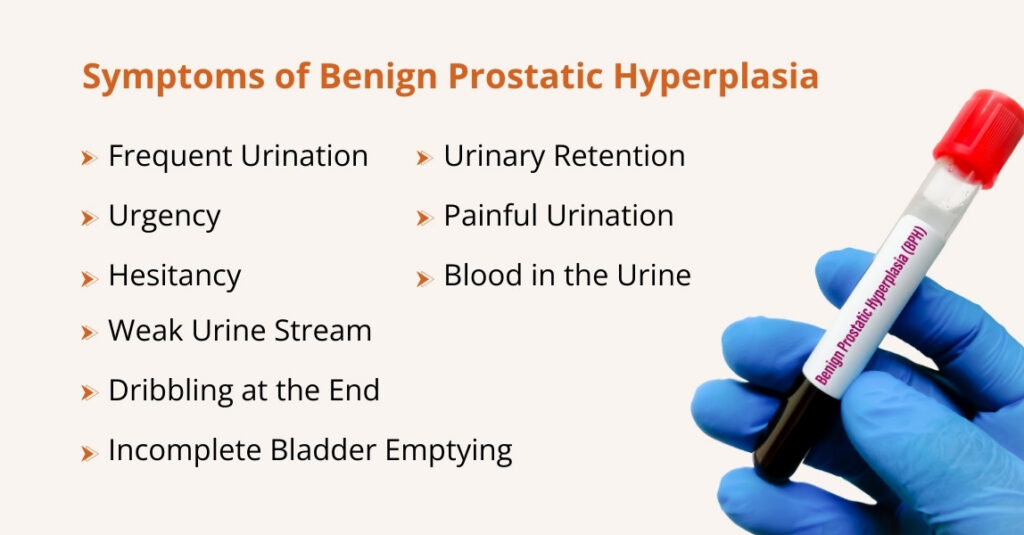
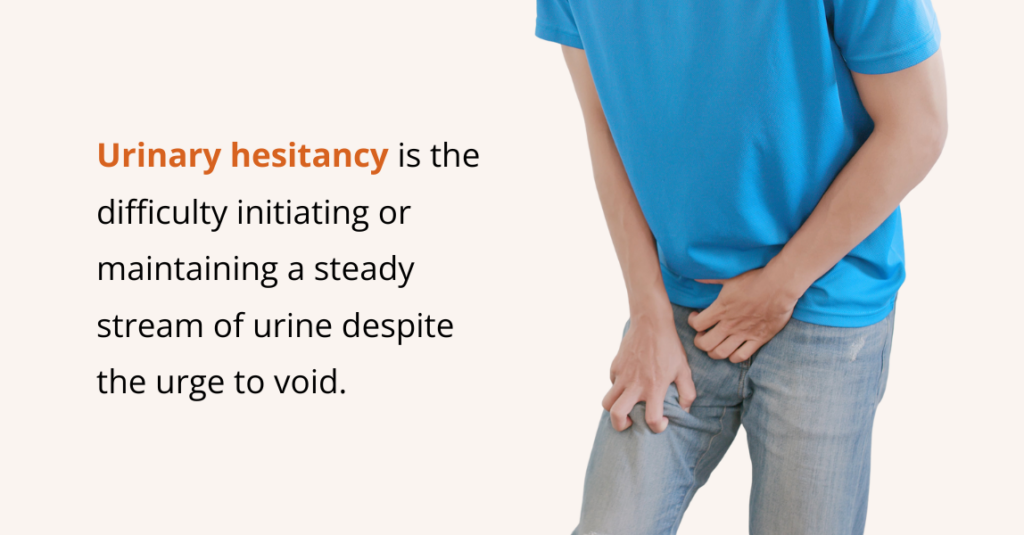
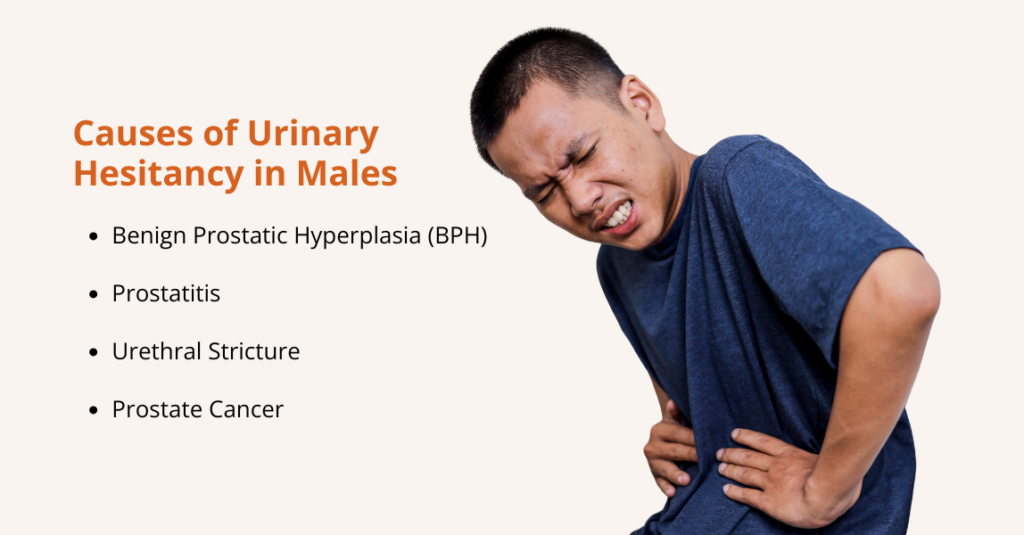
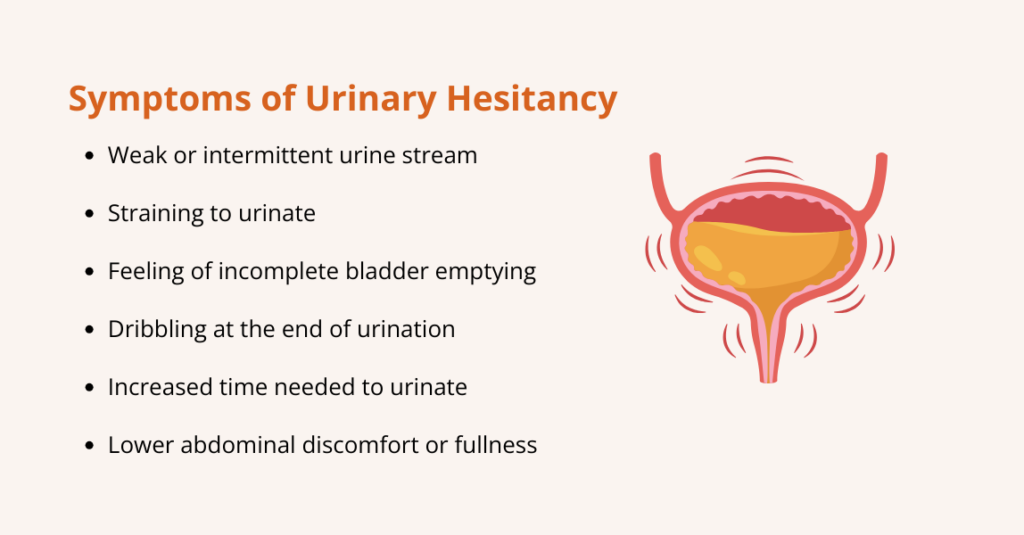
The urinary symptoms men describe most often include frequent urination during the day, waking multiple times at night to urinate (nocturia), a weak or interrupted urine stream, difficulty starting urination (hesitancy), a feeling that the bladder doesn’t fully empty, sudden urgency to urinate, and dribbling after urination. Any one of these can be caused by several different conditions. The key to getting the right treatment is identifying which condition is driving the symptoms.
Enlarged Prostate Symptoms: When BPH Is the Most Likely Cause
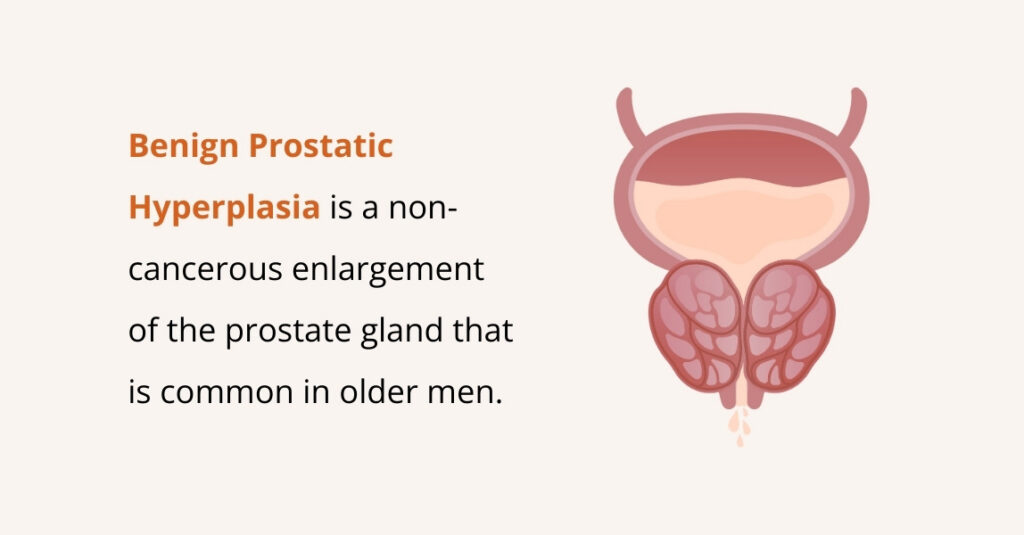
Benign prostatic hyperplasia (BPH) is one of the most common conditions affecting men as they age. The prostate gland gradually enlarges over time, and as it grows, it presses against the urethra and bladder, creating the urinary symptoms most men recognize.
Signs of an enlarged prostate typically develop slowly over months or years. You might notice that your stream isn’t as strong as it used to be, or that you’re planning errands around bathroom access. BPH symptoms tend to follow a recognizable pattern: gradual onset, steady or slowly worsening progression, and symptoms that affect urination mechanics (flow, frequency, and emptying) rather than causing pain or visible changes in urine.
BPH is not cancer and does not increase your risk of developing prostate cancer. However, BPH and prostate cancer can coexist, which is one reason evaluation is important even when BPH is the most likely explanation. For men whose symptoms persist despite medication or lifestyle changes, prostate artery embolization (PAE) offers a minimally invasive treatment option that can provide significant relief without traditional surgery.
Could Urinary Symptoms Be Early Signs of Prostate Cancer?
This is the question that brings the most anxiety, and it deserves an honest answer. In its early stages, prostate cancer often causes no symptoms at all. Most prostate cancers are detected through routine screening (PSA blood tests and digital rectal exams) before they produce noticeable urinary changes.
When prostate cancer does cause urinary symptoms, they can overlap significantly with BPH—which is precisely why men should not attempt to self-diagnose based on symptoms alone. However, certain signs are more commonly associated with advanced prostate disease and warrant prompt evaluation: blood in the urine (hematuria), blood in the semen, new onset of erectile dysfunction, pain in the hips, back, or pelvis that doesn’t have another clear explanation, and unexplained weight loss.
If you’re experiencing any of these symptoms, speak with your doctor promptly. If your urinary symptoms are more consistent with the gradual, flow-related pattern described in the BPH section above, the likelihood of cancer being the primary cause is lower—but screening remains important for peace of mind and proper diagnosis.
When a Urinary Tract Infection Mimics Enlarged Prostate Symptoms
Urinary tract infections are less common in men than in women, but they do occur and can produce symptoms that initially feel similar to BPH. The key difference is timing and onset.
UTI symptoms typically appear suddenly rather than building gradually over months. They often include a burning sensation during urination, cloudy or strong-smelling urine, fever or chills, pain or pressure in the lower abdomen, and an urgent, persistent need to urinate even when little comes out. If your symptoms appeared within the last few days and include pain, burning, or fever, a UTI is a strong possibility and should be evaluated quickly. UTIs are typically diagnosed with a simple urine test and treated with antibiotics.
It’s worth noting that men with BPH are more susceptible to UTIs because incomplete bladder emptying can create an environment for bacterial growth. If you experience recurrent infections, your doctor may evaluate whether an enlarged prostate is contributing to the problem.
How Do Doctors Determine What’s Causing Your Symptoms?
Because urinary symptoms overlap across these conditions, your doctor will use a combination of tools to identify the right diagnosis. A typical evaluation may include a medical history review and symptom assessment (often using a standardized questionnaire called the IPSS, or International Prostate Symptom Score), a digital rectal exam to assess prostate size and texture, a PSA blood test to screen for prostate cancer markers, urinalysis to check for infection or blood, and in some cases, imaging studies or urodynamic testing to evaluate bladder function.
The goal of this evaluation is to give you clarity—not just a diagnosis, but a clear understanding of what’s happening and what your options are. At Seamless Medical Centers, Dr. Bhatti works with patients to interpret these results in the context of each individual’s symptoms and health history.
What Happens When BPH Is Confirmed?
If your evaluation confirms that an enlarged prostate is causing your symptoms, you have several treatment paths depending on the severity of your condition. Mild symptoms may be managed with lifestyle modifications such as limiting fluids before bed, reducing caffeine and alcohol, and bladder training techniques. When symptoms are more disruptive, medications like alpha-blockers or 5-alpha reductase inhibitors may help reduce prostate size or relax the muscles around the bladder neck.
For men whose symptoms persist despite medication or who want to avoid the side effects that can come with long-term drug use, minimally invasive procedures offer another path. Prostate artery embolization (PAE) is a catheter-based procedure that reduces blood flow to the enlarged prostate, allowing it to gradually shrink and relieve pressure on the urinary tract. Unlike traditional surgical options like TURP, PAE does not require general anesthesia or a hospital stay, and most patients return to normal activities within a few days. You can compare PAE and TURP side by side to understand how they differ in approach, recovery, and outcomes.
For appropriate candidates, PAE may offer significant advantages including no incisions, same-day discharge, lower risk of sexual side effects, and a recovery measured in days rather than weeks. Learn what to expect during PAE recovery so you can plan with confidence.
Who Is More Likely to Develop an Enlarged Prostate?
Benign prostatic hyperplasia becomes more common with each decade of life, which is why it is so frequently the explanation for urinary changes in men over 50. Age is the strongest factor: the prostate tends to grow gradually throughout adulthood, and by their 60s and 70s a substantial share of men notice some degree of urinary symptoms. A family history of prostate enlargement can raise your likelihood as well, and research suggests that factors such as obesity, diabetes, and a sedentary lifestyle may contribute to both the development and the severity of symptoms.
Understanding your own risk profile is useful context, not a diagnosis. Having one or more of these factors does not mean your symptoms are definitely from BPH, and not having them does not rule it out. It simply helps frame the conversation with your provider. The same urinary symptoms can stem from several sources, so an evaluation remains the only reliable way to identify what is actually driving your experience rather than assuming based on age or risk factors alone.
It is also worth knowing that the size of the prostate does not always match the severity of symptoms. Some men with only modest enlargement have significant urinary difficulty because of where the growth presses on the urethra, while others with a larger prostate have relatively mild symptoms. This is one reason your provider focuses on how your symptoms affect you, not only on measurements, when discussing whether and how to treat an enlarged prostate.
Why Men Throughout Southeast Texas Trust Seamless Medical Centers
Dr. Zagum Bhatti is a Board-Certified Interventional Radiologist with advanced fellowship training in minimally invasive procedures. At Seamless Medical Centers, every patient receives a thorough evaluation, a clear explanation of their diagnosis, and a personalized treatment plan—not a one-size-fits-all approach.
Seamless serves patients from across the region, including those traveling from Houston for the focused specialist experience and personalized attention that a dedicated interventional radiology practice provides. Whether you need diagnostic clarity about your urinary symptoms or you’re ready to explore treatment options, the team at Seamless is here to help.
Address: 3300 Jimmy Johnson Blvd, Suite #130, Port Arthur, Texas 77642
Medical Disclaimer
Individual results may vary. This information is for educational purposes only and should not replace professional medical advice. Treatment decisions should be made in consultation with qualified healthcare providers.
Published by Seamless Medical Centers | Clinical information reflects the expertise of Dr. Zagum Bhatti, MD, Board-Certified Interventional Radiologist, Founder of Seamless Medical Centers.
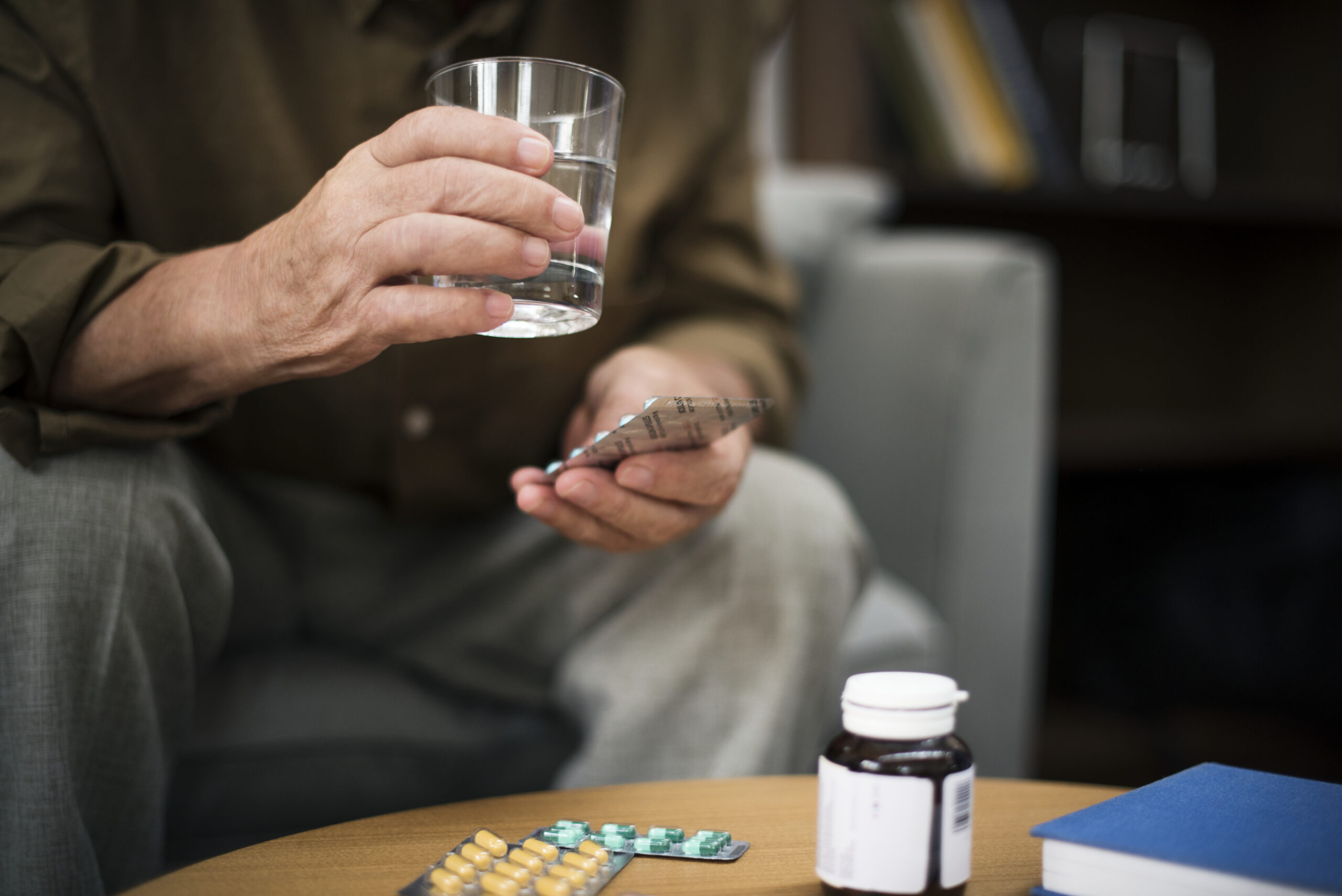
You started taking medication for your enlarged prostate hoping it would finally let you sleep through the night, empty your bladder completely, and stop planning your day around the nearest bathroom. Maybe it helped at first. But months or years later, you are still waking up two or three times a night, still waiting for a stream that takes its time to start, and still feeling like the job is never quite finished. If the relief you were promised has faded — or never fully arrived — you are right to wonder whether medication is still the answer.
You do not have to choose between living with worsening symptoms and undergoing major surgery. At Seamless Medical Centers, Dr. Zagum Bhatti, a board-certified interventional radiologist and founder of the practice, offers prostate artery embolization (PAE) — a minimally invasive treatment for an enlarged prostate that does not involve cutting or removing prostate tissue. Houston-area men are seen at our Port Arthur main office, where figuring out where you stand and what comes next starts with a conversation rather than a commitment. You can learn more about Dr. Bhatti’s training and background as a board-certified interventional radiologist before you ever book a visit.
For men across the Houston area — from Katy and Cypress to Sugar Land, Pearland, and The Woodlands — reaching the point where medication no longer controls an enlarged prostate is a common and frustrating crossroads. Understanding the full range of treatment options, and where a procedure like PAE fits among them, can help you make a decision that fits your symptoms, your anatomy, and your life.
When Medication for an Enlarged Prostate Stops Being Enough
An enlarged prostate — known medically as benign prostatic hyperplasia, or BPH — happens when the prostate gland grows and presses against the urethra, the tube that carries urine out of the body. That pressure is what produces the familiar enlarged prostate symptoms: a weak or stop-and-start stream, difficulty starting, frequent trips to the bathroom, and the sense that your bladder never fully empties. For many men, BPH is a slow, progressive condition, which is part of why a treatment that worked a few years ago can feel less effective today.
Medication is often the first step, and for good reason. Several categories of prescription drugs can relax the muscle around the prostate or gradually reduce its size, easing symptoms for a time. But these medications manage the condition rather than resolve it, and they do not work equally well for everyone. Some men find the benefit fades as the prostate continues to grow; others are bothered by side effects or simply tire of taking daily pills indefinitely with diminishing returns.
If you are spending more of your day managing symptoms than the medication is relieving, that is a meaningful signal. Worsening frequent urination, getting up repeatedly at night, or a stream that keeps weakening despite treatment are all reasons to revisit your options. It also helps to understand the full range of causes behind frequent urination, since recognizing the difference between normal aging and symptoms that warrant a closer look is the first step toward relief that lasts.
Understanding Your Treatment Options Beyond Medication
When medication is no longer enough, your options generally fall into three broad groups: continuing or adjusting medication, traditional surgical procedures, and minimally invasive treatments such as embolization. Each approaches the same problem — an enlarged prostate crowding the urethra — in a different way, with different trade-offs in recovery time, risk, and how the procedure affects the prostate itself.
Surgical options like transurethral resection of the prostate (TURP) physically remove or destroy prostate tissue to open the urinary channel. These procedures have a long track record and can be very effective, but they typically involve more recovery time and carry their own set of considerations. For men who want to understand how a surgical approach compares with a non-surgical one, our overview of how prostate artery embolization works as a modern BPH treatment explains the minimally invasive option in plain terms.
Minimally invasive treatments have expanded the middle ground between daily pills and the operating room. Rather than removing tissue, prostate artery embolization reduces the blood supply to the prostate so the gland gradually shrinks, relieving pressure on the urethra over time. For many men weighing what comes after medication, this kind of option opens up a path they did not realize existed.
How Prostate Artery Embolization Compares
Prostate artery embolization is performed through a tiny catheter — a thin, flexible tube — inserted into a blood vessel, usually at the wrist or groin. Guided by imaging, your interventional radiologist directs the catheter to the small arteries feeding the prostate and releases microscopic particles that reduce blood flow to the gland. With its blood supply limited, the prostate gradually shrinks over the following weeks and months, and many men notice their urinary symptoms easing as it does.
Because PAE does not cut or remove tissue, it differs from surgery in several practical ways. It is typically performed on an outpatient basis, often without general anesthesia, and many men return to normal activities within a few days. The approach also tends to preserve the surrounding structures, which is one reason some men explore it specifically out of concern about side effects associated with certain surgical procedures — though every option carries its own considerations that are best discussed individually.
Deciding between PAE and a surgical procedure is rarely one-size-fits-all. Prostate size, your symptoms, your overall health, and your personal priorities all factor in. If you want a side-by-side sense of the differences, our comparison of PAE versus TURP for prostate treatment lays out how the two approaches differ in recovery, risk, and results, so you can bring informed questions to your evaluation.
Is PAE Right for You? Evaluating Candidacy
Not every man with an enlarged prostate is a candidate for prostate artery embolization, and a thorough evaluation is the only way to know. For appropriate candidates, PAE tends to be considered when enlarged prostate symptoms are moderate to severe, when medication has not provided adequate relief, or when you would prefer to avoid — or are not a good candidate for — traditional surgery. Men with larger prostates, in particular, are often well suited to the approach.
Evaluation usually begins with a review of your symptoms and medical history, along with imaging to assess the size of your prostate and map the arteries that supply it. This planning is what allows the procedure to be tailored to your specific anatomy. It is also an opportunity to confirm that your symptoms are coming from BPH rather than another cause, so that any treatment is aimed at the right target.
Because the right choice depends on factors unique to you, the goal of an evaluation is not to push a single procedure but to help you understand which options genuinely fit your situation. Individual results may vary, and the most appropriate treatment is the one matched to your symptoms, your anatomy, and your goals after an honest conversation with a qualified specialist.
Accessible Specialist Care for Houston-Area Men
You should not have to navigate a sprawling hospital system or wait weeks for a specialist just to get answers about an enlarged prostate. Seamless Medical Centers serves men throughout the Houston area — including Katy, Sugar Land, The Woodlands, Pearland, Cypress, League City, and Spring, as well as the broader communities of Harris County and Fort Bend County — who are looking for focused, specialist care without the runaround of a large medical-center practice.
Houston-area men are seen at our Port Arthur main office, an accessible drive from the metro area along I-10. Dr. Bhatti is a board-certified interventional radiologist and a former faculty member in vascular and interventional radiology at UTHealth in Houston, and the practice is built around giving you direct access to that expertise with shorter waits and more personal attention than many men experience at a large hospital system. You can explore prostate artery embolization for Houston-area men on our dedicated service page, or visit our home page for the full range of minimally invasive treatments offered at the practice.
If insurance or scheduling questions are part of what is holding you back, those are exactly the kinds of details our team can walk through with you before any decision is made. The aim is simply to make getting clear, specialist guidance about your enlarged prostate as straightforward as possible, wherever in the Houston area you are coming from.
When to Seek a Specialist Evaluation
It can be hard to know when ongoing prostate symptoms have crossed from a manageable nuisance into something worth acting on. As a general guide, it is reasonable to seek evaluation when symptoms are disrupting your sleep, limiting your activities, or steadily worsening despite medication — or when you simply want to understand options you have not been offered yet.
Certain symptoms call for prompt attention rather than watchful waiting. If you become unable to urinate at all, see blood in your urine, or develop a fever alongside urinary symptoms, contact a medical provider right away or seek emergency care, as these can signal problems that need immediate evaluation. Short of that, persistent enlarged prostate symptoms are a signal to talk with a specialist about whether a treatment beyond medication makes sense for you.
Reaching out sooner rather than later tends to give you more options, not fewer. The earlier you understand where your symptoms are coming from and what can be done, the more control you have over the decision. If you are ready to take that step, you can contact Seamless Medical Centers to discuss your enlarged prostate symptoms and whether PAE may be appropriate for you.
Schedule Your Enlarged Prostate Consultation
You do not have to keep organizing your life around an enlarged prostate that medication can no longer control. If you are ready to understand your options and whether prostate artery embolization may be right for you, schedule your consultation with Seamless Medical Centers. Our team serves men throughout the Houston area and Southeast Texas, and we are here to help you take the next step toward lasting relief.
Phone: 409-213-9575
Address: 3300 Jimmy Johnson Blvd, Suite #130, Port Arthur, Texas 77642
Frequently Asked Questions About Enlarged Prostate Treatment in Houston
Q1. How do I know if I need more than medication for my enlarged prostate?
If your enlarged prostate symptoms are worsening despite taking medication, disrupting your sleep, or limiting your daily activities, it may be time to explore other options. Many men reach a point where medication manages their BPH less effectively over time, which is a reasonable moment to discuss minimally invasive treatments with a specialist.
Q2. Is prostate artery embolization a type of surgery?
No. Prostate artery embolization is a minimally invasive procedure performed through a small catheter, not an open or transurethral surgery. It does not remove prostate tissue; instead, it reduces blood flow to the prostate so the gland gradually shrinks, and it is typically performed on an outpatient basis.
Q3. Will I have to travel far for treatment if I live in the Houston area?
Houston-area men are seen at the Seamless Medical Centers main office in Port Arthur, an accessible drive from much of the metro area. Many men from Katy, Sugar Land, Pearland, and surrounding communities choose this route to access focused specialist care with shorter waits than a large hospital system.
Q4. Does prostate artery embolization affect sexual function?
One reason some men consider PAE is that, because it does not remove prostate tissue, it may carry a different risk profile for sexual side effects than certain surgical procedures. That said, every treatment has its own considerations and individual results may vary, so this is an important topic to discuss directly with your specialist during your evaluation.
Q5. How long does recovery after PAE usually take?
Recovery is generally quicker than with traditional prostate surgery. Many men experience only mild discomfort and return to normal activities within a few days, though symptom improvement develops gradually over the following weeks to months as the prostate shrinks. Individual recovery varies from person to person.
Frequent nighttime bathroom trips. Difficulty starting urination. A constant feeling that your bladder isn’t empty. If enlarged prostate symptoms are disrupting your daily life, you’re not alone—and you have more treatment options than ever before.
Prostate artery embolization (PAE) is a minimally invasive approach to treating benign prostatic hyperplasia (BPH) that offers an alternative to traditional surgery. At Seamless Medical Centers, we’re proud to offer this advanced, minimally invasive procedure that provides effective relief without the risks and recovery time of traditional surgery.
Understanding Prostate Artery Embolization
Prostatic artery embolization (PAE) is a minimally invasive treatment that helps improve lower urinary tract symptoms caused by benign prostatic hyperplasia (BPH). The procedure works by reducing blood flow to the enlarged prostate, causing it to shrink and relieving pressure on the urethra.
The PAE process:
Tiny particles are delivered through a small catheter to block specific prostate arteries
Reduced blood flow causes the prostate to gradually shrink
Pressure on the urethra decreases, improving urinary flow
Symptoms improve progressively over weeks to months
Prostatic artery embolization represents an emerging minimally invasive procedure for BPH, offering men an alternative to traditional surgical treatments.
How PAE Compares to Traditional Treatments
The landscape of BPH treatment has evolved dramatically, with PAE offering significant advantages over conventional approaches:
PAE vs. TURP (Transurethral Resection of Prostate)
Doesn’t address the underlying prostate enlargement
PAE advantages:
Addresses the root cause by reducing prostate size
Long-lasting results without daily medication
Minimal ongoing maintenance required
Improves both symptoms and quality of life measures
The Science Behind PAE Effectiveness
Studies and clinical experience suggest PAE can provide meaningful symptom improvement for appropriate candidates. PAE provides more urinary and sexual symptoms benefits than conservative treatment up to 24 months in patients with enlarged prostates who haven’t responded adequately to medication alone.
The PAE Procedure: What to Expect
Understanding the process helps ease anxiety about any medical procedure:
Pre-Procedure Preparation:
Comprehensive evaluation including symptom assessment
Imaging studies to map prostate blood supply
Review of medications and medical history
Discussion of expectations and post-procedure care
During the Procedure:
PAE is performed through a small catheter inserted by your interventional radiologist into the artery in your wrist or groin
Conscious sedation keeps you comfortable throughout
One of PAE’s most appealing aspects is the relatively swift recovery:
First Week:
Some pelvic discomfort or burning during urination
Gradual return to light activities
Temporary urinary frequency possible
Weeks 2-4:
Significant improvement in comfort levels
Return to normal work and daily activities
Initial symptom improvements often noticeable
Months 1-3:
Progressive symptom relief as prostate shrinks
Improved urinary flow and reduced frequency
Enhanced quality of life measures
Long-term (3+ months):
Maximum benefit typically achieved
Sustained symptom relief
Maintained improvement over years
Safety Profile and Side Effects
The PAE procedure has a lower risk of urinary incontinence and sexual side effects (retrograde ejaculation or erectile dysfunction), when compared with more invasive surgical procedures.
Common temporary effects:
Patients may experience “post-PAE syndrome” for days following the procedure, which can include nausea, vomiting, fever, pelvic pain, or painful or frequent urination
These symptoms typically resolve within a week
Serious complications are rare:
Infection requiring antibiotics
Bladder spasm or temporary retention
Bleeding or hematoma at access site
For appropriate candidates, PAE has a different risk profile from resective surgical alternatives, which is one of the factors weighed during the candidacy assessment.
Long-Term Outcomes and Satisfaction
Reported long-term outcomes with PAE include:
Symptom improvement:
Sustained reduction in urinary frequency and urgency
Improved urinary flow rates
Better sleep quality due to reduced nighttime urination
Enhanced overall quality of life
Patient satisfaction:
Many patients report meaningful improvement in urinary symptoms
Low rates of additional intervention
Seamless Medical Centers Advantage
Our board-certified interventional radiologists bring specialized expertise in advanced embolization procedures specifically designed for men’s health needs.
What distinguishes our approach:
Specialized expertise in minimally invasive men’s health procedures
Advanced imaging technology for optimal precision and safety
Comprehensive evaluation to ensure you’re an ideal candidate
Insurance coordination handled by our experienced team
We understand that prostate treatment involves both medical and quality-of-life considerations. PAE should only be performed by knowledgeable and trained interventional radiologists, ensuring you receive the highest standard of care.
Insurance Coverage and Accessibility
PAE is typically less expensive than even other minimally invasive procedures and is covered by most insurance plans, making this advanced treatment accessible to men who need it. PAE offers an effective, minimally invasive solution that addresses the underlying problem while preserving your comfort and lifestyle.
Ready to explore PAE? Contact Seamless Medical Centers to schedule your consultation. Our experienced team will evaluate your specific situation and help determine if PAE is the right choice for your BPH treatment needs.
Individual results may vary. This information is for educational purposes only and should not replace professional medical advice. Treatment decisions should be made in consultation with qualified healthcare providers.
Do you find yourself running to the bathroom more often than usual, even disrupting your day or sleep?
Most healthy adults urinate about 6–8 times a day, so going more than eight times, or waking repeatedly at night (nocturia), can feel frustrating and inconvenient.
Sometimes, frequent urination is harmless, like during pregnancy or after drinking a lot of fluids. However, it can also indicate an underlying health issue.
This guide breaks down why frequent urination happens in both women and men, the symptoms to watch for, practical self-care tips, and available medical treatments.
What is Frequent Urination?
Frequent urination means needing to pee more often than usual during the day or at night. It can be annoying and disruptive, and it is a common issue experienced by many people.
For example, waking up more than twice at night to void (nocturia) is generally beyond the normal range. Urinating more than 8 times per day falls into the “frequent urination” range.
In contrast, most healthy adults urinate 6–8 times per day (roughly every 3–4 hours) and wake only once at night at most.
Needing to urinate much more often than this, especially if it suddenly increases, can be a sign of conditions ranging from mild (such as increased fluid intake) to serious (such as infections, metabolic or neurologic disease).
What Causes Frequent Urination?
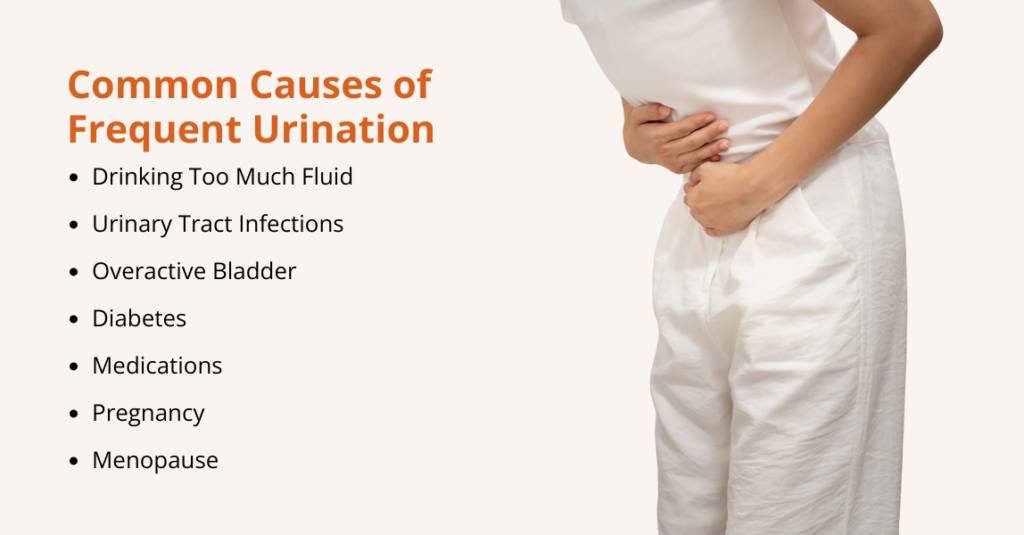
Frequent urination can result from many different factors. Common causes include:
Drinking too Much Fluid: If you drink a lot, especially coffee, tea, energy drinks, or alcohol, you empty your bladder more quickly.
Urinary Tract Infections (UTIs): A UTI irritates the bladder lining and triggers a strong, repeated urge to pee. People often feel a burning sensation, need to pee even when little comes out, or notice cloudy or bloody urine.
Overactive Bladder (OAB): With OAB, the bladder muscles suddenly contract, causing urgency and frequent trips to the bathroom, even if the bladder isn’t full.
Diabetes: High blood sugar causes extra glucose to spill into the urine, pulling more water with it. This leads to passing large amounts of urine and feeling thirsty all the time.
Medications (Diuretics): “Water pills” used for high blood pressure or swelling make the kidneys release more salt and water, so you pee more.
Pregnancy: The uterus presses on the bladder, and the kidneys work harder, leading to more frequent urination.
Menopause: Lower estrogen levels weaken bladder tissues and increase the risk of UTIs, urgency, and leakage.
Anything that fills or irritates the bladder can increase urination frequency, and understanding these causes is the first step toward appropriate treatment.
Causes of Frequent Urination in Women
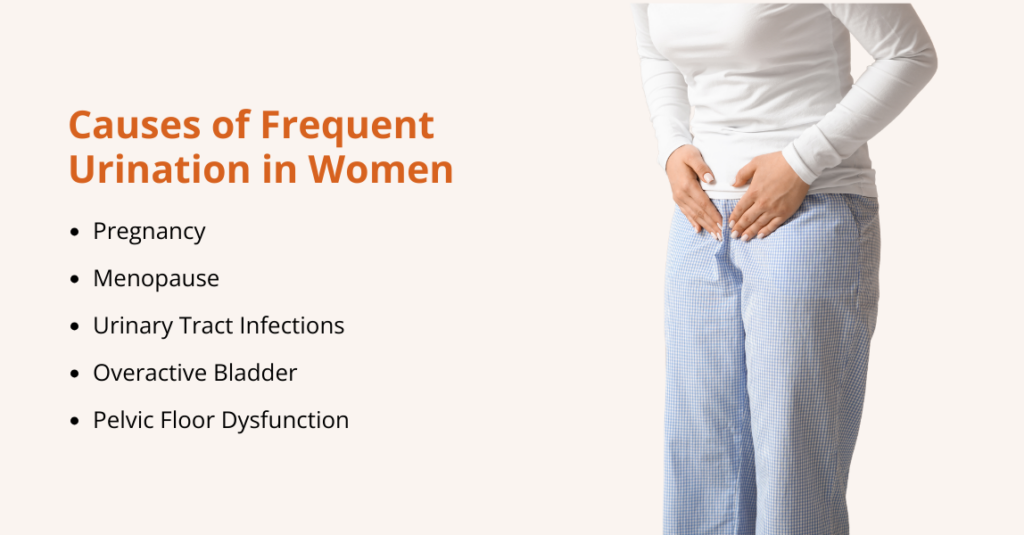
Women experience frequent urination for several gender-specific reasons. Key female causes and risk factors include:
Pregnancy: Hormonal changes, increased urine production, and pressure from the growing uterus make frequent urination very common, especially in the first and third trimesters.
Menopause: Lower estrogen weakens bladder and urethral tissues, leading to urgency, leakage, and a higher risk of UTIs, which can trigger sudden, frequent urination.
Urinary Tract Infections (UTIs): Because women have a shorter urethra, bacteria reach the bladder more easily. UTIs cause repeated urges to pee, burning, and small amounts.
Overactive Bladder (OAB): Women are slightly more likely to develop OAB, which causes sudden urges and frequent daytime and nighttime urination.
Pelvic Floor Dysfunction: Pregnancy, childbirth, or surgery can weaken pelvic floor muscles, causing urgency, leaks, and the need to urinate more often.
Causes of Frequent Urination in Men
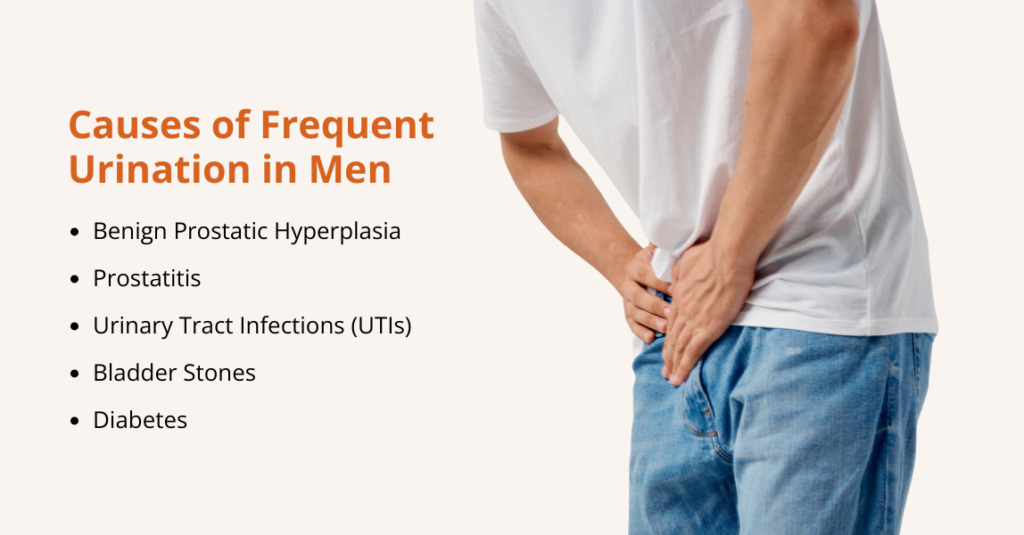
Men can have frequent urination for some causes unique to males, in addition to the general factors above (like fluid intake or diabetes). Important male-specific causes include:
Benign Prostatic Hyperplasia (BPH): The prostate enlarges with age and presses on the urethra, causing weak flow, incomplete emptying, and frequent or nighttime urination.
Prostatitis: Inflammation of the prostate leads to pelvic pain, burning with urination, and repeated urges to pee, often with a feeling of not emptying fully.
Urinary Tract Infections (UTIs): Less common in men, but when present, they cause urgency, burning, frequent urination, and sometimes blood, often linked to prostate issues.
Bladder Stones: More common in men, especially when bladder emptying is poor. Stones irritate the bladder wall, causing frequent urination, urgency, pain, or hematuria.
Diabetes: Hyperglycemia leads to increased urine production. Men with uncontrolled diabetes may notice increased thirst, large urine volumes, and frequent nighttime urination.
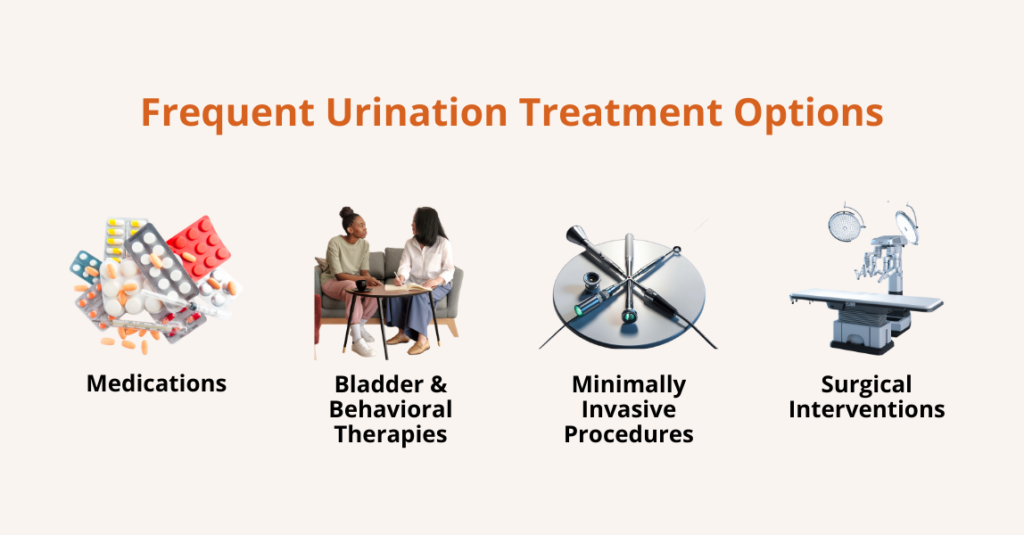
Frequent Urination Treatment Options
When lifestyle and behavioral changes are insufficient, or when there is an underlying medical cause, medical treatment may be necessary.
Here are the most common treatment options:
Medications
These treatments help manage urgency, frequency, and bladder control by addressing the specific cause of symptoms.
Anticholinergics & Beta-3 Agonists: Used for overactive bladder. Anticholinergics block bladder muscle contractions; beta-3 agonists relax the bladder.
Alpha-Blockers: For men with BPH. They relax the prostate and the bladder neck to improve urine flow.
5-Alpha-Reductase Inhibitors: Long-term BPH treatment that shrinks the prostate and reduces urinary symptoms.
Diuretics: Increase urination; timing may be adjusted if they cause bothersome frequency.
Topical Estrogen: Helps postmenopausal women by improving vaginal and urethral tissue health and reducing urgency.
Bladder and Behavioral Therapies
These are non-surgical approaches that focus on training and strengthening the bladder and pelvic muscles to improve control and reduce frequent urination or incontinence:
Bladder Training: This method helps you gradually increase the interval, enabling the bladder to hold more urine and reducing urgency and frequency.
Pelvic Floor Exercises (Kegel Exercises): These exercises strengthen the pelvic floor muscles, which support the bladder and urethra.
Biofeedback: Biofeedback uses sensors or devices to help you see how your pelvic muscles are working. It guides you in contracting and relaxing the right muscles.
These therapies are often used in combination and guided by a healthcare professional to achieve optimal results.
Minimally Invasive Procedures
These treatments offer non-surgical options for managing urinary problems:
Tiny particles are injected to block blood flow, causing the prostate to shrink over time. This relieves pressure on the urethra, improving urine flow and reducing the frequency of urination. The procedure is done without surgery, often as an outpatient treatment, and has a short recovery time.
Bladder Botox (OnabotulinumtoxinA)
This is used for refractory overactive bladder. Under anesthesia, Botox is injected directly into multiple sites in the bladder wall. The toxin paralyzes part of the bladder muscle, reducing involuntary contractions.
Botox can prevent bladder contractions, providing symptom relief for approximately 6–9 months. However, periodic re-injections may be needed.
Surgical Interventions
When medications and minimally invasive treatments aren’t enough, surgical options can help relieve urinary symptoms and improve bladder control.
Prostate Surgery
For severe BPH, procedures like Transurethral Resection of the Prostate (TURP) or laser prostatectomy remove excess prostate tissue, opening the urinary channel. This often significantly reduces urinary frequency by relieving bladder obstruction.
Anti-Incontinence Surgery
For women with stress urinary incontinence (UI), procedures like mid-urethral slings or bladder neck suspensions support the urethra, preventing leaks. By reducing incontinence, these surgeries can also improve overall bladder habits.
Neuromodulation Devices
For refractory cases of overactive bladder, sacral nerve stimulators (InterStim) or tibial nerve stimulators (PTNS) deliver mild electrical pulses to modulate bladder activity. These advanced therapies are used when medications and conservative treatments fail.
Remember, each treatment plan is individualized. A doctor will consider the severity of symptoms, the underlying cause, patient preferences, and health.
For example, a young woman with mild OAB may do well with Kegel exercises and bladder training alone, while an older man with BPH may need medications or even surgery for relief.
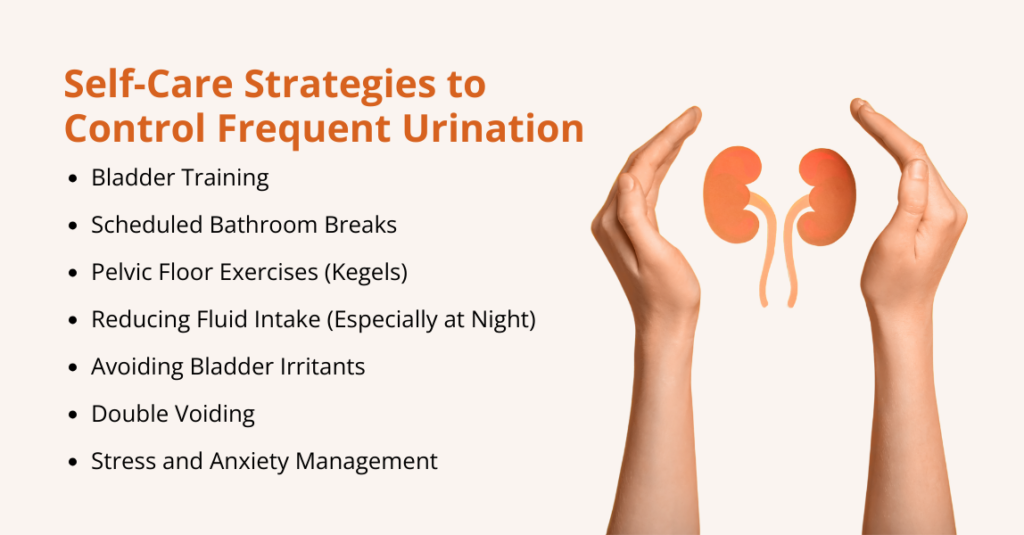
How to Stop Frequent Urination?
If frequent urination is due to lifestyle factors or an overactive bladder, several self-care strategies can help strengthen bladder control and reduce frequency.
Many of these are first-line recommendations before or alongside medications:
1. Bladder Training
This involves gradually extending the time between bathroom visits.
For example, if you are going every 30 minutes out of habit or urgency, you might try delaying for 5 minutes, then 10, then longer, gradually increasing bladder capacity.
Over days or weeks, this can condition the bladder to hold more urine and reduce the number of trips. Bladder training is widely recommended as a first-line therapy for an overactive bladder.
2. Scheduled Bathroom Breaks
Similar to bladder training, setting a regular voiding schedule can help. For example, try urinating at predetermined intervals (e.g., every 2–3 hours) even if you don’t feel a strong urge yet.
This prevents “sudden” emergencies and helps your bladder get used to holding urine. It can also help you track how often you truly need to go and whether you are going out of habit.
3. Pelvic Floor Exercises (Kegels)
The pelvic floor muscles support the bladder and help control urination. Strengthening these muscles can reduce urgency and incontinence.
To do Kegel exercises, simply tighten (squeeze) the muscles you would use to stop the flow of urine, hold for a few seconds, then relax. Repeat 10–15 times per session, several times a day. Over the course of weeks, this can markedly improve control.
4. Reducing Fluid Intake (Especially at Night)
Limit evening beverages, so you’re not forcing the kidneys to produce excessive urine before bedtime. This helps reduce nocturia (nighttime trips). Additionally, avoid excessive daily fluid intake if your bladder is overly sensitive.
Importantly, do not overrestrict fluid intake; staying hydrated is necessary, but avoid drinking a liter right before bed. Similarly, cut back on caffeine (coffee, tea, sodas) and alcohol, as both act as diuretics and bladder irritants.
5. Avoiding Bladder Irritants
Certain foods and drinks can irritate the bladder lining and exacerbate urgency.
The most common offenders include spicy foods, citrus fruits/juices, tomatoes, carbonated drinks, and artificial sweeteners. If you notice a surge in frequency after spicy meals or coffee, try eliminating these triggers.
6. Double Voiding
Especially useful if you feel the bladder is not fully emptying. After you finish peeing, wait a minute or two, then try to pee again. Sometimes this second attempt will release a small additional amount that was left behind.
With time, emptying the bladder more completely may reduce the sensation of fullness that leads to multiple trips.
7. Stress and Anxiety Management
Stress can worsen urinary frequency (due to the “fight or flight” response and pelvic muscle tension).
If you find yourself rushing to the bathroom whenever you feel even a little stress, consider stress reduction exercises. Practice relaxation techniques like deep breathing, mindfulness meditation, or yoga to reduce anxiety.
With these self-help methods, many people see improvement. However, it is important to track progress and provide relevant information if you later require a medical evaluation.
Frequently Asked Questions (FAQs)
How does drinking too much fluid lead to frequent urination?
Drinking large volumes of any fluid increases urine production. Think of the kidneys as filtering blood: the more fluid you drink, the more they filter, and the more urine is produced. This is especially true for beverages with diuretic effects, like coffee and alcohol. In effect, these fluids increase the amount of water in your bloodstream that needs to be excreted.
Why do I feel like I have to pee every 5 minutes?
Feeling like you need to pee every few minutes can be caused by an overactive bladder, which triggers sudden “gotta go” urges and frequent bathroom trips, or a urinary tract infection, which often brings burning, urgency, and discomfort. Certain medications, such as diuretics, can also increase urination. If you experience other symptoms such as pain, fever, or burning, it’s important to see a physician for proper evaluation.
Why am I peeing so much all of a sudden?
A sudden change in frequency of urination suggests a new factor. Common causes include urinary infections and diabetes. For example, a bladder infection can develop quickly and irritate your bladder, causing urgency every few minutes. New-onset diabetes can also cause a rapid increase in urination. It’s also worth reviewing any new medications or dietary changes (e.g., starting caffeine or supplements) that could be affecting your bladder. If the frequent urination is sudden and accompanied by other symptoms (e.g., thirst, sugar cravings), checking blood glucose and urine for infection may be prudent.
When should I worry about peeing a lot?
You should worry and see a healthcare provider if frequent urination comes with concerning symptoms or seriously affects your daily life. Red flags include pain or burning while urinating, blood in the urine, fever, or a sudden, sharp increase in how often you go. Waking up multiple times at night, particularly if it disrupts sleep and daytime functioning, warrants evaluation. Any warning signs, such as pain, fever, blood in the urine, or unusual discharge, require prompt medical attention.
Is it normal to urinate every 2 hours?
Urinating every 2 hours can be normal for someone drinking a lot or with bladder training, but it’s more frequent than the average of 6-8 times a day (every 3-4 hours). Normal frequency depends on your fluid intake and the size of your bladder. If there are no other symptoms, it may not need worrying. But if it’s more frequent than usual for you, or you feel urgency or discomfort, it may need further attention.
Is it normal to pee every 30 minutes?
No, peeing every 30 minutes is far outside the normal range for adults. Going every half hour suggests a serious problem, possibly a bladder infection, severely overactive bladder, or other issue. It should be evaluated by a doctor.
When should someone see a doctor for frequent urination?
You should consult a doctor if you urinate more than 8 times a day or wake frequently at night, especially if it disrupts your daily life or comes with other symptoms. These may indicate infections (like UTIs), diabetes, kidney problems, or other serious conditions. Also, see a doctor if you experience any of the following signs:
Pain/Burning: Discomfort while urinating (dysuria).
Blood in Urine: Urine appears pink, red, or brown (hematuria).
Signs of Infection: Fever, chills, cloudy urine, or lower back/side pain.
Urgency & Incontinence: Sudden, uncontrollable need to urinate or leaking urine.
Nocturia: Waking more than once or twice at night, disrupting sleep.
Systemic Symptoms: Excessive thirst or hunger, fatigue, or unexplained weight loss.
Difficulty Urinating: Trouble starting, weak stream, or feeling of incomplete emptying.
Conclusion
Frequent urination is a common condition with a wide range of causes. In some cases, it may simply result from drinking large amounts of fluids or consuming diuretics such as caffeine and alcohol.
However, it can also indicate more serious medical issues, including urinary tract infections (UTIs), diabetes, an overactive bladder, or prostate enlargement in men.
Therefore, understanding the context and symptoms is essential. New, sudden, or severe increases in urination, especially when combined with pain, burning, blood in the urine, fever, or other systemic symptoms, should prompt timely medical evaluation.
For many people, non-invasive options such as behavioral and bladder therapies, like bladder training, Kegel exercises, and fluid management, can significantly improve symptoms. In other cases, medications may help manage an overactive bladder, prostate issues, or infections.
For persistent or severe problems, minimally invasive procedures or surgical interventions may be necessary to relieve obstruction or restore bladder function.
Importantly, early evaluation and intervention can prevent complications. With the right combination of lifestyle adjustments, medical treatment, or procedures, most people experience meaningful improvements in urinary frequency and quality of life.
Urinary incontinence (UI) means leaking urine when you don’t want to. It is a common health problem that affects millions of people, especially women and older adults.
Over 33 million Americans suffer from some type of urinary incontinence or bladder condition.
Although it becomes more common with age, it is not a normal part of getting older. UI usually happens because the bladder cannot store urine properly, or the muscles that hold urine in become weak.
Importantly, it can affect daily life. People may feel embarrassed, avoid social activities, or feel stressed. For caregivers and family, UI increases physical and emotional strain.
But do you know what makes this problem even harder?
There is a lot of stigma around urinary incontinence, which makes people think leaking urine is “normal” after childbirth or as they get older. This stops many from asking for help.
In this blog, we’ll break down everything you need to know about urinary incontinence, its types, causes, symptoms, risks, diagnosis, treatment, and prevention.
With the right information, people can get help sooner, and healthcare providers can offer better care.
What is Urinary Incontinence?
Urinary incontinence (UI) means losing control of your bladder and accidentally leaking urine.
This can happen in different ways: you might leak a little when you cough or sneeze, feel a sudden urge to pee, or, in rare cases, lose full control of your bladder.
Your urinary system includes several organs that work together to filter, store, and remove waste as urine. When everything is working normally, you can get to the bathroom on time.
Incontinence happens when these organs or muscles don’t function properly. There are many reasons this can occur, and it can affect people at any stage of life.
While it’s true that the risk increases with age, UI can affect anyone, young or old.
The good news is that treatments are available to help manage it. With the right care, incontinence doesn’t have to disrupt your life or stop you from staying active.
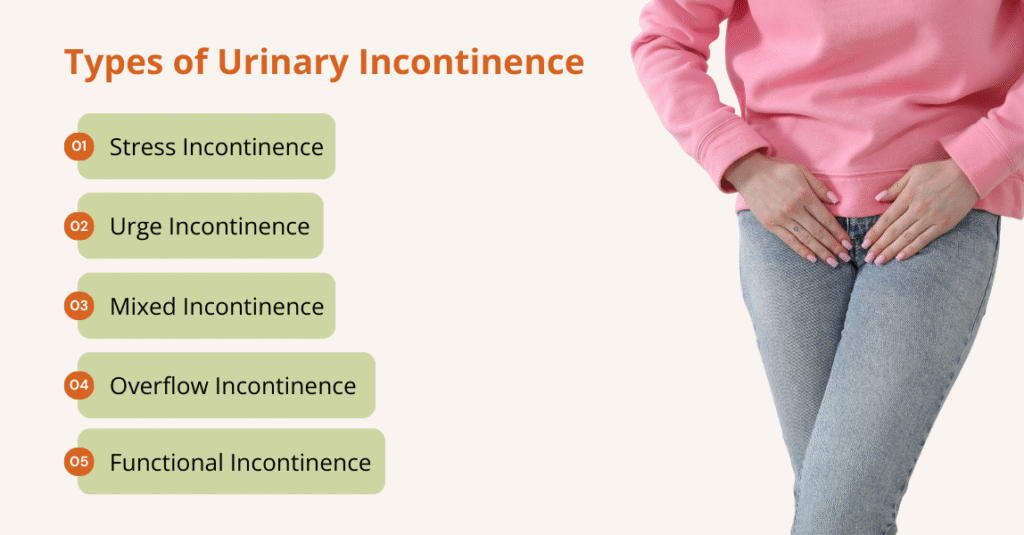
Types of Urinary Incontinence
There are several types of urinary incontinence, each with its own causes, symptoms, and triggers. Understanding which type you have is an important step in getting the right treatment.
The main types of incontinence include:
1. Stress Incontinence (SUI)
Stress incontinence (SUI) occurs when the pelvic floor muscles and/or urethral sphincter cannot resist sudden increases in intra‑abdominal pressure. Activities such as coughing, sneezing, laughing, exercising, or lifting heavy objects cause involuntary leakage.
In women, SUI commonly results from pregnancy, vaginal deliveries, and menopause, which weaken pelvic supports and the urethra. In men, it is frequently a postoperative complication of radical prostatectomy or transurethral resection of the prostate.
SUI is the most prevalent type in women; a cross‑sectional analysis of U.S. adults found that stress incontinence occurred in about 37.5% of women reporting incontinence.
2. Urge Incontinence (UUI)
Urge incontinence (UUI) is characterized by a sudden, intense urge to urinate followed by uncontrollable leakage. It is commonly associated with overactive bladder (OAB), a syndrome of urinary frequency, urgency, and nocturia.
Detrusor muscle overactivity is the principal mechanism; triggers include bladder inflammation or irritation (such as urinary tract infections), neurologic disorders (e.g., stroke, multiple sclerosis, Parkinson’s disease), and aging.
According to NHANES data, UUI affects approximately 9–31% of U.S. women and 2.6–21% of men, with prevalence rising sharply after age 75.
3. Mixed Incontinence (MUI)
Mixed incontinence (MUI) combines both stress and urgency symptoms. Research shows that 20–30% of individuals with chronic incontinence have MUI.
People may experience leakage with physical activity and a sudden urge to void. It is common in older women and is associated with the same risk factors as SUI and UUI.
4. Overflow Incontinence (OFI)
Overflow incontinence results from chronic urinary retention; the bladder becomes overdistended and leaks constantly or intermittently.
Causes include obstruction of urine outflow (e.g., enlarged prostate, urethral stricture), neurologic diseases causing impaired detrusor contractility (e.g., diabetic neuropathy, spinal cord injury), or medications that affect bladder emptying.
Also, overflow incontinence is potentially dangerous because it can lead to urinary tract infections and, in severe cases, kidney damage.
5. Functional Incontinence (FUI)
Functional incontinence arises when a person cannot reach the toilet or remove clothing in time.
Causes are external to the urinary tract, mobility impairments, cognitive disorders such as dementia, visual impairment, or environmental barriers.
While often overlooked, functional incontinence significantly contributes to incontinence in frail older adults and nursing home residents.
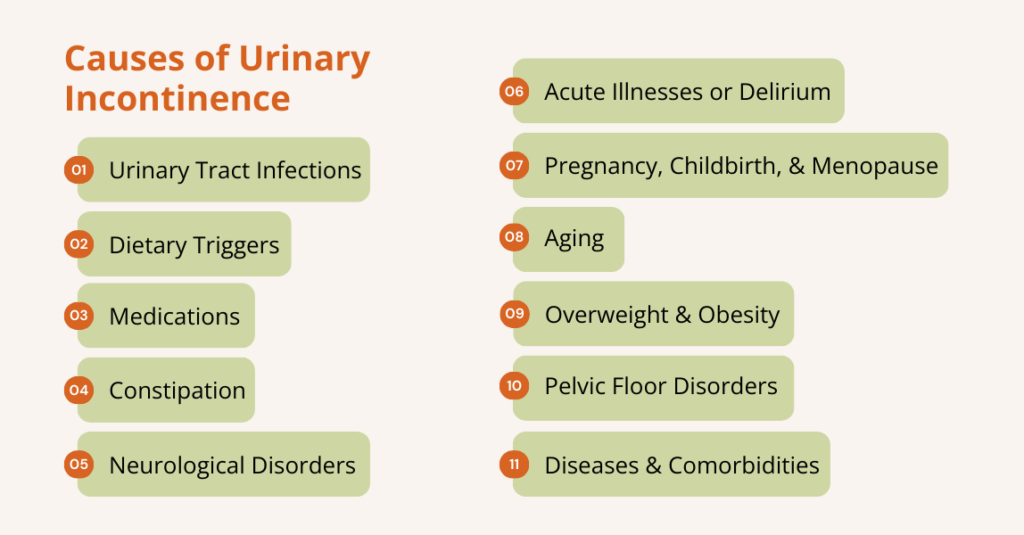
What Causes Urinary Incontinence?
Urinary Incontinence has multifactorial causes that can be temporary or persistent. Recognising the underlying cause is essential because treatment strategies vary.
Temporary Causes
Urinary Tract Infections (UTIs): Infections can irritate the bladder, leading to sudden urges to urinate and leakage.
Dietary Triggers: Foods and drinks like caffeine, alcohol, spicy foods, citrus fruits, carbonated drinks, and artificial sweeteners can irritate the bladder. Drinking large amounts of fluid or taking diuretics can also overwhelm the bladder.
Medications: Diuretics increase urine production, while some sedatives, muscle relaxants, or anticholinesterase drugs can interfere with bladder or sphincter control.
Constipation: Hard or impacted stool can put pressure on the bladder and block urine flow.
Acute Illnesses or Delirium: Confusion from illness or delirium can make it harder to recognize the need to use the bathroom or get there in time.
Persistent or Long-Term Causes
Key persistent and long-term causes include:
Pregnancy, Childbirth, and Menopause
Pregnancy and childbirth stretch and injure pelvic tissues and nerves. Vaginal delivery, instrument‑assisted birth, and having multiple births increase the risk of later SUI.
During menopause, declining estrogen causes atrophy of the urethral mucosa and pelvic connective tissue, reducing urethral closure pressure.
Aging
Age‑related changes include reduced bladder capacity, diminished urethral sphincter tone, and decreased estrogen in women.
Detrusor muscle overactivity becomes more frequent with aging. Evidence from the CDC’s Rise for Health study shows that women with multiple chronic conditions had poorer bladder health than those with zero or one chronic condition.
Overweight and Obesity
Excess body weight increases intra‑abdominal pressure and weakens pelvic floor muscles.
Another cross‑sectional study from NHANES 2013‑2018 reported that the weight‑adjusted waist index (WWI) was positively associated with urge urinary incontinence; each unit increase in WWI was associated with a 20% increase in UUI risk.
The study concluded that weight‑loss interventions could reduce UI in overweight women and clinically obese men.
Neurological Disorders
Stroke, spinal cord injury, Parkinson’s disease, multiple sclerosis (MS), and diabetic neuropathy can disrupt neural control of the bladder and urethra.
For example, MS and spinal cord injury can cause detrusor overactivity or detrusor-sphincter dyssynergia (outflow obstruction). Alzheimer’s disease and other dementias contribute to functional incontinence by impairing recognition of bladder signals or the ability to reach a toilet.
Pelvic Floor Disorders and Connective Tissue Weakness
Pelvic organ prolapse, such as cystocele or rectocele, can displace the bladder and urethra. Loss of connective tissue strength (e.g., collagen disorders) predisposes to SUI. In men, benign prostatic hyperplasia (BPH) and prostate cancer can cause obstruction and overflow or stress UI.
Diseases and Comorbidities
Diabetes, chronic obstructive pulmonary disease (COPD), chronic kidney disease, asthma, and cardiovascular disease contribute to UI risk. Obesity‑related metabolic syndrome amplifies risk through systemic inflammation and hormonal changes.
A study using NHANES data found that sarcopenia was independently associated with increased risk of mixed and stress UI among women aged ≥60 and that sarcopenic obesity with a metabolically unhealthy phenotype conferred the highest risk.
What are the Symptoms of Urinary Incontinence
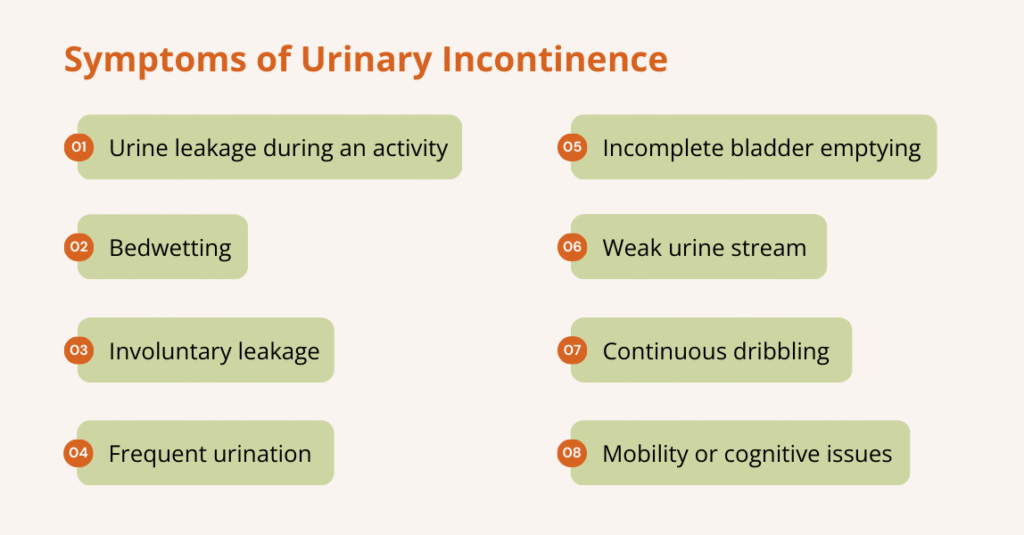
The main symptom of urinary incontinence is leaking urine before reaching the bathroom or during activities. Leaks can be small or large, occasional or constant, and the exact symptoms often depend on the type of incontinence.
Common symptoms may include:
Leaking urine during activities like coughing, sneezing, laughing, exercising, bending, or sexual activity
Bedwetting (enuresis)
Sudden, strong urge to urinate followed by involuntary leakage
Frequent urination (more than 8 times a day), including waking at night (nocturia)
Feeling that the bladder is full or unable to completely empty
Weak urine stream or needing to strain to urinate
Continuous dribbling or leakage without warning
Difficulty reaching the toilet in time due to mobility or cognitive issues
Who Is More Likely to Develop Urinary Incontinence?
Women are roughly twice as likely as men to experience UI; hormonal changes, pregnancy, and childbirth account for much of this difference.
Moreover, age is a strong predictor; prevalence increases from 3.7% among people aged 65–69 to 10.6% among those aged ≥85.
Race/ethnicity and socioeconomic status also influence risk; African American women have higher rates of urge or mixed UI, while white women are more likely to report stress UI.
Also, higher body‑mass index, diabetes, COPD, hypertension, and neurological disorders increase risk. Similarly, a study shows that sarcopenia, sarcopenic obesity, and metabolic unhealthy obesity were shown to elevate the risk of stress and mixed UI markedly.
In addition, research also highlights that environmental exposures to endocrine‑disrupting chemicals (e.g., bisphenol A) may specifically raise the risk of urge UI.
What are the Complications of Urinary Incontinence?
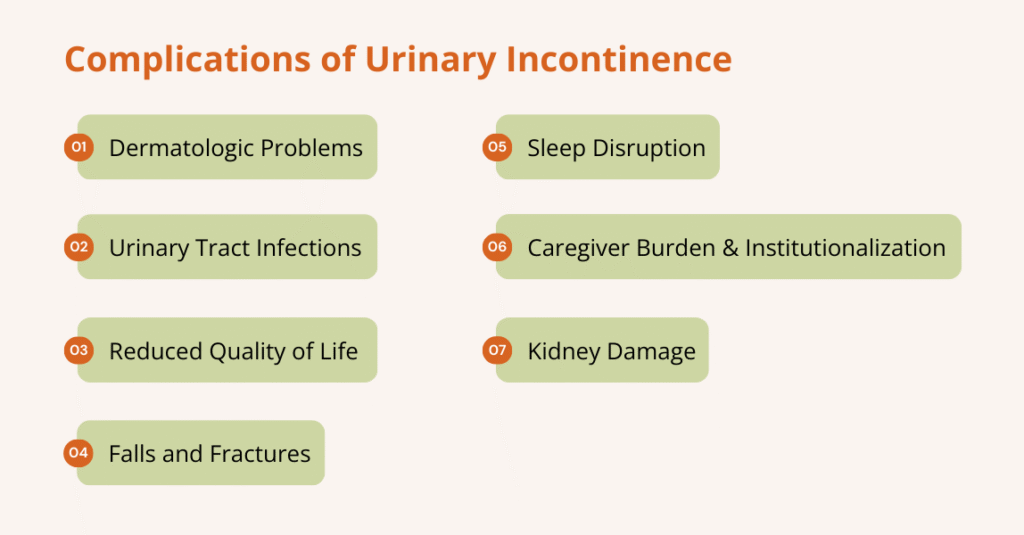
Urinary Tract Infections (UTIs): Incomplete emptying and catheter use increase the risk of UTIs.
Reduced Quality of Life: People may restrict social interactions and physical activities to avoid accidents, leading to isolation, depression, and anxiety.
Falls and Fractures: Rushing to the toilet increases the risk of falls, particularly among older adults.
Sleep Disruption: Nocturnal urgency and voiding disturb sleep, causing fatigue and cognitive impairment.
Caregiver Burden and Institutionalization: UI is a major reason for admission to long‑term care, and study shows that more than 50% of nursing home residents and 75% of long‑term care residents have UI.
Kidney Damage: Chronic urinary retention in overflow incontinence can lead to hydronephrosis and renal failure.
How Is Urinary Incontinence Diagnosed?
A thorough evaluation is essential to determine the type and cause of UI. Here’s how:
History & Physical Examination
The Doctor asks about when and how often leaks happen, fluid intake, medications, and health history. They check your abdomen/pelvis and may do a “cough stress test” to see if leakage happens with pressure.
Bladder Diary
You record when you drink, when you pee, how much, and when leaks occur (for several days). This helps identify patterns and triggers.
Urinalysis & (if needed) Urine Culture
A urinalysis checks for urinary tract infection (UTI), blood, sugar, or other abnormalities that might explain incontinence. Also, blood tests are sometimes performed to evaluate kidney function or detect other systemic conditions. These blood tests assess renal function, glucose, calcium, and electrolytes.
Post-Void Residual Measurement
After you urinate, a test (via ultrasound or catheter) may measure how much urine remains in your bladder. If a large amount remains, this may indicate incomplete bladder emptying (overflow or neurogenic bladder).
Bladder Function (Urodynamic) Tests
For more complex or unclear cases, tests such as uroflowmetry, cystometry, or pressure-flow studies assess how well your bladder and sphincter store and release urine.
Cystoscopy or Imaging
If there’s suspicion, endoscopic or radiographic evaluation is performed to assess for abnormalities, bladder stones, tumors, or fistulas.
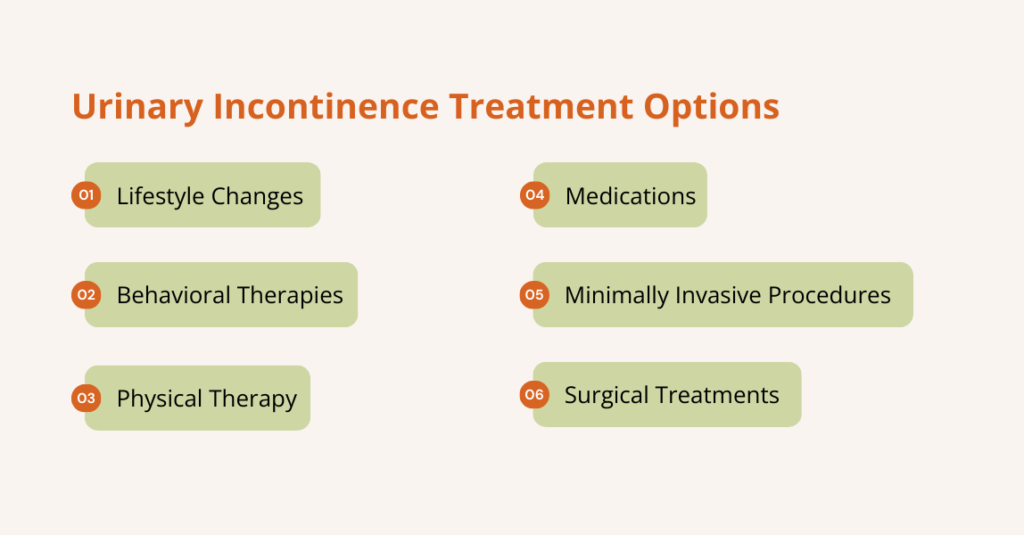
Urinary Incontinence Treatment Options
Treatment should be individualized based on the type of incontinence, severity, age, sex, and comorbidities.
Management usually follows a stepwise approach: lifestyle modifications, behavioral therapies, medications, devices, and surgery.
Lifestyle Changes
These are first‑line strategies recommended for all patients because they have minimal side effects and address reversible factors.
A frontiers study of 20,195 adults found that adherence to 4–5 healthy lifestyle factors (non‑smoking, moderate alcohol intake, regular physical activity, healthy diet, and optimal waist circumference) reduced the risk of overactive bladder by 46% compared with adherence to 0–1 factors.
Here are some lifestyle and behavioral therapies to consider:
Pelvic Floor Muscle Training (PFMT)
Also called Kegel exercises, PFMT strengthens the levator ani and urethral sphincter. People contract and relax pelvic muscles in sets of 10–15 squeezes, three times daily.
Evidence indicates that PFMT improves or resolves symptoms in two-thirds of women. Men benefit as well; PFMT is recommended after prostate surgery.
Lifestyle Modifications
Maintain a healthy weight, treat chronic cough, manage diabetes and constipation, stop smoking, reduce alcohol and caffeine intake, and avoid bladder irritants.
Fluid Management
Drink adequate fluids (about 6–8 glasses daily) and avoid excessive intake. Avoid drinking right before bedtime.
Behavioral Therapies
Behavioral therapies help retrain the brain–bladder connection and reduce anxiety, urgency, and leakage through mental and emotional techniques.
Bladder Training and Timed Voiding
For urgency or mixed incontinence, patients gradually increase intervals between voids and use urge‑suppression techniques. This helps expand bladder capacity and reduce urgency.
Cognitive Behavioral Therapy (CBT)
CBT helps individuals modify thoughts and behaviors that exacerbate urgency or fear of leaking. It teaches coping strategies, reduces bathroom-related anxiety, and improves confidence in bladder control.
Physical Therapies
Physical therapy focuses on strengthening and retraining the pelvic floor muscles to improve bladder control and reduce leakage.
Pelvic Floor Muscle Rehabilitation
This involves learning to strengthen and control the pelvic floor muscles, as they support the bladder and help prevent urinary leakage.
A physical therapist teaches proper techniques (similar to Kegel exercises). Therapy may also include breathing techniques and core strengthening to improve overall pelvic stability.
Biofeedback and Electrical Stimulation
Biofeedback uses sensors to display muscle activity on a screen, helping you learn when you’re contracting the right muscles and how to improve control.
Whereas electrical stimulation delivers a gentle current to activate weak pelvic floor muscles, strengthen them over time, and reduce symptoms like urgency, frequency, and leakage.
Together, they help improve muscle awareness, coordination, and bladder control.
Medications
Medication is usually considered when behavioral therapies don’t provide enough relief.
Common drug options include:
Anticholinergics (Antimuscarinics)
Antimuscarinic agents (e.g., oxybutynin, tolterodine, solifenacin) are used to relax the bladder muscle to reduce urgency, frequency, and urge-related leakage.
In U.S. Medicare data, antimuscarinics remain the most commonly prescribed, but their use decreased from 49% to 34% between 2012 and 2021, while β‑3 agonist use increased from 0.2% to 17%.
Beta-3 Agonists
These drugs (e.g., mirabegron, vibegron) also relax the bladder muscle but typically have fewer cognitive side effects than anticholinergics.
Topical Estrogen
Low-dose vaginal estrogen can improve urethral and vaginal tissue health, reduce irritation, and improve stress or urgency symptoms in postmenopausal women.
It is not the same as systemic hormone therapy and has minimal systemic absorption.
Medications for Men with BPH-Related Incontinence
For men with bladder symptoms caused by prostate enlargement, alpha-blockers (e.g., tamsulosin, terazosin) help relax the prostate and bladder neck. Whereas 5-alpha reductase inhibitors (e.g., finasteride, dutasteride) shrink the prostate over time. Often, these medications are combined for better symptom control.
Minimally Invasive Procedures
These treatments are considered when lifestyle changes and medications aren’t enough and offer effective, low-risk options to improve bladder control.
Botox Injections for Overactive Bladder
Botox is injected into the bladder muscle to calm overactive contractions. This reduces urgency, frequency, and the risk of sudden leakage. Results typically last 6–12 months.
A small device sends gentle electrical pulses to the sacral nerves, which control bladder function. This helps restore normal signaling and reduces urge incontinence and urinary retention.
Urethral Bulking Agents
A gel-like material is injected around the urethra to facilitate closure. This provides extra support and reduces stress incontinence, especially in women with weak sphincter muscles.
Surgical Treatments
These procedures are considered when other treatments fail or when incontinence is severe and linked to structural problems.
Mid‑urethral Sling Procedures
A mesh or tissue sling is placed under the urethra to provide support. It helps maintain urethral closure during coughing, laughing, or exercise, making it highly effective for stress urinary incontinence in women.
Artificial Urinary Sphincter (AUS) Implantation
AUS is most commonly used in men, especially after prostate surgery. It involves placing an inflatable cuff around the urethra, which opens and closes via a small pump. This provides strong control for moderate to severe incontinence.
Bladder Neck Suspension
This surgery lifts and secures the bladder neck and urethra into a better position. It helps reduce leakage caused by weak support tissues and is often used for stress incontinence in women.
Cystoplasty (Bladder Augmentation)
This procedure enlarges the bladder using a piece of bowel. It increases bladder capacity and reduces pressure, making it useful for severe urge incontinence or neurogenic bladder when other treatments have failed.
How to Prevent Urinary Incontinence?
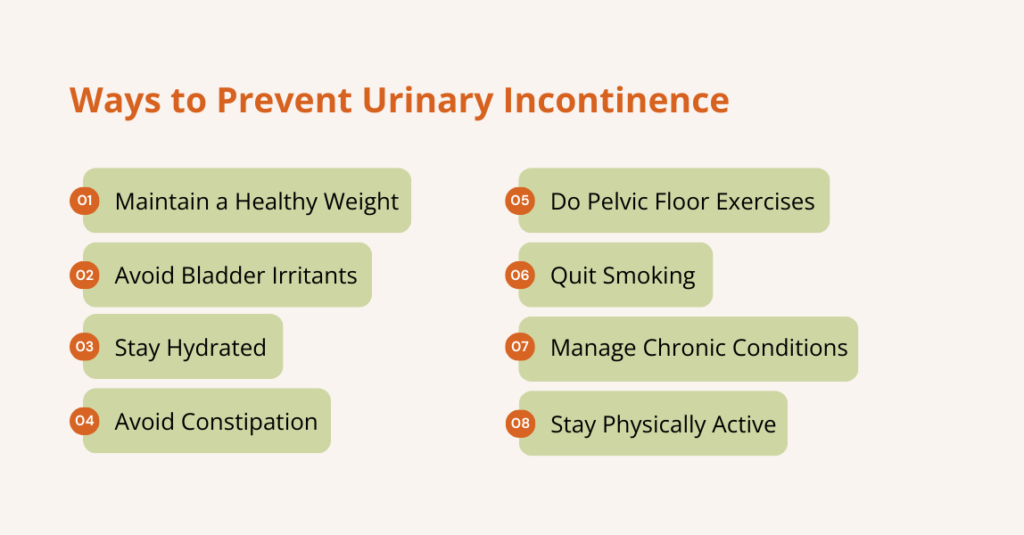
You can lower your risk of urinary incontinence by protecting your pelvic floor and managing lifestyle factors: Here’s how:
Maintain a Healthy Weight: Keeping your BMI in a healthy range reduces pressure on your bladder. Weight-loss programs are especially effective for overweight women and obese men.
Avoid Bladder Irritants: Cut back on caffeine, alcohol, carbonated drinks, artificial sweeteners, spicy foods, and citrus. Some people also react to chocolate and acidic foods.
Stay Hydrated: Drink enough water to keep urine light-colored, but don’t overdrink. Dehydration can irritate the bladder and increase the risk of UTIs.
Prevent Constipation: Eat more fiber, drink plenty of fluids, and stay active. Constipation can worsen bladder leakage.
Do Pelvic Floor Exercises: Practice PFMT regularly, including during and after pregnancy, to keep pelvic muscles strong.
Quit Smoking: Smoking causes chronic coughing, which strains pelvic muscles and increases SUI risk.
Manage Chronic Conditions: Keep conditions like diabetes, hypertension, asthma, and COPD under control to protect bladder function.
Stay Physically Active: Regular exercise supports weight control and muscle strength. Avoid too many high-impact activities if they trigger leakage; balance them with PFMT.
Frequently Asked Questions (FAQs)
Can urinary incontinence be cured?
Many people achieve significant symptom improvement or complete resolution, especially with early intervention. Lifestyle and behavioral therapies (PFMT, bladder training) are effective first‑line treatments. For persistent symptoms, medications, neuromodulation, or surgery can provide relief. Cure rates vary by type and severity; for example, research shows that PFMT cures or improves symptoms in roughly 67% of women, while mid‑urethral sling surgery for SUI has long‑term success rates around 80%. Urge incontinence often requires combination therapy; Botox and sacral neuromodulation have similar efficacy at two years.
Is urinary incontinence a normal part of aging?
No. Although prevalence increases with age, UI is a medical condition, not an inevitable consequence of aging. Many older adults maintain continence with proper bladder health habits, pelvic floor exercises, and management of chronic diseases.
Will drinking less water help with incontinence?
Restricting fluid intake can worsen urinary symptoms because concentrated urine irritates the bladder. Instead, spread fluid intake throughout the day and limit fluids before bedtime. Avoid caffeinated or carbonated beverages, as they can’t stimulate the bladder.
When should I see a healthcare provider about incontinence?
You should consult a clinician if you experience involuntary leakage that affects daily life; have associated symptoms such as burning, pain, blood in urine, or frequent UTIs; or have difficulty emptying your bladder. Early evaluation helps identify reversible causes and prevents complications.
Conclusion
For many people, talking about bathroom habits can feel embarrassing. However, it is a common and often overlooked condition that affects millions of Americans.
Urinary incontinence may make you self-conscious or keep you from enjoying daily activities because you’re worried about leaking or not reaching the bathroom in time.
Therefore, promoting bladder health, encouraging early symptom reporting, and supporting lifestyle changes are essential.
Most individuals can achieve meaningful improvement through weight management, pelvic floor exercises, bladder training, and appropriate medications or procedures.
If you’re experiencing any signs of incontinence, don’t wait; taking action now can help you prevent discomfort and bigger problems later in life.
Benign Prostatic Hyperplasia (BPH) is the most common prostate condition affecting men, particularly as they age.
In the United States, over 50% of men over 50 experience symptoms of BPH, and this number rises to 90% by age 85.
BPH is closely linked with male lower urinary tract symptoms (LUTS), but it does not raise the risk of prostate cancer or cause sexual dysfunction. However, it can affect quality of life by leading to bothersome and sometimes embarrassing urinary issues.
While age and genetics play a key role in the development of BPH, emerging research shows that modifiable factors, including hormone levels, obesity, glucose regulation, diet, exercise, and inflammation, also influence its onset and progression.
Therefore, understanding these risk factors, recognizing early symptoms, and seeking timely diagnosis and treatment can dramatically improve outcomes and quality of life.
This article provides an overview of BPH, including its causes, symptoms, risk factors, diagnosis, and the latest treatment options, to help patients and caregivers understand how to manage this common condition effectively.
What is Benign Prostatic Hyperplasia?
BPH is the non-cancerous enlargement of the prostate gland, a small walnut-sized organ below the bladder that surrounds the urethra and produces seminal fluid.
As men age, the prostate can enlarge from the size of a walnut to that of a lemon. In BPH, the prostate undergoes increased cell growth (hyperplasia), especially around the urethra, leading to gland enlargement.
As it grows, it can compress the urethra and partially block urine flow, causing symptoms such as difficulty starting urination, a weak urine stream, or needing to urinate frequently.
Who is more likely to have Benign Prostatic Hyperplasia?
In the United States alone, BPH accounts for millions of healthcare visits each year, reflecting its prevalence among an aging male population.
Certain risk factors make someone more prone to developing BPH:
Age
Advancing age is the strongest risk factor. BPH is uncommon before 40, but the incidence rises sharply in later decades. The prostate tends to keep growing as men get older, which is why BPH primarily affects middle-aged and older men.
Family History (Genetics)
Men with a family history of BPH, such as a father or brother who had an enlarged prostate, are more likely to develop the condition themselves. Studies have shown that first-degree relatives of BPH patients may have a fourfold increase in risk compared to men with no family history.
Diabetes and Heart Disease
Research shows that chronic health conditions like type 2 diabetes and cardiovascular disease have been linked to a higher likelihood of BPH. Men with diabetes, in particular, have a higher incidence of BPH and often more severe symptoms, possibly due to insulin and growth-factor effects on the prostate.
Diet and Obesity
An unhealthy diet and obesity can increase BPH risk. Research suggests that diets high in fat and red meat are associated with a greater risk of symptomatic BPH, whereas diets rich in vegetables may be protective. Obesity is also correlated with BPH; men who are overweight or who have metabolic syndrome tend to have larger prostate volumes and more symptoms.
Localized Inflammation
Chronic prostatitis or inflammation of the prostate is often found alongside BPH on tissue analysis, and researchers suspect that inflammation may contribute to prostate enlargement. Inflammatory cells in the prostate can release factors that stimulate growth.
Metabolic Syndrome
Related to the above factors, metabolic syndrome (a cluster of conditions including insulin resistance/diabetes, high blood pressure, and high cholesterol) has been linked to BPH.
Men with metabolic syndrome tend to have larger prostates on average, and those with poor blood sugar control have an increased risk of LUTS.
This may be due to metabolic syndrome’s association with obesity, inflammation, and hormonal imbalances that also drive prostate growth.
Hormone Levels
Although not a traditional risk factor in the sense of a lifestyle choice, age-related hormonal changes underlie BPH development.
Research shows that men who have normal testes producing testosterone can develop BPH, whereas men who were castrated or have very low testosterone from a young age do not develop BPH.
What Causes Benign Prostatic Hyperplasia?
Despite how common BPH is, its exact cause remains unclear. As men grow older, changes in sex hormones, particularly the accumulation of dihydrotestosterone (DHT), can stimulate prostate growth.
Key factors contributing to BPH:
Aging
Hormonal changes
Family history
Lifestyle factors
Other health conditions, such as obesity, type 2 diabetes, and heart and blood vessel diseases
What are the Symptoms of Benign Prostatic Hyperplasia?
BPH mainly affects urination and can range from mild to severe. As the prostate enlarges, it presses on the urethra and bladder, leading to lower urinary tract symptoms (LUTS) that can disrupt daily life.
Common BPH symptoms include:
Frequent urination: Needing to urinate more often, especially at night (nocturia). Some men go every 1–2 hours.
Urgency: A sudden, strong urge to urinate, even when the bladder isn’t full.
Difficulty starting urination (hesitancy): Trouble beginning the urine stream, sometimes requiring straining.
Weak or interrupted urine stream: A slow or stop-and-start flow due to urethral narrowing.
Dribbling at the end: Small drops of urine may continue after finishing.
Incomplete bladder emptying: Feeling that the bladder isn’t fully emptied, leading to frequent trips to the bathroom.
Urinary retention: In severe cases, partial or complete blockage can make urination difficult or impossible, which is a medical emergency.
Painful urination (dysuria): BPH itself usually doesn’t cause burning, but infections or straining can.
Blood in the urine (hematuria): Straining or bladder irritation can cause small amounts of blood in the urine; a doctor should check any visible blood.
Many of these symptoms are quantified by doctors using the International Prostate Symptom Score (IPSS), which is a questionnaire that asks about frequency, nocturia, weak stream, etc., to grade symptom severity from mild to severe.
Also, not every man with BPH will have all these symptoms, and the severity can vary.
What are the Complications of Benign Prostatic Hyperplasia?
BPH is benign and usually develops slowly, but if it becomes advanced or is left untreated, it can lead to complications in the urinary tract.
The prostate’s blockage of urine flow and the resulting strain on the bladder can cause several issues:
Urinary Retention: The enlarged prostate can block urine flow, causing the bladder to fill and sometimes leading to sudden, painful inability to urinate (acute retention) or constant partial retention.
Recurrent Urinary Tract Infections (UTIs): When the bladder doesn’t empty fully, urine can stagnate, leading to infections and symptoms such as burning, cloudy urine, or pelvic pain.
Bladder Stones: Minerals in leftover urine can form stones, which may worsen urinary problems or cause blood in the urine.
Bladder Damage: Constant pressure on the bladder can weaken its muscles and reduce its ability to empty properly. This can cause long-term urinary problems even after treatment.
Kidney Damage: Severe blockage can cause urine to back up into the kidneys (hydronephrosis), potentially leading to kidney injury or infection. Rarely, untreated BPH can contribute to kidney failure.
Incontinence: Overflow or urge incontinence can occur when the bladder is too full or unstable. Some BPH treatments may also cause temporary incontinence.
Blood in Urine (Hematuria): Persistent bleeding can happen due to the enlarged prostate, sometimes requiring treatment.
Sexual Side Effects: BPH itself doesn’t cause erectile dysfunction, but treatments may lead to issues like retrograde ejaculation, which can affect fertility but is not dangerous.
Many of these complications are preventable with timely treatment. If you have BPH, it’s important to follow up with your healthcare provider, especially if symptoms are worsening.
How is Benign Prostatic Hyperplasia Diagnosed?
When BPH is suspected, healthcare providers will perform a series of evaluations to confirm the diagnosis, assess severity, and rule out other conditions (like infections or prostate cancer) that can cause similar symptoms.
Diagnosing BPH typically involves some or all of the following steps and tests:
Medical history & symptom check: Your doctor will ask about urinary habits (frequency, urgency, nighttime trips, stream changes, blood in urine) and may use a questionnaire such as the IPSS/AUA symptom score to rate severity.
Digital rectal exam (DRE): A quick exam where the doctor feels the prostate through the rectal wall to estimate size and check for lumps or hard areas.
Urinalysis: A urine sample checks for infection, blood, or other conditions (e.g., diabetes) that can mimic or worsen symptoms.
PSA blood test: Measures prostate-specific antigen. PSA can be higher with larger prostates or cancer, so results are interpreted alongside other findings.
Uroflowmetry (flow test): You urinate into a device that measures flow rate and volume to see if there’s an obstruction.
Post-void residual (PVR) scan: A quick bladder ultrasound (or catheter measurement) shows how much urine remains after voiding—high volumes suggest incomplete emptying.
Transrectal ultrasound (TRUS): Used when precise prostate size is needed (for treatment planning) or before biopsy; not required in every case.
Cystoscopy: A scope is passed into the urethra to view the prostate and bladder directly; it is used when symptoms are unusual or before certain procedures.
Urodynamic testing: Specialized pressure and flow studies that evaluate bladder function; reserved for complex cases (e.g., weak bladder muscle, neurologic disease).
Advanced imaging (MRI/CT): Not routine for BPH, but may be used if cancer is suspected or to assess the kidneys/bladder when complications are possible.
In most cases, a combination of history, DRE, urinalysis, PSA, and simple office tests (uroflow and PVR) is enough to diagnose BPH and start treatment.
More invasive or specialized tests are used when the diagnosis is uncertain, symptoms are severe, or surgery is being considered.
Benign Prostatic Hyperplasia Treatment Options
Multiple treatment options exist for BPH, ranging from simple lifestyle adjustments to medications to minimally invasive procedures and surgery.
Here we’ve outlined the main categories of BPH treatment:
Lifestyle Changes (Conservative Management)
For men with mild BPH symptoms, simple lifestyle adjustments can help reduce urinary problems and improve comfort:
Adjust fluid intake: Avoid drinking large amounts in the evening and limit fluids 1–2 hours before bedtime to reduce nighttime bathroom trips.
Limit bladder irritants: Cut back on caffeine, alcohol, and any foods that trigger bladder irritation, such as spicy or acidic items.
Stay active and maintain a healthy weight: Regular exercise (e.g., 30 minutes of brisk walking daily) can improve urinary symptoms. Maintaining a healthy weight, blood pressure, and blood sugar also supports prostate health.
Optimize bathroom habits: Urinate when you feel the urge, and try “double voiding” to empty the bladder more completely. Planning regular trips every 2–3 hours can help manage frequent urges.
Review medications: Some decongestants, antihistamines, and diuretics can worsen urinary symptoms. Consult your doctor before using these medications.
Pelvic floor exercises: Kegel exercises can strengthen the pelvic muscles and improve bladder control.
Stay warm: Cold can worsen urinary retention; dressing warmly and avoiding prolonged exposure to cold may help.
Many men start with “watchful waiting” using these habits, often managing symptoms without medication. Regular check-ups are important to monitor progression.
If symptoms worsen, doctors may recommend medications or other treatments.
Medications for BPH
For men with moderate to severe BPH, medications are usually the first line of treatment. These drugs either relax the prostate and bladder muscles to improve urine flow or shrink the prostate over time.
Common options include:
Alpha-blockers
These relax the muscles in the prostate and bladder neck, making urination easier. They work quickly (days to weeks) but do not shrink the prostate.
5-Alpha-Reductase Inhibitors (5-ARIs)
Drugs like finasteride (Proscar) and dutasteride (Avodart) shrink the prostate by blocking DHT, the hormone that drives growth. They take several months to work and are most effective in larger prostates.
Combination Therapy
For men with severe symptoms or large prostates, alpha-blockers and 5-ARIs can be used together (e.g., tamsulosin + dutasteride, Jalyn®). This provides fast symptom relief and long-term prostate shrinkage.
Phosphodiesterase-5 inhibitors (PDE-5i)
Tadalafil (Cialis) at a low daily dose can improve urinary symptoms by relaxing the bladder and prostate muscles. It’s especially helpful for men who also have erectile dysfunction.
Other Medications
For overactive bladder symptoms, anticholinergics (e.g., oxybutynin, tolterodine) or beta-3 agonists (mirabegron) may be added. These help reduce urgency and frequency but must be used carefully if bladder emptying is poor.
Most men start with an alpha-blocker for quick relief. If the prostate is large or symptoms persist, a 5-ARI or combination therapy may be added.
Doctors monitor symptom scores, urine flow, and PSA levels to ensure treatment is effective and safe. If medications don’t work or side effects are unacceptable, minimally invasive procedures or surgery may be considered.
Minimally Invasive Procedures for BPH
For men whose symptoms aren’t fully controlled with medication or who want to avoid major surgery, minimally invasive procedures offer effective alternatives with quicker recovery and fewer complications.
These procedures either widen the urethra or shrink prostate tissue. Common options include:
It involves accessing the blood vessels to the prostate (usually via a catheter inserted in the femoral or radial artery) and injecting tiny particles to block blood flow in the prostatic arteries.
PAE is done under local anesthesia and sedation, and typically, no hospital stay is needed.
It’s an option for men who may not tolerate surgery or anesthesia or who prefer an arterial approach. PAE’s advantages are that there’s no incision, no general anesthesia, and sexual function is generally preserved.
Prostatic Urethral Lift
This is a device-based therapy where small implants are used to pull apart the enlarged prostate lobes, widening the urethral passage.
The urologist inserts a special instrument through the urethra and places several tiny spring-like implants that tether the prostate lobes open, almost like curtain tie-backs, to prevent them from pressing inward. This does not involve cutting or destroying tissue, and it can be done under local anesthesia or light sedation.
The benefit is that it improves urine flow and often preserves sexual function (minimal risk of retrograde ejaculation or ED) compared to traditional surgery. It is best suited for men with relatively moderate prostates and no large middle lobe.
Rezūm Water Vapor Therapy
Rezūm is a newer treatment that uses steam injections to ablate prostate tissue.
During this procedure, a device is introduced via the urethra and a small needle is deployed into the prostate; steam (water vapor) is then released, which delivers thermal energy that kills the surrounding prostate cells.
Over the next days and weeks, the body’s immune system clears away the treated tissue, shrinking the prostate.
Laser Therapy
Laser prostatectomy involves inserting a scope through the urethra and using laser energy to burn/vaporize or cut prostate tissue.
Examples include photoselective vaporization of the prostate (PVP), often called GreenLight laser (which vaporizes tissue), and holmium laser enucleation of the prostate (HoLEP), which uses a laser to actually enucleate (carve out) the enlarged prostate tissue in lobes.
The advantage of lasers: lower risk of bleeding, so it’s good for patients on blood thinners or with bleeding risks. However, side effects like retrograde ejaculation still occur in many cases (especially if a lot of tissue is removed).
Transurethral Microwave Therapy (TUMT)
This is an older minimally invasive therapy where a special catheter with a microwave antenna is inserted into the urethra, and microwave energy heats and destroys prostate tissue from inside.
TUMT can be done without general anesthesia. It generally only reduces symptoms moderately and may take weeks to have an effect.
Surgical Procedures
Modern BPH surgeries are mostly done endoscopically (through the urethra) without external cuts, providing lasting relief by removing or reducing the enlarged prostate tissue.
Common surgical options include:
Simple Prostatectomy (Open or Robot-Assisted)
Reserved for very large prostates (>80–100 grams), this involves removing the enlarged internal portion via an open incision or robot-assisted surgery.
Recovery is longer, with a few days in the hospital and the use of a catheter. It carries higher risks like bleeding, infection, and blood clots, but offers excellent symptom relief.
Transurethral Incision of the Prostate (TUIP)
TUIP is for men with small prostates (<30 cc) but significant blockage. The surgeon makes one or two small cuts in the prostate and bladder neck to widen the urethra without removing tissue.
Recovery is usually quick, with a lower risk of retrograde ejaculation than TURP.
In general, surgery is considered when symptoms are severe and not responding well to meds, the patient can’t tolerate meds, or if there are complications.
How to Prevent Benign Prostatic Hyperplasia
Since BPH is so tied to the aging process and genetics, there is no guaranteed way to prevent prostate enlargement altogether.
Here are some strategies that may help support long-term prostate health:
Eat a Healthy Diet: Focus on fruits, vegetables, whole grains, and healthy fats (such as fish, nuts, and olive oil). Avoid too much red meat, high-fat foods, processed foods, sugar, and excess dairy.
Maintain a Healthy Weight: Obesity can disrupt hormone balance and increase the risk of BPH. Staying at a healthy weight through diet and exercise may help prevent prostate enlargement.
Exercise Regularly: Aim for at least 30 minutes of moderate activity, like walking, most days. Exercise improves blood flow and hormone balance and reduces inflammation, all of which support prostate health.
Manage Chronic Health Conditions: Keep diabetes, high blood pressure, and cholesterol under control. Good metabolic health may lower the risk of BPH progression. Avoid smoking, as it can worsen urinary symptoms.
Avoid Irritants: Limit caffeine and alcohol, especially in the evening, to reduce bladder stress. Stay hydrated but avoid extremes of too little or too much fluid.
Preventive Medications (for select cases): In certain men at higher risk (strong family history or early prostate enlargement), doctors may sometimes consider low-dose 5-alpha-reductase inhibitors to slow growth. This is not routine for all men.
Remember, BPH is common with age, but a healthy lifestyle can delay symptoms, reduce severity, and improve well-being.
Frequently Asked Questions (FAQs)
How common is Benign Prostatic Hyperplasia?
BPH is very common, especially as men get older.
While many men may have an enlarged prostate (even without symptoms), a large portion of older men will experience BPH to some degree.
An enlarged prostate can be treated with medications like 5-ARIs and procedures such as Prostatic Artery Embolization, relieving blockage and symptoms, often for many years. Since BPH is linked to aging, the prostate may grow again over time, but symptoms are usually well controlled. With proper treatment, follow-up, and healthy habits, most men regain normal urinary function and quality of life.
What happens if you leave an enlarged prostate untreated?
If an enlarged prostate (BPH) is left untreated, symptoms can gradually worsen and lead to serious problems: urine may not empty fully or you can suddenly be unable to urinate (acute urinary retention), recurrent urinary tract infections and bladder stones can develop, and long-term bladder strain can weaken the bladder. In severe cases, urine can back up into the kidneys (hydronephrosis) and cause kidney damage, and visible blood in the urine or new incontinence may occur. These issues reduce quality of life and can become medical emergencies.
How long can I live with an enlarged prostate?
You can live a long, healthy life with an enlarged prostate (BPH), as it is noncancerous and doesn’t raise the risk of prostate cancer. Life expectancy isn’t affected when symptoms are managed with lifestyle changes, medications, or procedures such as Prostatic Artery Embolization. Untreated BPH can worsen over time, but many men with mild symptoms live comfortably for years while managing them.
What type of doctor treats benign prostatic hyperplasia?
A urologist is the primary specialist for BPH, managing both medications and procedures such as Prostatic Artery Embolization. Primary care doctors can evaluate early symptoms and start basic treatment, but significant or persistent BPH usually requires a urologist’s care.
Can BPH lead to prostate cancer?
No, BPH does not cause prostate cancer. It is a benign condition, and the prostate cells are not cancerous. BPH does not raise your risk of developing prostate cancer. However, because both conditions can cause similar symptoms, such as frequent or difficult urination, regular checkups are important to rule out cancer.
Conclusion
Benign Prostatic Hyperplasia is a very common and manageable condition that affects a great number of aging men.
While the prospect of an “enlarged prostate” can be worrisome, it’s important to remember that BPH is benign, it is not prostate cancer, and in itself is not life-threatening.
The primary impact of BPH is on quality of life: it can cause frustrating urinary symptoms that interrupt sleep, work, and daily comfort.
With modern medications and minimally invasive treatments, most men can find relief that suits their needs and lifestyle.
If you’re a man over 50 experiencing urinary changes, such as increased frequency, hesitancy, or nocturia, it’s important to talk to your healthcare provider.
That said, a simple evaluation can identify BPH as the cause and guide you to the most appropriate treatment plan.
Today, men don’t have to live with severe urinary problems like previous generations. Early consultation and personalized care can keep BPH a minor concern rather than a major obstacle to healthy aging.
When enlarged prostate symptoms significantly impact your quality of life, two primary treatment options often emerge as leading solutions: prostate artery embolization (PAE) and transurethral resection of the prostate (TURP). Both procedures effectively address benign prostatic hyperplasia (BPH), but they take fundamentally different approaches to achieving symptom relief.
At Seamless Medical Centers, we believe the best treatment decision comes from understanding all your options thoroughly. This comprehensive comparison examines these two proven treatments, helping you evaluate them based on your individual circumstances, health goals, and lifestyle preferences.
PAE is a minimally invasive procedure that reduces prostate size by blocking blood flow to the enlarged gland. An interventional radiologist performs PAE using real-time imaging guidance, inserting a tiny catheter through a small puncture to deliver embolic particles directly to the prostate’s blood supply.
The PAE approach:
Targets the prostate’s blood supply system
Causes gradual shrinkage over weeks to months
Preserves prostate structure while reducing size
Requires no surgical incisions or tissue removal
Transurethral Resection of the Prostate (TURP)
TURP surgically removes excess prostate tissue that’s blocking urinary flow. A urologist performs this procedure by inserting instruments through the urethra to cut away obstructing prostate tissue, creating a wider channel for improved urine flow.
The TURP approach:
Physically removes obstructing prostate tissue
Provides immediate improvement in urinary flow
Requires surgical expertise and operating room time
Involves tissue cutting and removal through the urethra
Detailed Procedure Comparison
Invasiveness and Approach
PAE:
Single needle puncture (typically in groin or wrist)No surgical incisions or tissue removal
Conscious sedation, avoiding general anesthesiaOutpatient procedure lasting 60-90 minutes
TURP:
Access through the urethra with surgical instrumentsGeneral or spinal anesthesia required
Full activity: 4-6 weeksImmediate symptom improvement
The recovery difference is significant. Length and cost of hospitalization are lower for PAE, and most PAE patients return to normal activities weeks sooner than TURP patients.
Effectiveness and Outcomes
Symptom Relief Comparison
Recent research provides compelling comparisons between these treatments:
During a 12-month follow-up period, both PAE and TURP were comparable on the reduction in IPSS and QoL questionnaire, while TURP showed significant improvements in Qmax and in the reduction in prostate volume.
PAE outcomes:
Significant improvement in urinary symptoms
20-30% average prostate volume reduction
Gradual, progressive symptom relief
High patient satisfaction rates
TURP outcomes:
Immediate improvement in urinary flow
More dramatic reduction in prostate volume
Rapid symptom relief
Well-established long-term effectiveness
Long-Term Success Rates
PAE long-term results:
Sustained symptom improvement in 80-90% of patients
Low rates of additional treatment needed
Durable results lasting years
Progressive improvement continuing up to 12 months
TURP long-term results:
Excellent long-term symptom control
Gold standard with decades of proven results
Low retreatment rates
Immediate and sustained benefits
Risk and Complication Profiles
PAE Safety Profile
The PAE procedure has a lower risk of urinary incontinence and sexual side effects when compared with more invasive surgical procedures.
Minor complications:
Post-PAE syndrome (flu-like symptoms for 3-7 days)
Studies show complication and adverse events rates were higher in the TURP group rather than in the PAE group (60.6% vs. 35.5%).
TURP Risk Profile
Common complications:
Retrograde ejaculation (75-90% of patients)
Temporary urinary incontinence (5-10%)
Urinary tract infection
Blood in urine during healing
Serious complications:
Significant bleeding requiring transfusion (2-5%)
Urethral stricture requiring additional treatment
Permanent incontinence (1-3%)
TURP syndrome (rare but serious electrolyte imbalance)
Overall complication rate:
Higher than PAE, particularly for sexual side effects and bleeding complications.
Sexual Function Considerations
PAE and Sexual Health
Advantages:
Minimal impact on sexual function
Preserves ejaculatory function in most men
No direct manipulation of sexual anatomy
Gradual treatment process allows adaptation
Considerations:
Some men report temporary changes during healing
Long-term sexual function is generally preserved
Individual responses may vary
TURP and Sexual Health
Expected changes:
Retrograde ejaculation in 75-90% of patients (semen goes into bladder)
Fertility affected due to retrograde ejaculation
Erectile function typically preserved
Orgasm sensation usually maintained
Permanent considerations:
Dry orgasms become the norm for most men
Fertility requires medical intervention if desired
Sexual satisfaction often remains high despite changes
Making Your Treatment Decision
Choose PAE if you:
Want the least invasive option available
Need to return to work/activities quickly
Want to preserve sexual function
Prefer to avoid surgery and general anesthesia
Are comfortable with gradual improvement
Have medical conditions that increase surgical risk
Choose TURP if you:
Want immediate, dramatic symptom improvement
Have very large prostate requiring significant tissue removal
Are comfortable with surgical recovery
Accept potential sexual function changes
Want the most proven long-term treatment
Have failed previous minimally invasive treatments
Important Factors to Consider
Medical considerations:
Prostate size and configuration
Severity of urinary symptoms
Overall health and surgical risk
Previous prostate treatments
Current medications and medical conditions
Lifestyle factors:
Work and family responsibilities
Recovery time availability
Sexual function priorities
Risk tolerance
Treatment preferences
Expert Consultation Process
During your consultation at Seamless Medical Centers, we’ll help you understand:
Your prostate profile: Size, anatomy, and how it’s affecting your symptoms
Treatment suitability: Which procedures are most appropriate for your situation
Expected outcomes: Realistic expectations for symptom relief and recovery
Risk assessment: Personalized evaluation of potential complications
Alternative options: Discussion of all available treatments including newer alternatives
The Seamless Medical Centers Approach
Our experienced interventional radiologists specialize in PAE while maintaining close relationships with urologists who perform TURP. This collaborative approach ensures you receive unbiased guidance about the best treatment for your specific situation.
Our evaluation process:
Comprehensive symptom and medical history assessment
Detailed imaging analysis of your prostate
Discussion of treatment goals and preferences
Honest assessment of expected outcomes for each option
Referral coordination if surgical treatment is preferred
Moving Forward with Confidence
Understanding your options empowers you to make the best decision for your unique situation. The goal is effective BPH treatment that aligns with your health goals, lifestyle needs, and personal preferences.
Recent advances in both PAE techniques and patient selection have made this minimally invasive option increasingly attractive for many men. However, TURP remains an excellent choice for appropriate candidates, particularly those needing maximum tissue removal or immediate results.
Ready to explore your BPH treatment options?
Contact Seamless Medical Centers to schedule a comprehensive consultation. Our team will evaluate your specific situation, discuss all appropriate treatments, and help you make an informed decision about the best approach for your prostate health.
Urinary hesitancy, the difficulty, delay, or interruption in starting urination, can be a frustrating and unsettling experience.
What should be an automatic bodily function becomes a source of stress and anxiety. Simple bathroom visits can become stressful and frustrating when your body doesn’t respond as expected.
Many people find themselves planning activities around bathroom access or feeling isolated and worried about their symptoms.
However, in most cases, targeted pelvic floor exercises, gentle stretching, medications, and lifestyle modifications can support healthy bladder function and improve urine flow.
In this guide, we will explore the causes, symptoms, and potential complications of urinary hesitancy, as well as diagnosis and treatment options to help you manage symptoms and regain confidence in your daily life.
What is Urinary Hesitancy?
Urinary hesitancy is the difficulty initiating or maintaining a steady stream of urine despite the urge to void.
It’s more than just a minor inconvenience; it’s a disruption of a fundamental process. It often occurs alongside other symptoms like a weak stream, straining, or a sensation of incomplete emptying.
What does urinary hesitancy feel like?
Patients describe it as:
A frustrating “hold-up” where you feel ready, but your body doesn’t cooperate.
Needing to concentrate or wait several seconds to a minute for the flow to begin.
A stop-and-start pattern during urination.
The need to apply abdominal pressure or strain to get started.
An underlying feeling that you haven’t fully emptied your bladder, even after finishing.
What are the Causes of Urinary Hesitancy?
Hesitancy is a symptom, not a disease itself. It signals an obstruction, a neurological issue, or weakened muscles. Causes often differ by biological sex due to anatomical differences.
Causes of Urinary Hesitancy in Females
Pelvic Organ Prolapse: When the bladder, uterus, or rectum descends into the vaginal canal, it can alter the urethra’s angle and function.
Urinary Tract Infections (UTIs): Inflammation and swelling in the urinary tract can cause hesitation and pain.
Post-Surgical Effects: Scar tissue or nerve damage following pelvic or back surgeries (e.g., hysterectomy, spinal surgery).
Pelvic Floor Dysfunction: Overactive or tight pelvic floor muscles (not just weak ones) can prevent the urethral sphincter from relaxing properly to allow urine out.
A study of female patients found that a continuous detrusor voiding pressure curve and a prolonged, “tailed” shape on the free urine flow curve were strongly associated with bladder outlet obstruction (BOO).
Causes of Urinary Hesitancy in Males
Benign Prostatic Hyperplasia (BPH): The most common cause in men over 50. An enlarged prostate gland constricts the urethra, acting like a kink in a garden hose.
Prostatitis: Inflammation or infection of the prostate gland, causing swelling and irritation.
Urethral Stricture: Scarring that narrows the urethra, often from past injury, infection, or medical procedures.
Prostate Cancer: While less common, it can cause similar obstructive symptoms.
A clinical study examined nearly 500 men with BPH and found that symptoms such as weak urinary stream and hesitancy are among the most common and bothersome components of BPH-related Lower urinary tract symptoms (LUTS).
Common Causes in All Genders:
Neurological Conditions: Diseases that disrupt nerve signals between the brain and bladder (e.g., Multiple Sclerosis, Parkinson’s, Stroke, Spinal Cord Injuries, Diabetes-induced neuropathy).
Medications: Side effects of common drugs like antihistamines, decongestants, anticholinergics, tricyclic antidepressants, and certain muscle relaxants.
Psychological Factors: Extreme anxiety, “shy bladder” syndrome (paruresis), or a history of trauma.
Bladder Neck Obstruction: A malfunction of the muscles at the bladder’s outlet.
What are the Symptoms of Urinary Hesitancy?
Hesitancy rarely occurs in isolation. Look for these accompanying signs:
Weak or intermittent urine stream
Straining to urinate
Feeling of incomplete bladder emptying
Dribbling at the end of urination
Increased time needed to urinate
Lower abdominal discomfort or fullness
What are the Risk Factors for Urinary Hesitancy?
Urinary hesitancy does not usually happen without a reason. Certain health conditions, lifestyle factors, and medications can increase the risk of having trouble starting urination.
Age-Related Changes
As people age, the muscles that control the bladder and urethra may weaken or lose coordination. This can slow urine flow and make it harder to start urinating.
More common in adults over 50
Often develops gradually
Prostate-Related Conditions (in men)
An enlarged prostate is one of the most common risk factors for urinary hesitancy.
Prostate inflammation or infection can also block urine flow
Risk increases with age
Neurological Conditions
The bladder depends on proper nerve signals to function normally. Any condition that affects these signals can cause hesitancy.
Diabetes-related nerve damage
Parkinson’s disease
Multiple sclerosis
Stroke or spinal cord injury
Psychological Factors
In some cases, mental or emotional factors play a role.
Anxiety or stress
Habitually holding urine for long periods
Difficulty urinating in public settings
Medications
Some medications interfere with bladder muscle contraction or tighten the urinary sphincter. Common examples include:
Antihistamines and cold medications
Decongestants
Certain antidepressants
Opioid pain medications
Other Key Factors
Several additional conditions can also interfere with normal urine flow.
For example, urinary tract infections and inflammation, such as UTIs, prostatitis, or urethritis, can cause swelling and irritation that temporarily narrow the urinary passage.
Similarly, pelvic floor disorders, including pelvic organ prolapse, childbirth-related muscle strain, or chronic pelvic muscle tension, may disrupt the coordination needed to start urination.
In other cases, structural blockages, such as urethral strictures, bladder or kidney stones, pelvic tumors, or scar tissue from previous surgery or injury, can physically obstruct urine flow.
In addition, severe or long-term constipation can place pressure on the bladder and urethra, making it harder to begin urinating.
What are the Complications of Urinary Hesitancy?
When urine stays in the bladder, er it creates problems: bacteria can grow, the bladder can overstretch or weaken, and pressure can back up into the kidneys. Left untreated, these changes can progress.
Common complications of urinary hesitancy include:
If urinary hesitancy is new, progressive, painful, or accompanied by fever or reduced urine output, seek medical evaluation. Prompt treatment of retention or infection prevents most of these complications.
How Do Doctors Test for Urinary Hesitancy?
Urinary hesitancy is usually diagnosed by a primary care physician (PCP) or healthcare provider.
Initial Assessment
The evaluation begins with a detailed discussion of your symptoms, a review of your medical history, and a physical examination.
During this visit, your provider may ask questions such as:
How long have you had difficulty starting urination?
Has your urine stream become weaker than usual?
Did the symptoms develop gradually or start suddenly?
Are you taking any prescription or over-the-counter medications?
Do your symptoms worsen after certain activities or after consuming specific foods or drinks?
These questions help identify possible causes and guide further testing.
Tests Used to Diagnose Urinary Hesitancy
If needed, your healthcare provider may order tests to confirm the diagnosis and determine the underlying cause.
Urodynamic Testing
Urodynamic tests measure how well your bladder and urethra store and release urine. These tests can assess:
The amount of urine you pass
The speed and strength of your urine stream
Pressure within the bladder during filling and emptying
Additional Diagnostic Tests
Depending on your symptoms, your provider may also recommend:
Imaging tests, such as an ultrasound or CT scan, are used to evaluate bladder emptying and check prostate size
Cystoscopy, which uses a small camera to look inside the urethra and bladder
Digital rectal exam, to assess prostate size and detect abnormalities
Urinalysis, to examine urine for signs of infection, blood, or other abnormalities
Urine culture, to identify bacterial infections
Together, these evaluations help determine the cause of urinary hesitancy and guide appropriate treatment.
Treatment for Urinary Hesitancy
Treatment for urinary hesitancy depends on the underlying cause and any other comorbidities. Your healthcare provider may recommend
Home Remedies
Bladder Retraining (Timed Voiding)
Pelvic Floor Physical Therapy
Medications
Surgery & Procedures
Sacral Nerve Stimulation (Sacral Neuromodulation)
Home Remedies
Some cases of urinary hesitancy can improve with safe home strategies, but always consult your provider first:
Heat: Applying a heating pad, using a hot water bottle, or taking a warm shower/bath can relax the pelvic muscles.
Gentle abdominal massage: Light pressure near the bladder while peeing may help strengthen the stream.
Bowel regulation: Using stool softeners or adjusting diet to prevent constipation can reduce pressure on the bladder.
Bladder diary: Track fluid intake, urine volume, stream strength, time to urinate, frequency, and other symptoms to help your provider monitor progress and adjust treatment.
Bladder Retraining (Timed Voiding)
Bladder retraining involves voiding at set intervals, typically every 2 hours, to prevent overfilling of the bladder.
You do this even if you don’t feel the urge to urinate. Over time, it helps improve bladder control and ease hesitancy.
Pelvic Floor Physical Therapy
Pelvic floor physical therapy (PT) is an effective way to treat urinary hesitancy caused by tight or uncoordinated pelvic floor muscles.
These muscles need to contract and fully relax to allow normal urination. If the muscles remain tense, go into spasm, or cannot relax properly, it can lead to urinary hesitancy and other bladder symptoms.
Targeted exercises help stretch and relax the pelvic floor muscles, improving urine flow. You can perform some exercises at home, but working with a physical therapist ensures personalized guidance.
Medications
Depending on the cause, your provider may prescribe:
Alpha-blockers to relax muscles in the bladder and prostate
5-alpha-reductase inhibitors (like dutasteride or finasteride) to shrink the prostate
Antibiotics to treat urinary tract infections
Surgery & Procedures
Surgery is considered when medications, physical therapy, or less invasive treatments are not effective. Common surgical options include:
Prostate surgery (partial prostatectomy or transurethral resection of the prostate) to remove excess prostate tissue and relieve BPH-related obstruction.
Pelvic organ prolapse repair to restore support to dropped organs, reducing pressure on the bladder and improving urination.
Urethral dilation or reconstruction for a narrow or obstructed urethra.
Prostatic Artery Embolization (PAE), a non-surgical procedure for BPH, reduces blood flow to the enlarged prostate, shrinking it and relieving urinary symptoms.
Sacral Nerve Stimulation (Sacral Neuromodulation)
A small device is implanted near the upper buttock. It sends mild electrical impulses to the sacral nerve, helping stimulate bladder muscles and improve urine flow.
Frequently Asked Questions (FAQs)
What is the difference between urinary hesitancy and urinary retention?
Urinary hesitancy and urinary retention are related but distinct problems in the urinary process. Urinary hesitancy refers specifically to the difficulty or delay in initiating the flow of urine once you feel the urge to go; it’s about a troublesome start, often accompanied by straining or a weak stream, but you usually can eventually urinate. Urinary retention, on the other hand, is the more severe condition where the bladder cannot empty properly, meaning little or no urine is released despite an urge, often leading to painful bladder distention and the potential for serious complications.
Why does it feel like I have to pee, but nothing comes out?
This sensation is often caused by urinary hesitancy or incomplete bladder emptying. Even though your bladder signals the need to urinate, several factors can prevent urine from flowing normally:
Weak bladder muscle contractions (detrusor underactivity): The bladder isn’t squeezing strongly enough to push urine out.
Obstruction in the urinary tract: In men, an enlarged prostate (BPH) can block the urethra; in women, pelvic organ prolapse or urethral narrowing can have a similar effect.
Tight or uncoordinated pelvic floor muscles: If the muscles around the bladder and urethra remain tense, they can prevent urine from starting or fully flowing.
Nerve or neurological issues: Conditions such as diabetes, multiple sclerosis, or spinal injuries can interfere with the signals between the bladder and brain.
Infections or inflammation: Swelling from a urinary tract infection or urethritis can make it difficult for urine to pass.
If you experience this frequently, feel discomfort, or cannot urinate at all, it’s important to seek medical evaluation.
When should someone seek medical care for urinary hesitancy?
You should seek medical evaluation for urinary hesitancy if:
Your symptoms suddenly appear or get worse over time.
You experience pain, burning, or discomfort while urinating.
There is blood in your urine or unusual discharge.
You are unable to urinate at all.
You have fever, nausea, or lower back/flank pain, which could indicate an infection or kidney problem.
Even if your symptoms are mild, persistent urinary hesitancy should be discussed with a healthcare provider to identify the cause and prevent complications.
How can urinary hesitancy be prevented?
You can help prevent urinary hesitancy through healthy bladder habits, such as going to the bathroom regularly and avoiding holding urine for long periods. Staying hydrated and managing constipation can reduce pressure on the bladder and urethra, while pelvic floor exercises help maintain muscle strength and proper coordination. Additionally, promptly addressing urinary tract infections, prostate issues, or other underlying conditions can lower the risk of complications that contribute to hesitancy.
What is the most common treatment for urinary retention?
The most common initial treatment for urinary retention is catheterization, which temporarily drains urine from the bladder to relieve discomfort and prevent complications. Depending on the cause, healthcare providers may also recommend medications (such as alpha-blockers for men with prostate enlargement), pelvic floor therapy, or surgical procedures to address obstructions or improve bladder function. However, the exact approach depends on whether the retention is acute (sudden) or chronic (long-term), as well as on the underlying cause.
What medication is used for urinary hesitancy?
The medication prescribed for urinary hesitancy depends on the underlying cause:
Alpha-blockers (e.g., tamsulosin, alfuzosin) help relax the muscles in the bladder neck and prostate, thereby improving urine flow, and are commonly used for men with benign prostatic hyperplasia (BPH).
5-alpha-reductase inhibitors (e.g., finasteride, dutasteride) may be prescribed to shrink an enlarged prostate over time.
Antibiotics are used if urinary tract infections contribute to hesitancy.
Always consult a healthcare provider before starting any medication, as the choice depends on your specific condition, other health factors, and potential side effects.
How many seconds is urinary hesitancy?
There isn’t a strict “number of seconds” that defines urinary hesitancy, because it varies by person and by the underlying cause. Research suggests that a delay of over 11.3 seconds after attempting to urinate may be considered significant, especially if it happens repeatedly or is accompanied by other symptoms like a weak stream, straining, or incomplete emptying.
Conclusion
The journey with urinary hesitancy is more than physical; it’s an emotional drain that can make you feel like your body is working against you.
The constant anticipation, the planning, the silent worry, it’s a heavy load to carry alone. But please understand this: Your struggle is valid, and it is treatable.
With appropriate evaluation, targeted therapies, lifestyle modifications, and, in some cases, medical or surgical interventions, most people can achieve meaningful improvement.
Small changes, guided exercises, and professional support can help restore confidence, reduce frustration, and allow you to reclaim control over daily routines.
Remember, seeking help is the first step toward relief. You don’t have to navigate urinary hesitancy alone; support, treatment, and better bladder health are within reach.
Urinary retention is a condition where the bladder does not empty properly.
For many people, it starts as a heavy or tight feeling in the lower abdomen. You may feel a strong urge to urinate but struggle to start, strain to pass urine, or release only a small amount even though your bladder still feels full.
This can be uncomfortable, frustrating, and sometimes painful.
In some cases, urinary retention happens suddenly and causes severe pain and pressure. In others, it develops slowly over time.
Because these symptoms can build up gradually, they are sometimes ignored until the discomfort becomes hard to manage.
Urinary retention can affect both men and women and may be linked to blockages, nerve problems, medications, infections, or recent surgery.
This guide explains what urinary retention is, its causes, signs, and symptoms, how it is diagnosed, and the treatment options available, so you can better understand what is happening and what steps to take next.
What is Urinary Retention?
Urinary retention is a condition where your bladder does not empty fully, or cannot empty at all, when you urinate (pee). This means urine stays trapped inside the bladder instead of flowing out normally.
Your bladder works like a storage tank. Your kidneys filter waste from your blood and turn it into urine. That urine travels to your bladder, where it is stored until you’re ready to urinate.
When you pee, the bladder muscles squeeze, and urine flows out through the urethra.
With urinary retention, this process does not work properly. The bladder may not squeeze properly, the urethra may be blocked, or the nerves may not send the right signals. As a result, urine stays in the bladder, causing pressure, discomfort, and other urinary problems.
What Causes Urinary Retention?
Urinary retention can happen for several different reasons. Common causes can include:
A blockage in the urine flow
Medications that affect the nervous system
Nerve problems that stop the brain and the urinary system from communicating
Infections or inflammations can block or slow the flow
Surgery or anesthesia can cause retention
While these causes apply to both men and women, the specific reasons for urinary retention often differ by sex due to anatomical differences and common health conditions.
What are the Causes of Urinary Retention in Females?
The most common and female-specific causes include:
Pelvic Organ Prolapse (POP)
Sometimes the bladder, uterus, or other pelvic organs sag or drop down. When the bladder bulges into the vagina (a cystocele), it can kink the bladder outlet or press on the urethra, making it hard to empty fully.
Childbirth & Pregnancy
Pregnancy and vaginal delivery can stretch or injure the pelvic muscles and nerves that help you pee. A very full uterus or an unusual uterus position (like a retroverted uterus) can press on the bladder.
Epidural anesthesia during labor can also make the bladder less able to squeeze for a short time.
Fowler’s Syndrome
A less common problem in younger women is where the ring of muscle around the urethra (the sphincter) doesn’t relax properly. That tightness obstructs urine flow even when the bladder is full.
Pelvic Surgery or Trauma
Operations on the pelvis (for example, for urine incontinence or hysterectomy) or injuries can damage nerves or change the shape of pelvic organs. That can weaken bladder control or cause a physical condition that impedes the flow of urine.
Menopause
Lower hormone levels after menopause result in thinner, less elastic pelvic tissues. The urethral opening can narrow, and weak tissues can alter the position of the bladder and urethra, which may lead to difficulty emptying.
Noncancerous growths (fibroids) or other pelvic masses can press on the bladder or urethra. That pressure can partially obstruct urine flow or make it difficult to fully empty the bladder.
What are the Causes of Urinary Retention in Males?
The most common and male-specific causes include:
Benign Prostatic Hyperplasia (BPH)
As men get older, the prostate gland often becomes enlarged. The prostate sits just below the bladder and surrounds the urethra (the tube that carries urine out of the body). When it enlarges, it can squeeze the urethra, slowing or blocking urine flow.
Prostatitis
Prostatitis is inflammation or infection of the prostate. It can cause the prostate to swell suddenly, narrowing the urethra.
Prostate Cancer
Prostate cancer can also press on the urethra and block urine flow. Unlike infections, this usually develops slowly over time.
Urethral Stricture
A urethral stricture occurs when scar tissue narrows the urethra. This scar tissue can form after injury, surgery, catheterization, or infection (e.g., sexually transmitted infections), restricting urinary flow.
Phimosis and Paraphimosis
These conditions affect uncircumcised men.
Phimosis happens when the foreskin cannot be pulled back over the tip of the penis, which can trap urine and cause swelling.
Paraphimosis occurs when the foreskin is pulled back but cannot return to its normal position, causing painful swelling that can block urine flow.
Penile Trauma (Injury)
Injury to the penis, such as from an accident, fall, or sports injury, can cause swelling, bleeding, or damage to the urethra. This swelling or damage can block urine flow and lead to sudden urinary retention.
What are the Signs and Symptoms of Urinary Retention?
The symptoms of urinary retention can be different depending on whether it is acute (sudden) or chronic (long-term).
Some people, especially those with nerve damage, may not feel pain even when the bladder is not emptying properly.
Acute (Sudden)
People with acute urinary retention (AUR) may experience:
Sudden inability to urinate despite a strong urge
Severe pressure, pain, or discomfort in the lower abdomen
Swelling or bloating in the lower belly
Lower back pain
Chronic (Long-Term)
Chronic urinary retention (CUR) typically develops gradually and may not cause severe pain initially. People with chronic urinary retention may experience:
Trouble starting urine flow
A weak or slow urine stream
A urine stream that stops and starts
A strong urge to urinate, but passing only a small amount
Feeling the need to urinate again right after going
Frequent trips to the bathroom, including at night
Mild, ongoing discomfort in the lower abdomen or urinary tract
Leakage of urine during sleep or at rest due to bladder overflow
How is Urinary Retention Diagnosed?
Healthcare professionals diagnose urinary retention by reviewing your medical history, performing a physical exam, and measuring how much urine remains in your bladder after you urinate (called a post-void residual).
Additional lab tests and imaging studies may be ordered to find the exact cause.
Medical History
Your health care professional will ask detailed questions about your health and symptoms, including:
Urinary symptoms (also called lower urinary tract symptoms)
Current and past medical conditions, surgeries, or catheter use
Prostate problems (in men)
Pregnancy and childbirth history (in women)
Over-the-counter and prescription medications
Eating and drinking habits
Bowel habits
This information helps identify possible triggers or underlying causes.
Physical Exam
A physical exam is done to look for signs of bladder or nerve problems. This may include:
Checking your lower abdomen for a full or swollen bladder
A rectal exam to examine the prostate (in men)
A pelvic exam (in women)
A basic neurological exam to assess nerve function
Post-Void Residual (PVR) Urine Measurement
A post-void residual test measures how much urine remains in your bladder after you urinate. The leftover urine is called the post-void residual.
This test is done using:
A small catheter is placed briefly into the bladder, or
A bladder ultrasound scan
A high amount of leftover urine suggests urinary retention.
Lab Tests
Your health care professional may order lab tests to look for conditions linked to urinary retention, such as:
Urinalysis: Checks for urinary tract infection (UTI), kidney problems, or diabetes
Blood tests: Check kidney function and chemical imbalances in the body
You may be asked to provide a urine sample for testing.
Imaging Tests
Imaging tests help identify structural problems or blockages in the urinary tract. These may include:
Ultrasound: Uses sound waves to view the bladder, kidneys, and urinary tract
Voiding cystourethrogram (VCUG): Uses X-rays to show how urine flows through the bladder and urethra
MRI (magnetic resonance imaging): Creates detailed images of the urinary tract and spine
CT scan: Provides detailed cross-sectional images of the urinary system
Urodynamic Testing
Urodynamic tests check how well the bladder, urethra, and sphincter muscles store and release urine. These tests may include:
Uroflowmetry: Measures how much urine you pass and how fast
Pressure-flow studies: Measure bladder pressure and urine flow during urination
Video urodynamics: Uses images or video to show bladder filling and emptying
Cystometry: Measures bladder capacity and pressure as it fills
Electromyography: Tests how well nerves and muscles around the bladder work together
Cystoscopy
Cystoscopy is a procedure in which a thin, flexible tube with a camera (a cystoscope) is inserted into the urethra to visualize the urethra and bladder. This helps doctors check for:
Blockages or narrowing
Inflammation or infection
Tumors or cancer
Structural abnormalities
Urinary Retention Treatment Options
There are several treatment options for urinary retention, including the following:
Catheterization
Acute urinary retention is a medical emergency. If you suddenly can’t pee at all, a doctor will quickly drain your bladder. This is usually performed by inserting a thin tube (a catheter) through the urethra into the bladder to allow urine to flow out.
Draining the bladder relieves pain and prevents damage to your bladder or kidneys. Once the bladder is empty, doctors will treat the cause (for example, an enlarged prostate, a blood clot, or an infection).
In some cases of long-term (chronic) retention, people learn to use a catheter at home to empty their bladder regularly.
Home Remedies
While medical treatment is essential for urinary retention, some gentle at-home tricks can help encourage urination. These are not cures, but they may make it easier to go until you can see a doctor:
Warm water and sound: Sit on the toilet and run warm water from the tap. The sound and feel of warm water can sometimes trigger bladder emptying.
Warm bath or perineal rinse: A warm sitz bath or rinsing the genital area with warm water can relax pelvic muscles.
Body position and relaxation: Lean slightly forward while sitting on the toilet (for women, putting feet on a small stool) and take deep breaths.
Walking and gentle movement: Sometimes a short walk or light activity can help stimulate bladder function or relieve constipation, which in turn can facilitate urination.
Peppermint oil: Some individuals report that the scent of peppermint oil may facilitate urination.
Herbal teas: Teas made from herbs such as dandelion or stinging nettle are sometimes used to relieve bladder symptoms.
If you still cannot urinate or have severe pain, seek medical help right away. Home tips are intended only for mild cases or for use while waiting for care.
Lifestyle & Behavioral Changes
Certain habits and exercises can support treatment and ease symptoms over time. These changes are especially useful for chronic retention or after initial treatment:
Bladder training: Go to the toilet at regular times, even if you don’t feel a strong urge. For example, try urinating every 2–4 hours.
Double voiding: After you urinate, wait a minute and then try again. This “double peeing” helps make sure your bladder is as empty as possible.
Relax on the toilet: Take a moment to relax while seated fully. Breathe deeply and give yourself time. For women, sitting with the knees apart (or even slightly squatting) allows the pelvic muscles to relax more effectively.
Fluid management: Drink adequate water during the day, but limit fluids before bedtime to avoid nocturnal retention.
Avoid bladder irritants: Cut down on caffeine (coffee, tea, cola), alcohol, and carbonated drinks, as these can irritate the bladder and make retention worse.
Go when you need to: Don’t “hold it” when you feel the urge. Responding promptly to the urge to urinate helps prevent bladder overstretching.
Manage constipation: Straining during defecation can worsen retention by compressing the bladder or pelvic nerves.
Weight and posture: Maintaining a healthy weight and good posture can reduce pressure on pelvic organs. Lifting properly (bending the knees, not the back) can also help prevent problems.
Making these changes takes time, but they are low-risk ways to help your bladder. Always discuss lifestyle plans with your doctor or nurse.
Medication
Your health care provider may prescribe medicines to treat the underlying cause of urinary retention. The type of medication depends on what is preventing your bladder from emptying properly.
Enlarged prostate (in men): Medicines such as alpha-blockers help relax the muscles around the prostate and bladder neck, making it easier for urine to flow. 5-alpha reductase inhibitors work by slowly shrinking the prostate, which can reduce blockage over time.
Infections: If an infection is causing swelling or blockage, antibiotics are used to clear the infection and relieve urinary retention.
Medical Procedures
If medicines and behavior changes aren’t enough, doctors have many procedures and therapies to fix the cause of retention:
Cystoscopy and stone removal: A cystoscope is a thin, lighted tube passed into the bladder. It allows the physician to see inside and remove any stones or growths obstructing urine flow.
Prostate artery embolization (PAE): PAE is a minimally invasive, image-guided procedure used to treat symptoms of an enlarged prostate caused by benign prostatic hyperplasia (BPH). During the procedure, blood flow to the prostate is reduced, causing it to shrink and relieving pressure on the urethra.
Urethral dilation: If a urethral stricture (scar tissue narrowing the urethra) is the problem, the doctor can stretch or widen the urethra during an office visit.
Vaginal pessary (women): In women with pelvic organ prolapse, a pessary is a removable ring placed inside the vagina to hold the bladder up.
Pelvic floor therapy: A specialized pelvic-floor therapist can use biofeedback, electrical stimulation, or manual techniques to improve pelvic muscle function.
Frequently Asked Questions (FAQs)
Can UTI cause urinary retention?
Yes, a urinary tract infection (UTI) can cause urinary retention. When the bladder or urethra becomes inflamed or swollen due to infection, it can block or slow the flow of urine. In some cases, the bladder muscles may also become weak or unable to contract properly, making it difficult to empty the bladder completely. Urinary retention and UTIs can also make each other worse: urine left in the bladder provides a place for bacterial growth, increasing the risk of infection. If you experience difficulty urinating along with symptoms of a UTI, such as burning, urgency, or lower abdominal discomfort, it’s essential to seek medical care promptly.
Can urinary retention be cured?
Yes, urinary retention can often be cured or well-managed. Treatment usually involves draining the bladder and addressing the underlying cause, which may include an enlarged prostate, infections, or nerve problems. Depending on the cause, doctors may use catheters, medications, pelvic floor therapy, or surgery to restore normal urination, relieve discomfort, and improve bladder function.
Does constipation cause urinary retention?
Yes, constipation can contribute to urinary retention. A full rectum can press on the bladder or urethra, making it hard to empty, and straining can weaken pelvic muscles or interfere with the nerves that control urination. This can lead to incomplete bladder emptying and increase the risk of urinary tract infections.
Can you die from urinary retention?
Yes, urinary retention can be life-threatening, but usually only if complications develop. When urine stays in the bladder for too long, it can lead to serious infections that may spread to the kidneys or bloodstream, causing sepsis, a dangerous body-wide reaction that can result in organ failure. It can also cause acute kidney damage if the blockage prevents urine from leaving the body.
What can urinary retention lead to?
Urinary retention can lead to several complications if it isn’t treated, including:
Urinary tract infections (UTIs): Residual urine allows bacteria to grow, increasing the risk of recurrent or severe infections.
Bladder damage: A chronically overfilled bladder can stretch and weaken, reducing its ability to contract and empty.
Overflow incontinence: The bladder may leak small amounts of urine when it becomes overly full.
Urine backup in the kidneys (hydronephrosis): A blockage can cause urine to flow backward into the kidneys, leading to swelling and damage.
Acute kidney injury/chronic kidney disease: Severe or prolonged obstruction can impair kidney function.
Sepsis (blood infection): A UTI that spreads can lead to life-threatening sepsis, particularly in older adults or immunocompromised individuals.
Stones and irritation: Stagnant urine can lead to bladder stones and ongoing irritation or inflammation.
Sexual dysfunction & reduced quality of life: Ongoing urinary problems can affect sexual function, sleep, mood, and daily activities.
Falls or injuries: Nighttime urgency or hurried bathroom trips increase the risk of falls, particularly among older adults.
When to get urgent care: inability to urinate at all, severe belly pain, fever, chills, confusion, vomiting, fainting, or decreased urine output. These can signal serious complications and need immediate medical attention.
How long before urinary retention is dangerous?
If urinary retention is acute (sudden), it becomes dangerous right away, and you should seek emergency care the moment you cannot urinate because immediate bladder drainage is needed to prevent pain and complications. Research shows that obstruction can cause acute kidney injury within hours to days, and the risk of lasting kidney damage rises noticeably after about 48–72 hours of ongoing blockage. Whereas chronic (long-term) retention is less often immediately life-threatening but can slowly cause bladder damage, infections, stones, and kidney problems over weeks to months if not treated.
How long does post-operative urinary retention last?
Postoperative urinary retention (POUR) usually improves on its own, with most patients regaining normal urination within a few days to a few weeks after surgery. In some cases, it can last 4–6 weeks, and rarely even longer, depending on the type of surgery, anesthesia used, and individual factors. Retention often resolves as the effects of anesthesia wear off and urinary tract swelling decreases. Still, prolonged cases may require additional interventions, such as catheterization, medications, or further evaluation by a healthcare provider.
How to prevent urinary retention?
You can often reduce the risk of urinary retention by addressing factors that compress the bladder, interfere with emptying, or disrupt nerve function. Here’s how:
Perform pelvic floor exercises (Kegels) or consult a pelvic floor therapist to maintain muscle function.
Avoid constipation by increasing fiber intake, maintaining adequate hydration, exercising, and using gentle laxatives or stool softeners if needed, as a full rectum can press on the bladder.
Drink regularly during the day but cut down before bedtime; avoid excess caffeine and alcohol that irritate the bladder.
Get UTIs or prostatitis checked and treated promptly so swelling does not block urine flow.
Review medicines with your clinician, as some drugs (antihistamines, strong painkillers, decongestants) can cause retention; your doctor may adjust them.
Manage prostate and pelvic conditions, follow up for BPH, prolapse, or fibroids, so mechanical blockages are identified and treated.
Sit properly, take your time, try “double voiding” (pee, wait a minute, try again), and don’t ignore urges.
After surgery, follow post-op care, as early walking, pain control, and close bladder checks reduce the risk of postoperative retention.
See your doctor for regular checks if you have diabetes, spinal problems, prior pelvic surgery, or recurrent urinary issues.
If you start having trouble emptying your bladder, sudden inability to urinate, severe pain, fever, or worsening symptoms, seek medical help right away.
Doctors who treat acute urinary retention
Doctors who treat acute urinary retention (AUR) are mainly urologists, specialists in the urinary and reproductive systems, who manage immediate bladder drainage with a catheter and treat the underlying cause through medications or procedures. If you cannot see a urologist immediately, going to the emergency room is essential, where an emergency physician can provide urgent care and relieve the obstruction. Other healthcare professionals, such as nurse practitioners, physician assistants, and pelvic floor physical therapists, may also be involved in ongoing management and rehabilitation to prevent recurrence and improve bladder function.
Conclusion
Urinary retention can be uncomfortable, frustrating, and even frightening, especially when you feel a full bladder but cannot urinate.
This condition is fairly common and can occur suddenly (acute) or develop over time (chronic), with causes ranging from infections, an enlarged prostate, nerve problems, pelvic organ prolapse, to certain medications.
As a result, symptoms can vary widely, from difficulty starting urination and a weak urine stream to an inability to urinate, lower abdominal pain, or frequent urination.
To determine the cause, diagnosis typically involves obtaining a detailed medical history, performing a physical examination, performing urinalysis, and, in some cases, using imaging or specialized bladder studies.
Based on the findings, treatment depends on the severity and underlying cause of the retention. Available options include immediate catheterization, medications, nonsurgical therapies, lifestyle adjustments, and, when necessary, surgical intervention.
It is important to remember that if you are experiencing urinary difficulties, you are not alone, and medical help is available to restore comfort, improve bladder function, and provide peace of mind.