
Periods are a normal part of life, but they shouldn’t dominate it.
Many people silently endure heavy menstrual bleeding, feeling embarrassed or believing it’s just their “normal.”
Yet this condition can drain energy, disrupt work or family life, and lead to anemia and other health problems.
Importantly, heavy periods also stir emotions, fear of leaking in public, cancelling social plans, or worrying about possible health issues. Your struggle is valid, and compassionate care exists.
In this post, we’ll walk you through what heavy periods are, why they happen, and the steps you can take to regain control and feel like yourself again.
What is Heavy Menstrual Bleeding?
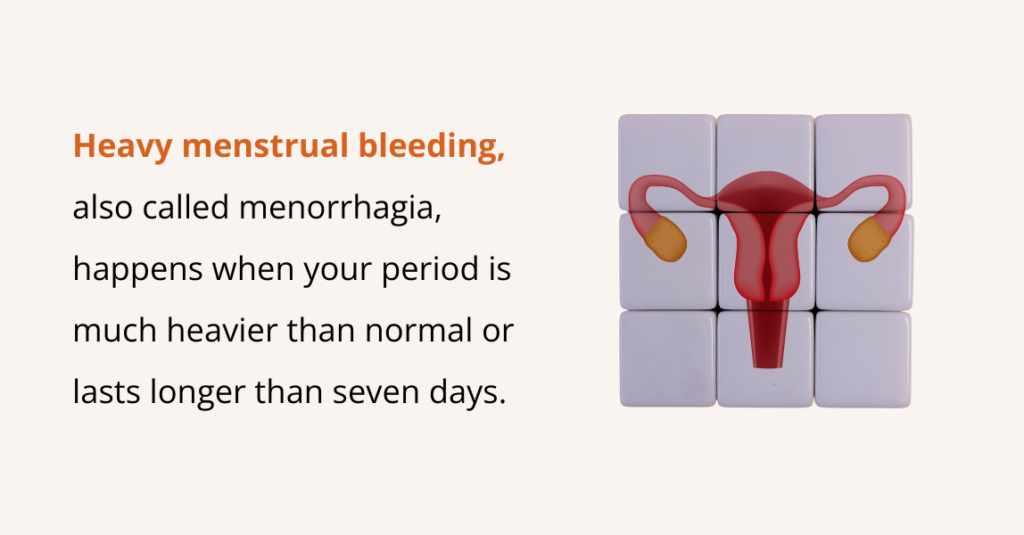
Heavy menstrual bleeding, also called menorrhagia, happens when your period is much heavier than normal or lasts longer than seven days.
If heavy or prolonged bleeding isn’t treated, it can start to affect your everyday life and make it hard to do normal activities. It can also lead to anemia, a common blood condition that may cause fatigue, weakness, or low energy.
Also, constantly layering pads, worrying about leaks, and staying home because of heavy bleeding can feel exhausting and overwhelming.
In some cases, ongoing heavy bleeding may be linked to other underlying health problems that need medical care.
Common Causes of Heavy Menstrual Bleeding
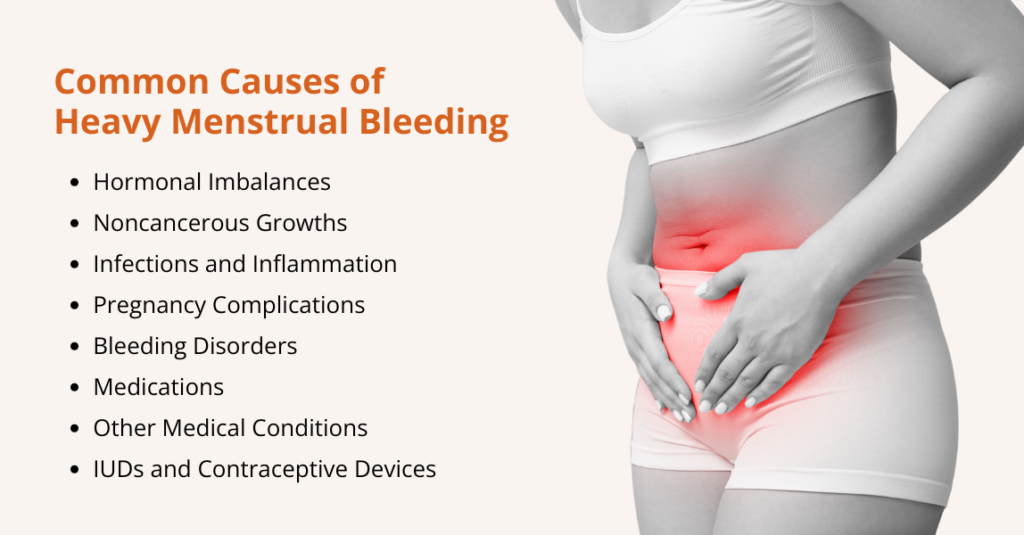
Menorrhagia can stem from multiple factors; sometimes the cause is unknown. Common categories include:
Hormonal Imbalances
Estrogen and progesterone control the uterine lining. Imbalances from obesity, insulin resistance, thyroid disease, or polycystic ovary syndrome (PCOS) can thicken the lining and lead to heavy bleeding. Anovulation (when the ovaries don’t release an egg) is another cause.
Noncancerous Growths
Uterine fibroids (benign muscle tumors), polyps, and adenomyosis (endometrial tissue growing into the uterine muscle) increase blood loss. Fibroids can distort the uterus and cause sudden gushes of blood during periods.
Infections and Inflammation
Sex ually transmitted infections such as trichomoniasis, gonorrhea, and chlamydia, or chronic endometritis, can trigger heavy bleeding.
Pregnancy Complications
Miscarriage, ectopic pregnancy, or a cesarean scar (“C‑section niche”) may present as unexpected heavy bleeding.
Bleeding Disorders
Von Willebrand disease, platelet function disorders, and other genetic bleeding disorders impair clotting. These often go undiagnosed but should be considered when menstrual bleeding is severe.
Medications
Blood thinners (e.g., warfarin, apixaban, rivaroxaban), aspirin, and certain hormonal therapies can increase blood flow.
Other Medical Conditions
Liver, kidney, and thyroid problems, pelvic inflammatory disease, leukemia, and certain cancers (uterine or cervical) are linked with heavy bleeding. Obesity and approaching menopause are risk factors.
IUDs and Contraceptive Devices
Hormone‑free intrauterine devices may cause heavier periods. Forgotten IUDs or implants can cause abnormal bleeding.
Symptoms and Signs You’re Losing Too Much Blood
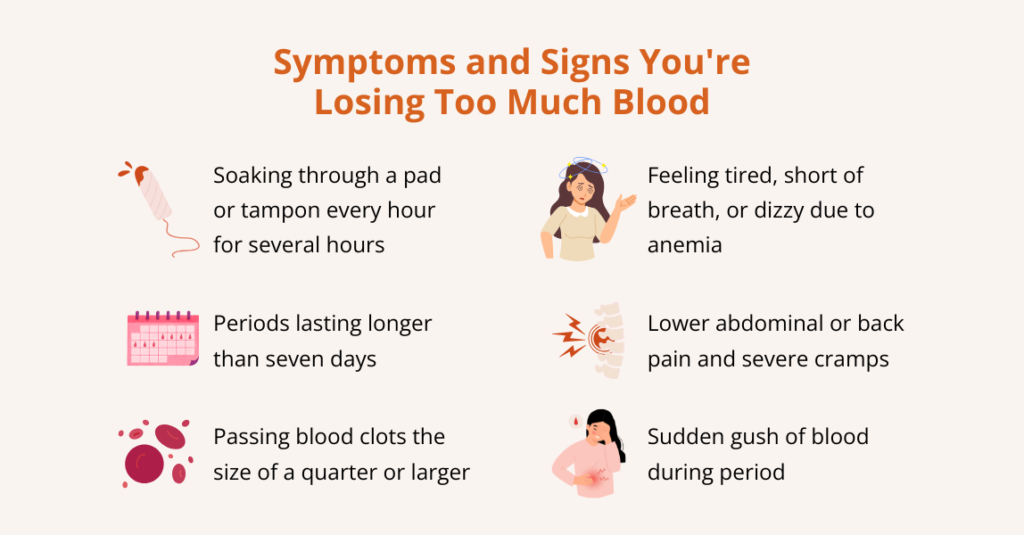
Heavy menstrual bleeding can interfere with daily life and cause anemia. Warning signs include:
- Soaking through a pad or tampon every hour for several hours, needing double protection, or changing pads at night.
- Periods lasting longer than seven days. Some people report a period lasting two weeks or more.
- Passing blood clots the size of a quarter or larger. Clots suggest that blood is pooling and clotting in the uterus.
- Feeling tired, short of breath, or dizzy due to anemia. Iron deficiency can cause fatigue and palpitations.
- Lower abdominal or back pain and severe cramps.
- Sudden gush of blood during period that drenches clothes or bedding; this can be frightening and may suggest fibroids or endometrial polyps.
If you bleed through two or more pads or tampons each hour for two or three hours, you should seek immediate medical care.
Diagnosis: How Doctors Evaluate Heavy Menstrual Bleeding
Doctors evaluate heavy period bleeding using a step-by-step approach to understand symptoms and identify the underlying cause.
This process typically includes a detailed medical history, a physical and pelvic examination, and, when indicated, diagnostic tests.
Patient History & Physical Exam
The evaluation begins with a close review of the patient’s symptoms and the impact of heavy bleeding on daily life. Key areas include:
Menstrual History
The provider will ask about the age of the first period, cycle length and regularity, how long bleeding lasts, and how heavy the flow feels. Patients may be asked to keep a period diary, or track pad, or a tampon use to help estimate blood loss.
Symptom Review
Doctors look for clear signs of HMB, such as soaking through pads or tampons every hour for several hours, passing large blood clots (quarter-sized or larger), needing to change menstrual products during the night, or symptoms of anemia such as fatigue or shortness of breath.
Medical and Family History
The provider will review current health conditions (such as thyroid or liver problems), medications (including blood thinners), and any personal or family history of bleeding disorders or gynecologic cancers.
Physical Examination
This usually includes a general exam to check for signs of anemia and a pelvic exam to look for structural issues like fibroids or polyps, as well as signs of infection or other abnormalities.
Diagnostic Tests
A pelvic ultrasound is the most common test used by healthcare providers to evaluate menorrhagia.
Based on the initial assessment, doctors may order one or more tests. Common diagnostic tests may include:
- Blood tests to check for anemia, clotting problems, or thyroid disorders
- A transvaginal ultrasound is used to closely examine the organs and tissues in the pelvis
- Magnetic resonance imaging (MRI) is used if an ultrasound does not provide enough detail about the uterus
- Pap smear to examine cervical cells for abnormal changes that could suggest cancer
- Cervical culture to test for infection
- Endometrial biopsy to analyze uterine tissue for cancer or other abnormalities
Additional procedures that may help identify the cause include:
- Sonohysterogram (saline-infusion sonography): A test in which saline is placed in the uterus to give a clearer view of the uterine lining and detect abnormalities.
- Hysteroscopy: A procedure that allows the provider to look directly inside the vagina, cervix, and uterus to identify polyps, fibroids, or other abnormal tissue. In some cases, growths causing heavy bleeding can be removed during this procedure.
Treatments for Heavy Menstrual Bleeding
Treatment depends on the cause, severity, age, overall health, fertility goals, and personal preferences. Options range from lifestyle adjustments and supplements to medication and surgery.
In some cases, menorrhagia may improve on its own without treatment. This is more likely when heavy bleeding is caused by mild hormonal changes or factors such as being overweight. For some individuals, menstrual bleeding may become lighter after achieving a healthier weight.
It’s important to discuss your symptoms, overall health, and treatment goals with your healthcare provider.
Home Remedies and Lifestyle Changes
Some people seek ways to stop menstrual bleeding immediately or ask how to slow down period flow. While there is no “quick fix,” you may try these supportive measures:
- Stay Hydrated and Rest: Drink extra water to maintain blood volume and rest when needed.
- Cold Compress: Placing a cold pack on the lower abdomen may constrict blood vessels and temporarily reduce bleeding.
- Elevate Legs: Raising the legs while lying down can ease blood flow back to the heart.
- Avoid Aspirin: Choose ibuprofen or naproxen instead (if safe for you) because aspirin can increase bleeding.
- Discuss TENS (transcutaneous electrical nerve stimulation: Some find relief from cramps with TENS units.
If heavy bleeding continues beyond seven days, see a healthcare provider.
Medications to Treat Heavy Menstrual Bleeding
Healthcare providers usually try medications first before recommending surgical treatment. Depending on the cause and severity of your symptoms, treatment options may include:
- Iron supplements help restore low iron levels and treat or prevent anemia.
- Nonsteroidal anti-inflammatory drugs (NSAIDs), such as ibuprofen or aspirin, can be used to reduce menstrual cramps and help lessen blood loss.
- Birth control methods (including pills, patches, vaginal rings, and hormonal IUDs) are used to regulate menstrual cycles and reduce heavy bleeding.
- Hormone replacement therapy (HRT) to balance estrogen and progesterone levels and reduce heavy flow; this option is often used during perimenopause and should be discussed carefully due to potential risks.
- Gonadotropin-releasing hormone (GnRH) agonists or antagonists are used to reduce or stop menstrual bleeding temporarily.
- Desmopressin nasal spray (Stimate®) to control bleeding in people with von Willebrand disease by improving blood clotting.
- Antifibrinolytic medications, such as tranexamic acid, help prevent blood clots from breaking down and reduce excessive bleeding.
Your healthcare provider can help determine which medication is most appropriate based on the cause of your heavy periods, overall health, and treatment goals.
Minimally Invasive Procedures for Heavy Menstrual Bleeding
When medications do not provide enough relief, healthcare providers may recommend procedures to control heavy menstrual bleeding.
The choice depends on the cause of bleeding, symptom severity, and whether a future pregnancy is desired.
Hysteroscopy
This procedure allows the provider to look directly inside the uterus using a thin, lighted instrument. It is commonly used to identify and remove polyps or small fibroids located within the uterine cavity that may be causing heavy bleeding.
Dilation and Curettage (D&C)
During a D&C, the cervix is gently opened, and part of the uterine lining is removed. This can help reduce heavy bleeding and may also be used to diagnose underlying causes, such as abnormal tissue growth or complications related to pregnancy, including miscarriage.
Myomectomy
A myomectomy involves the surgical removal of uterine fibroids while preserving the uterus. This option is often recommended for people who wish to maintain fertility but need treatment for fibroids that cause heavy or painful periods.
Uterine Fibroid Embolization (UFE)
UFE is a minimally invasive procedure that blocks the blood supply to fibroids, causing them to shrink over time. As fibroids decrease in size, menstrual bleeding and related symptoms often improve.
Endometrial Ablation or Resection
These procedures destroy or remove all or part of the uterine lining using heat, lasers, freezing, or electrical energy. They can significantly reduce or stop menstrual bleeding. However, they are not recommended for people who plan to become pregnant, as the uterus may no longer support a healthy pregnancy.
Hysterectomy
A hysterectomy is the surgical removal of the uterus and is considered a permanent solution for heavy menstrual bleeding. It completely ends menstruation and fertility and is usually reserved for severe cases or when other treatments have not worked.
Frequently Asked Questions (FAQs)
How heavy is too heavy for a period?
A period is generally considered “too heavy” when the amount of bleeding is more than what’s typical and starts to interfere with your life or health. In a typical menstrual cycle, most people lose about 2–3 tablespoons (30–40 mL) of blood over several days. Heavy menstrual bleeding (menorrhagia) is often defined as losing more than about 80 mL (roughly 5–6 tablespoons) of blood during a period, although exact measurement is hard to do in everyday life.
Why is my period so heavy this month?
Your period may be heavier than usual this month due to short-term hormone changes, stress, recent weight changes, or shifts in birth control. Other common causes include uterine conditions like fibroids or polyps, thyroid problems, perimenopause, certain medications (such as blood thinners), or pregnancy-related issues like an early miscarriage. Sometimes, a single heavy period occurs without a serious cause, but if the bleeding is very heavy, lasts more than 7 days, or affects your daily life, it’s important to consult a healthcare provider.
Why am I bleeding so much on my period?
Excessive bleeding (menorrhagia) can result from hormone imbalances, uterine growths, pregnancy issues, bleeding disorders, or medications. Only a healthcare provider can determine the exact cause through history and testing.
When to go to the emergency for heavy menstrual bleeding?
Go to the emergency room for heavy menstrual bleeding if you soak two or more pads or tampons per hour for several hours, pass large clots continuously, feel faint, or have trouble breathing. Heavy bleeding with severe pain or suspected pregnancy complications also warrants urgent medical attention.
How to stop menstrual bleeding after 7 days?
To stop menstrual bleeding that lasts more than 7 days, medical treatments like hormonal birth control (pills, IUD, or implant), NSAIDs, or tranexamic acid are most effective. Lifestyle measures, managing stress, staying hydrated, eating a balanced diet, and gentle exercise, may also help. However, prolonged bleeding should always be evaluated by a doctor to check for underlying health issues.
How to stop heavy menstrual bleeding with clots?
To stop heavy menstrual bleeding with clots, medical treatments are usually the most effective. Options include hormonal therapy such as birth control pills, IUDs, or high-dose progesterone, and tranexamic acid, which helps stabilize blood clots. NSAIDs like ibuprofen can reduce bleeding and relieve cramps. Lifestyle measures, such as staying hydrated, managing stress, engaging in gentle exercise, and using appropriate menstrual products, can also help. However, if bleeding soaks a pad or tampon every hour, passes very large clots, lasts more than 7 days, or causes dizziness, fainting, or rapid heartbeat, it’s important to seek medical care immediately to rule out serious underlying issues and receive urgent treatment.
Conclusion
Heavy menstrual bleeding, or menorrhagia, is more than just an inconvenient period; it’s your body’s way of signaling that something may need attention.
Causes can range from hormonal changes, fibroids or polyps, thyroid issues, pregnancy-related complications, to certain bleeding disorders.
It’s important to recognize the warning signs: soaking through pads or tampons every hour, bleeding for more than seven days, passing large clots, or feeling unusually tired or weak.
These symptoms are not something you have to just “live with.” A careful medical evaluation can help pinpoint the cause and guide the best treatment for you.
Treatment options vary depending on your needs and may include lifestyle changes, iron supplements, NSAIDs, hormonal therapies, minimally invasive procedures, or, in rare cases, surgery.
Most importantly, caring for yourself means seeking help without hesitation; you deserve to live your life fully without being held back by heavy periods.