
Leg pain is a common yet often misunderstood symptom.
While many people experience temporary aches after exercise, long work shifts, or standing all day, persistent or severe leg pain can be a sign of something more serious.
In fact, leg pain is one of the most frequently misdiagnosed symptoms because it can stem from multiple structures, muscles, nerves, joints, bones, or blood vessels. This overlap often confuses.
For example, peripheral artery disease (PAD) is commonly mistaken for back pain or sciatica, and some patients even undergo spine evaluations or treatments before the vascular cause is identified.
Meanwhile, nerve-related pain, such as sciatica, can mimic vascular or muscular disorders.
However, location, type of pain, and what triggers or relieves it are often the biggest clues: sharp, shooting pain often points toward nerve involvement; dull, aching pain suggests muscle or joint irritation; and cramping during walking may indicate circulation problems.
To help patients, families, and caregivers, this guide clarifies what leg pain is, explores the major types of leg pain, reviews common causes, highlights red‑flag symptoms, and summarizes evidence‑based treatments and prevention strategies.
What is Leg Pain?
From a medical perspective, leg pain refers to any discomfort, soreness, or aching felt between the hip and the ankle. It can be acute (sudden and short-term) or chronic (lasting weeks or longer), and it may come and go or stay constant.
People often describe leg pain as:
- A sharp, shooting pain
- A dull or heavy ache
- A burning or tingling sensation
- Cramping, especially at night.
Leg pain can come from almost any structure in the leg, including your:
- Bones
- Muscles
- Tendons and ligaments
- Joints
- Nerves
- Blood vessels
- Soft tissues
Because so many tissues are involved, the cause of leg pain varies widely.
However, it’s important to seek medical care if the pain is severe, persistent, or comes with swelling, numbness, colour changes, or difficulty walking.
4 Types of Leg Pain
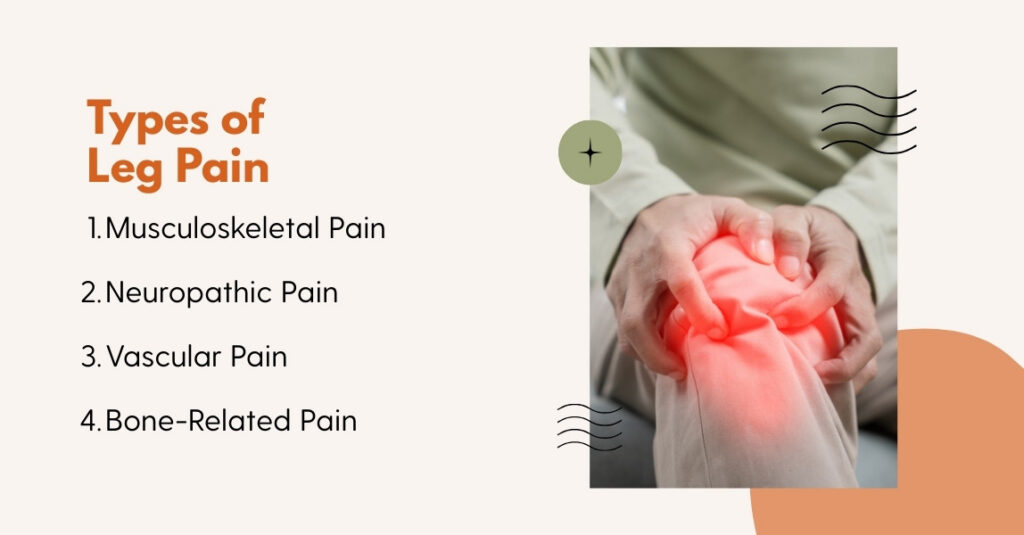
Medical experts and researchers typically classify leg pain by the major tissue type or system affected, as this helps guide diagnosis and treatment.
Here are the main types of leg pain:
1. Musculoskeletal Pain (Muscle and Tendon)
Musculoskeletal leg pain refers to discomfort that arises from muscles, tendons, ligaments, and other soft-tissue structures.
They can occur due to:
- Muscle strains: These injuries happen when a muscle is overstretched or torn. Strains are common, especially in athletes or during sudden increases in activity.
- Shin splints: This condition involves irritation and inflammation of the muscles, tendons, or tissues surrounding the shin bone (tibia), often triggered by overuse.
- Stress fractures: Tiny cracks in the bone caused by repetitive force or impact, often seen in runners and other high-impact sports.
- Tendinitis: Also called tendonitis, this occurs when the tendon connecting muscle to bone becomes inflamed, typically from overuse or repetitive motion.
2. Neuropathic Pain (Nerve-Related)
Neuropathic leg pain occurs when the nerves are irritated, damaged, or compressed. Conditions such as sciatica, nerve compression, and neuropathy commonly trigger this type of pain.
Unlike muscle-related discomfort, neuropathic pain follows nerve pathways and often radiates from the lower back or hip into the leg.
People typically describe neuropathic pain with distinct sensations, including:
- Burning pain
- Tingling or pins and needles
- Shooting or electric-shock sensations
- Numbness
- Sometimes, leg weakness or reduced sensation
These features help differentiate nerve-related pain from musculoskeletal pain and often indicate an underlying neurological issue that requires proper evaluation.
A prospective study of patients with low-back–related leg pain found that depending on the definition used, 48% to 74% of these cases showed neuropathic pain features.
3. Vascular Pain (Blood-Flow/Circulation-Related Pain)
Vascular leg pain occurs when blood flow to or from the leg is impaired.
Typical features of vascular pain include:
- Varicose veins: These develop when blood pools inside the veins, causing them to enlarge and appear blue or purple beneath the skin. They may lead to heaviness, aching, or swelling in the legs.
- Peripheral artery disease (PAD): PAD occurs when plaque made of fat and cholesterol builds up in the arteries, narrowing them and reducing blood supply to the legs. This often causes cramping or aching during activity.
- Deep vein thrombosis (DVT): DVT is a blood clot in a deep vein that blocks normal blood flow. It can cause swelling, warmth, and tenderness in one leg. This condition is serious and requires prompt medical attention.
A recent biomechanical study showed that people with PAD have impaired gait, even when not currently in pain, which underlines how vascular problems affect leg function beyond just subjective discomfort.
4. Bone-Related Pain
Bone-related leg pain originates from problems in the bone itself, such as stress fractures, shin splints, or arthritis.
The underlying mechanism is usually: repetitive mechanical stress → micro-damage to bone → bone irritation or fractures → ongoing pain.
This type of pain is typically deep, persistent, and often worsens with impact or weight-bearing activities like walking or running. It can also occur due to:
- Arthritis: A very common condition characterized by joint pain, stiffness, and inflammation. There are more than 100 different types, affecting people of all ages.
- Gout: A form of inflammatory arthritis that causes sudden episodes of intense joint pain and swelling. It occurs when uric acid builds up in the body and forms sharp crystals in the joints.
Although many reviews separate bone and joint pain from soft-tissue musculoskeletal pain, classic orthopedic and sports-medicine literature lists stress fractures and bone-stress injuries as frequent causes of chronic leg pain, especially in athletes or people who are increasing their activity.
Because these injuries can worsen if left untreated, proper diagnosis, often including imaging, and load management, such as rest or reduced-impact activity, are essential to prevent further damage.
What Causes Leg Pain?
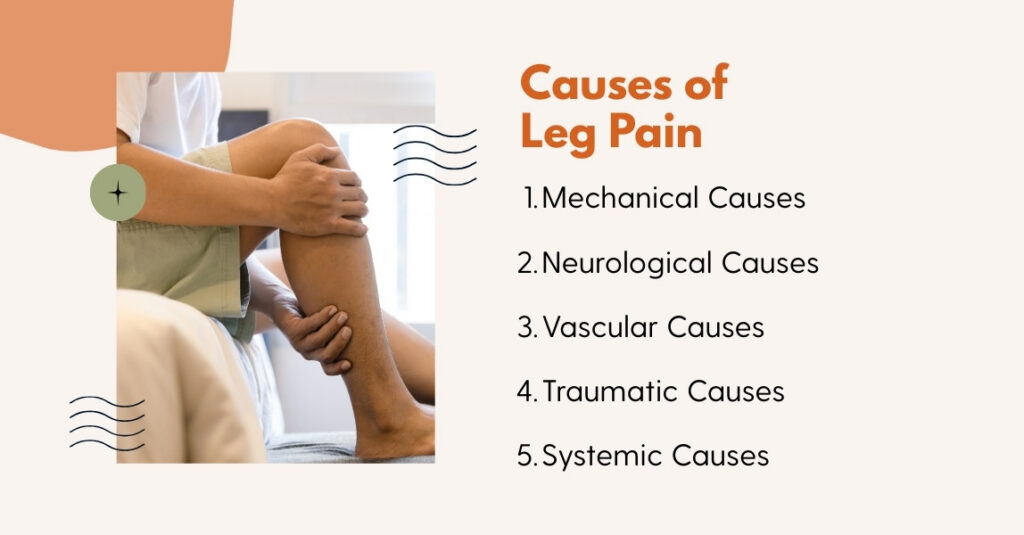
Leg pain can arise from a wide range of mechanical, neurological, vascular, traumatic, and systemic factors. Thus, understanding the underlying cause is essential for accurate treatment and prevention.
1. Mechanical Causes
Mechanical issues occur when the muscles, bones, or joints are stressed beyond their capacity.
Overuse injuries and muscle imbalances are common: repetitive activity, sudden increases in training, or weak supporting muscles can lead to strains, tendinitis, or stress fractures.
Even sedentary jobs can lead to stiffness and cramps when activity resumes.
Improper footwear and flat feet also contribute. Also, poor arch support alters biomechanics, placing extra stress on muscles and joints and increasing the risk of shin splints or plantar fasciitis.
2. Neurological Causes
Leg pain can stem from nerve problems. Herniated discs or spinal stenosis compress spinal nerves, leading to sciatica, burning, tingling, or numbness in the leg.
Nerve entrapment conditions, such as peroneal neuropathy, may cause weakness or difficulty lifting the foot.
Moreover, prolonged sitting or poor posture can tighten hip flexors, compressing nerves and contributing to neuropathic leg pain.
3. Vascular Causes
Circulatory problems are another major source of leg pain. Peripheral Artery Disease (PAD) occurs when atherosclerosis narrows leg arteries, causing cramping or aching during walking or activity.
The risk factors include smoking, diabetes, hypertension, and high cholesterol. The symptoms include unilateral swelling, tenderness, warmth, or a “pulling” sensation in the calf.
Research shows that varicose veins and venous insufficiency result from prolonged standing or genetic factors, leading to leg heaviness, cramps, and visible veins. Roughly one in four adults may have visible varicose veins.
4. Traumatic Causes
Direct trauma from falls, accidents, or sports injuries can cause fractures, sprains, or contusions.
If you experience this, seek immediate care if you hear a popping sound, notice a visible deformity, or are unable to bear weight.
Similarly, compartment syndrome is a serious condition where swelling within muscle compartments causes severe pain and requires emergency surgery to prevent permanent damage.
5. Systemic or Metabolic Causes
Diabetes and neuropathy can damage nerves and blood vessels, producing burning, tingling, and numbness in the legs. Also, inflammatory joint conditions like arthritis or gout can cause deep joint pain, stiffness, and swelling.
Moreover, infections, including cellulitis or osteomyelitis (bone infection), may produce redness, warmth, and pain. Fever accompanied by other symptoms is a red flag that requires urgent medical attention.
Kristofer Jones, MD, an orthopaedic surgeon at UCLA Health, says that many people with sedentary jobs cram all their physical activity into the weekend. This sudden spike in load can cause strains or stress fractures; he recommends gradually increasing activity, varying exercises, and building core strength. Ignoring early discomfort can turn a minor strain into a serious injury.
The “Weekend-Warrior-Mentality”
What are the Symptoms of Leg Pain?
Leg pain can appear in many forms. It may affect a small, specific area or spread across the entire leg. The discomfort can also extend into the buttocks, foot, lower back, or spine, depending on the cause.
In some cases, pain occurs in multiple body regions at the same time. The pain may feel:
- Dull or sharp
- Burning or tingling
- Your leg may also feel numb
It can be triggered by activity (for example, walking or running), by position (standing or sitting), or by coming on at night. Common features associated with leg pain include swelling, numbness, colour changes, warmth or redness, and difficulty walking.
Additional signs and symptoms that can accompany leg pain include:
- Swelling, especially if one leg looks noticeably different from the other
- Varicose veins
- Sores or ulcers
- Redness/warmth
- Numbness/sensory change
- Color changes in the leg or foot
- Slow-healing wounds
- General unwellness, especially during recovery from an infection or fracture
It is important to seek medical attention if your leg pain is sudden, severe, persistent, or if you experience any of these additional symptoms.
Vascular surgeon George Anton, MD, notes that visible venous disease is not only cosmetic, “When veins are big enough, the blood that pools in them can also clot. Clots can travel through your body, putting you at risk for a pulmonary embolism, which could be life-threatening.”
Clinical Insight
Leg Pain Treatments
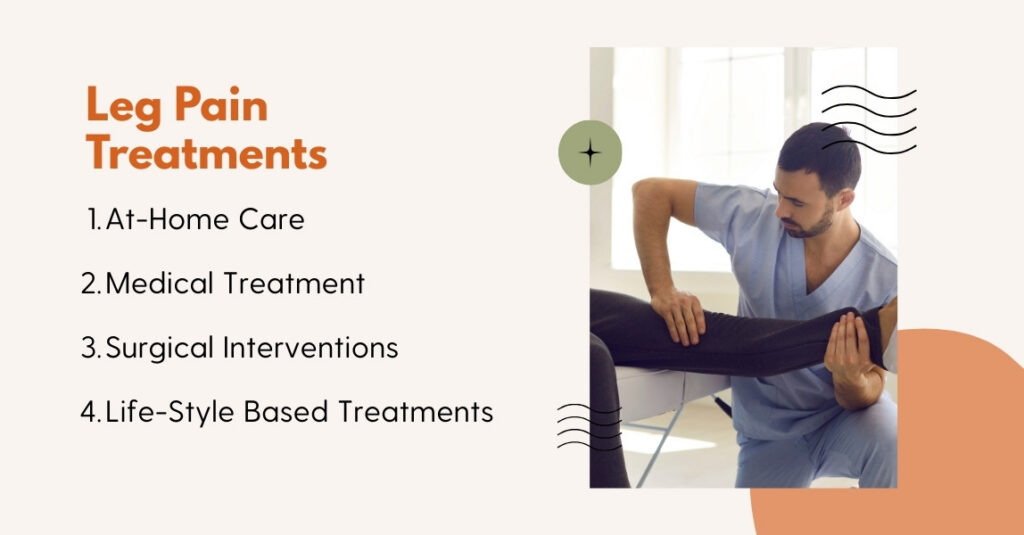
Leg pain treatment depends on the cause, but many mild issues improve with home care, such as gentle stretching, movement, and simple pain relievers like paracetamol or ibuprofen.
More serious causes may require antibiotics, targeted medication, or, in some cases, surgery.
At-Home Care
For many mild leg problems, especially muscle, tendon, or soft-tissue pain, at-home care can help relieve pain and support healing.
Some of the common approaches include:
- RICE (Rest, Ice, Compression, Elevation)
Rest the leg, apply ice, use gentle compression (e.g., bandage), and elevate the leg above heart level. Research shows that RICE can reduce pain and swelling after a strain, sprain, or minor injury.
- Stretching and hydration
Gentle stretching helps keep muscles and tendons flexible. Staying well-hydrated supports muscle health and may reduce the chance of cramps or overuse injury.
- Epsom salt soaks
Warm salt baths (when no open wounds) can help ease muscle soreness and promote relaxation, useful for muscle or tendon discomfort.
According to a study, Epsom salt has anti-inflammatory and analgesic properties, making it a pain-relieving agent.
- Over-the-counter (OTC) pain relievers/anti-inflammatories
Drugs like non-steroidal anti-inflammatory drugs (NSAIDs) or acetaminophen help relieve pain, reduce inflammation, and make movement easier.
These “home-care” methods often work for sprains, strains, mild tendon irritation, or post-activity soreness. If pain persists or worsens, seeking medical care is advised.
Medical Treatments
When at-home care isn’t enough, or when leg pain stems from vascular, nerve, or deeper structural problems, medical treatments may be required:
- Physical therapy
A physical therapist can guide gentle movement, strengthen muscles, improve flexibility, and correct movement patterns. This helps many people with musculoskeletal or nerve-related leg pain recover without surgery.
- Anti-inflammatory medications(NSAIDs)
For pain and inflammation, NSAIDs remain a first-line treatment. They reduce swelling and relieve discomfort in soft-tissue injuries, arthritis, or after surgery.
- Antibiotics
If leg pain stems from an infection (e.g., cellulitis, infected joint, bone infection), antibiotics are required. Infections accompanied by redness, warmth, fever, or spreading pain warrant prompt medical treatment.
- Nerve blocks or nerve-directed treatments
For severe nerve-related pain (nerve compression, radiculopathy), nerve-block injections or other nerve-targeted therapies may be recommended, especially when conservative measures fail.
- Blood thinners (anticoagulants)
If leg pain is due to a blood clot (deep vein thrombosis, DVT), anticoagulant (“blood thinner”) medications are standard treatment to prevent clot growth or migration.
For vascular problems like DVT or chronic venous insufficiency, compression therapy (compression stockings or wraps) may also be prescribed to improve blood flow and reduce swelling.
Surgical or Procedural Interventions
When conservative or medical treatments are insufficient, surgery or interventional procedures may become necessary, for example:
- Fractures, severe bone damage, or structural joint problems may require surgical repair or stabilization.
- Severe nerve compression (e.g., spinal nerve-root compression) may require surgical decompression.
- Vascular blockages, clots, or severe venous/arterial disease may require vascular intervention, such as clot removal, angioplasty, or vein surgery (depending on the condition).
In post-surgical situations, pain medications and physical therapy often support recovery. It is evident that NSAIDs, acetaminophen, and pain-management strategies help reduce pain after surgery.
Lifestyle-Based & Preventive Treatments
Prevention and long-term management often depend on lifestyle and biomechanical adjustments:
- Custom orthotics
For foot or gait-related leg pain (e.g., flat feet, shin splints, tendon issues), custom orthotics or insoles can correct biomechanics, reduce abnormal stress, and prevent recurrence.
- Strength building and regular exercise
Strengthening muscles, improving flexibility, and balancing muscle groups help support joints and bones, reducing the risk of overuse injuries, tension, or biomechanical stress that can lead to pain.
- Weight management
Maintaining a healthy weight reduces load on bones, joints, and vessels, lowering the risk of arthritis, vascular disease, or overuse injuries.
- Smoking cessation
For vascular-related leg pain (like peripheral artery disease, PAD), stopping smoking is critical to improve blood flow and slow disease progression.
Also, for those at risk of vascular problems or blood clots, lifestyle habits, such as regular movement, avoiding prolonged immobility (e.g., on long flights), maintaining a healthy diet, and staying hydrated, help reduce risk.
How to Prevent Leg Pain?
You can lower your risk of leg pain by stretching before and after physical activity, staying hydrated, and eating potassium-rich foods like bananas and chicken to support healthy muscles and tendons.
To prevent health conditions that can cause leg nerve damage:
- Maintain overall health: Get enough sleep, stay hydrated, and eat a balanced diet rich in potassium, magnesium, and calcium to support muscle and nerve function.
- Exercise regularly and gradually: Include aerobic, strength, and flexibility training, increasing intensity slowly to avoid overuse injuries.
- Warm-up and cool-down: Gentle stretching before and after activity helps prevent strains.
- Wear proper footwear: Good arch support and cushioning reduce stress on joints and bones.
- Maintain a healthy weight and avoid smoking: Both reduce strain on the circulatory system and lower the risk of PAD and varicose veins.
- Monitor key health markers: Keep blood pressure, cholesterol, and blood sugar within healthy ranges through regular check-ups.
- Take movement breaks: Avoid prolonged sitting or standing to improve circulation and reduce nerve compression.
- Listen to your body: Stop activity if you notice unusual pain, swelling, or numbness and seek timely medical care.
Frequently Asked Questions (FAQs)
When should someone see a doctor?
You should seek medical attention if you experience any of the following:
- Pain lasting more than 3–5 days without improvement
- Severe or worsening pain that interferes with daily activities
- Swelling in one or both legs, especially if sudden or accompanied by redness or warmth
- Numbness, tingling, or weakness in the leg
- Pain after an injury such as a fall, twist, or direct impact
- Red flags like inability to bear weight, fever, or sudden color changes in the leg
Prompt evaluation is important to identify underlying issues such as nerve compression, blood clots, vascular problems, or serious musculoskeletal injuries.
Is Leg Pain Always from Injury?
No, leg pain is not always caused by an injury. While strains, sprains, or fractures are common sources of leg pain, it can also arise from nerve, spinal, or vascular issues.
- Nerve-related causes: Conditions such as sciatica, peripheral neuropathy, or spinal nerve compression can cause burning, tingling, shooting pain, or numbness in the leg, even without trauma.
- Spinal issues: Herniated discs or spinal stenosis can compress nerves, causing pain to radiate down the leg. Often, patients feel leg pain more than back pain.
- Vascular causes: Problems with blood flow, including peripheral artery disease (PAD), deep vein thrombosis (DVT), or varicose veins, can lead to aching, heaviness, swelling, or color changes. These pains may worsen with activity or prolonged standing and are unrelated to muscle injury.
Understanding the underlying cause is crucial because treatment differs depending on whether the pain comes from muscles, nerves, bones, or blood vessels.
Why Does Leg Pain Worsen at Night?
Leg pain often feels worse at night due to several factors:
- Circulation changes: When you lie down, blood flow and venous return in the legs can shift, sometimes worsening discomfort from conditions like peripheral artery disease (PAD) or varicose veins.
- Nerve irritation: Nerve-related pain, such as sciatica or peripheral neuropathy, can become more noticeable at rest because there are fewer distractions and the body is more aware of discomfort.
- Restless Leg Syndrome (RLS): This neurological condition causes an uncontrollable urge to move the legs, often accompanied by aching, tingling, or crawling sensations, which typically intensify in the evening or at night.
Recognizing the pattern and timing of leg pain can help clinicians identify the underlying cause and guide appropriate treatment.
Conclusion
Leg pain is a symptom with many faces. While minor aches after exercise are common, persistent or severe pain may indicate underlying musculoskeletal, neurologic, vascular, or systemic disorders.
Early recognition of symptoms and prompt medical evaluation are crucial, especially for red flags like sudden swelling, color changes, or neurological deficits.
Evidence‑based treatments range from at‑home RICE therapy to physical therapy, medications, surgery, or anticoagulation, depending on the cause.
Moreover, preventive strategies such as regular exercise, proper footwear, smoking cessation, and careful attention to cardiovascular health can substantially reduce the risk of leg pain.
Remember that an accurate diagnosis is the key to effective treatment.
Consult healthcare professionals rather than self‑diagnosing, and take leg pain seriously; it might be your body’s warning of a more significant health issue.
Leave a Reply